Nickel Alloy Welding Wire and ERNi Welding Consumables
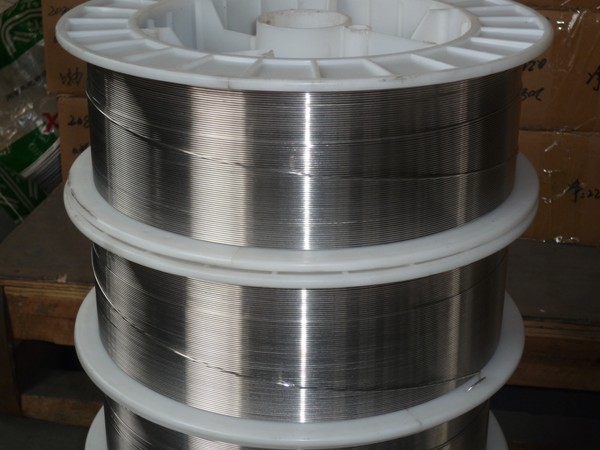
Nickel Alloy Welding Wire Overview
Nickel alloy welding wire is supplied in ERNi classifications for joining nickel alloys, dissimilar-metal combinations and corrosion-resistant cladding. Filler-metal selection must be based on the base materials, welding process, service temperature, corrosion environment, joint design and the governing welding procedure.
The AWS classification identifies a controlled chemistry range, but it does not replace procedure qualification. The responsible welding engineer should confirm classification, diameter, shielding gas, heat input, interpass temperature, dilution, post-weld requirements and acceptance testing.
Product Specification and Classification
| Item | Supply Reference |
|---|---|
| Product type | Bare nickel and nickel-alloy welding wire / rod |
| Common classification standard | AWS A5.14 / ASME SFA-5.14, subject to the required edition and project specification |
| Classification families | ERNiCrMo, ERNiCr, ERNiCu and ERNiFeCr |
| Processes | GTAW, GMAW, SAW and PAW where permitted by the selected classification and qualified procedure |
| Supply forms | Spools, coils, drums or straight TIG rods according to classification, diameter and process |
| Critical order information | AWS classification, diameter, packaging, cast / helix, chemistry, testing and certificate |
Supply Forms and Process Selection
| Supply Form | Purchasing Information |
|---|---|
| GTAW / PAW cut-length rod | Classification, diameter, cut length, straightness, surface and tube / box quantity |
| GMAW spool or drum | Diameter, spool / drum type, net weight, cast, helix and feeding requirement |
| SAW coil | Classification, diameter, coil weight, matching flux and procedure requirements |
| Special packaging | Vacuum or moisture-resistant packing, batch segregation and project-specific labeling |
ERNi Grade Chemistry Comparison
The following original chemistry table is retained as a broad ERNi grade comparison. Superscript footnotes and limits depend on the applicable AWS edition; buyers must confirm the exact classification and certificate requirements rather than treating this table as a purchase specification.
| AWSClassification | Uns |
Weight Percent |
||||||||||||||||
|
C |
Mn |
Fe |
P |
S |
Si |
Cu |
Ni |
Co |
Al |
Ti |
Cr |
Nb(Cb) Plus Ta |
Mo |
V |
W |
Other |
||
| ERNiCrMo-3a | N06625 | 0.10 | 0.50 | 5.0 | 0.02 | 0.015 | 0.50 | 0.50 | 58.0min | 0.40 | 0.40 | 20.0-23.0 | 3.15-4.15 | 8.0-10.0 | 0.50 | |||
| ERNiCr-3a,c | N06082 | 0.10 | 2.5-3.5 | 3.0 | 0.03 | 0.015 | 0.50 | 0.50 | 67.0min | (e) | 0.75 | 18.0-22.0 | 2.0-3.0 | 0.50 | ||||
| ERNiCu-7a | N04060 | 0.15 | 4.0 | 2.5 | 0.02 | 0.015 | 1.25 | Rem | 62.0-69.0 | 1.25 | 1.5-3.0 | 0.50 | ||||||
| ERNiCrMo-4 | N10276 | 0.02 | 1.0 | 4.0-7.0 | 0.04 | 0.03 | 0.08 | 0.50 | Rem | 2.5 | 14.5-16.5 | 15-17 | 0.35 | 3.0-4.5 | 0.50 | |||
| ERNiFeCr-1 | N08065 | 0.05 | 1.0 | 22.0 min | 0.03 | 0.03 | 0.50 | 1.5-3.0 | 38.0-46.0 | 0.2 | 0.6-1.2 | 19.5-23.5 | 2.5-3.5 | 0.50 | ||||
| ERNiCrFe-8a | N07069 | 0.08 | 1.0 | 5.0-9.0 | 0.03 | 0.015 | 0.50 | 0.50 | 70.0min | 0.4—1.0 | 2.00-2.75 | 14.0-17.0 | 0.70-1.20 | 0.50 | ||||
| ERNiCrFe-11 | N06601 | 0.10 | 1.0 | Rem | 0.03 | 0.015 | 0.50 | 1.0 | 58.0-63.0 | 1.0-1.7 | 21.0-25.0 | 0.50 | ||||||
| ERNiCrFe-12 | N06025 | 0.15-0.25 | 0.50 | 8.0-11.0 | 0.020 | 0.010 | 0.5 | 0.1 | Rem | 1.0 | 1.8-2.4 | 0.10-0.20 | 24.0-26.0 | 0.50 | ||||
| ERNiFeCr-1a | N08065 | 0.05 | 1.0 | 22.0min | 0.03 | 0.03 | 0.50 | 1.5-3.0 | 38.0-46.0 | 0.20 | 0.6-1.2 | 19.5-23.5 | 2.5-3.5 | 0.50 | ||||
| ERNiFeCr-2b | N07718 | 0.08 | 0.35 | Rem | 0.015 | 0.015 | 0.35 | 0.30 | 50.0-55.0 | 0.20-0.8 | 0.65-1.15 | 17.0-21.0 | 4.75-5.50 | 2.80-3.3 | 0.50 | |||
| ERNiCr-6a | N06076 | 0.08-0.15 | 1.00 | 2.00 | 0.03 | 0.015 | 0.30 | 0.50 | 75min | 0.40 | 0.15-0.50 | 19.0-21.0 | 0.50 | |||||
| ERNiCrFe-5a | N06062 | 0.08 | 1.0 | 6.0-10.0 | 0.03 | 0.015 | 0.35 | 0.50 | 70min | (e) | 14.0-17.0 | 1.5-3.0 | 0.50 | |||||
| ERNiCrFe-6a | N07092 | 0.08 | 2.0-2.7 | 8.0 | 0.03 | 0.015 | 0.35 | 0.50 | 67min | 2.5-3.5 | 14.0-17.0 | 0.50 | ||||||
| ERNiCrFe-7d | N06052 | 0.04 | 1.0 | 7.0-11.0 | 0.02 | 0.015 | 0.50 | 0.30 | Rem | 1.10 | 1.0 | 28.0-31.5 | 0.10 | 0.50 | 0.50 | |||
ERNiCrMo-3 is used for welding nickel-chromium-molybdenum alloy (ASTM B 443, B 444, and B 446 having UNS number N06625) to itself, to steel, to other nickel-base alloys, for cladding steel with nickel-chromium molybdenum weld metal, and for welding the clad side of joints in steel with nickel-chromium-molybdenum alloy using the GTAW, GMAW, SAW, and PAW processes. This welding wire is recommended for applications where the operating temperature ranges from cryogenic to 1000°F [540°C].
ERNiCr-3 is used for welding nickel-chromium-iron alloy (ASTM B 163, B 166, B 167, and B 168 having UNS number N06600) to itself, for the clad side of joints in steel clad with nickel-chromium-iron alloy, for surfacing steel with nickel-chromium-iron weld metal, for dissimilar welding of nickel-base alloys, and for joining steel to stainless steel or nickel-base alloys using the GTAW, GMAW, SAW, and PAW processes.
ERNiCu-7 is used for welding nickel-copper alloy (ASTM B 127, B 163, B 164, and B 165 having UNS number N04400) to itself using the GTAW, GMAW, SAW, and PAW processes. The welding wire contains sufficient titanium to control porosity with these welding processes.
ERNiCrMo-4 is used for welding nickel-chromium-molybdenum alloy (ASTM B 574, B 575, B 619, B 622, and B 628 having UNS number N10276) to itself, to steel, to other nickel-base alloys, and for cladding steel with nickel-chromium-molybdenum weld metal using the GTAW and GMAW processes.
ERNiFeCr-1 is used for welding the nickel-iron-chromium-molybdenum-copper alloy (ASTM B 423 having UNS number N08825) to itself using the GTAW and GMAW processes.
| Selection Factor | Why It Matters |
|---|---|
| Base materials | Identify both sides of the joint, cladding and any dilution-sensitive layer |
| Service environment | Temperature, corrosion medium, pressure and thermal cycling influence filler selection |
| Welding process | Process controls wire form, feeding, shielding, deposition rate and applicable classification |
| Procedure qualification | WPS / PQR, heat input, interpass temperature and testing establish production acceptance |
Discuss ERNi Classification and Wire Packaging
Typical Welding Applications
| Application | Typical Requirement |
|---|---|
| Nickel-alloy joining | Matching or compatible filler for specified nickel-alloy base materials |
| Dissimilar-metal welding | Joining nickel alloys to stainless or low-alloy steels under a qualified procedure |
| Corrosion-resistant cladding | Controlled dilution and deposited chemistry for overlay or clad-side joints |
| High-temperature equipment | Filler selection based on elevated-temperature strength, oxidation and code requirements |
| Chemical and marine equipment | Filler chemistry matched to the corrosion environment and joint design |
Quality Inspection and Documentation
| Inspection Item | Available Review |
|---|---|
| Classification and chemistry | Heat / batch analysis and conformity to the agreed AWS / ASME classification |
| Dimensions | Wire diameter, tolerance, cut length, spool or drum net weight, cast and helix |
| Surface and feedability | Cleanliness, finish, freedom from damaging defects and feeding condition |
| Deposited metal tests | Mechanical, corrosion, ferrite or other procedure / project tests when specified |
| Documents | Certificate, batch traceability, inspection reports, marking and project documentation |
Packaging and Export Delivery
| TIG rods | Sealed tubes or boxes with classification, diameter, batch and net-weight labels |
| Spools and drums | Moisture-resistant inner protection and reinforced cartons or cases for stable feeding condition |
| Coils | Protected coil surfaces, secure winding and rigid outer packing according to unit weight |
| Batch control | Separate identification and traceability maintained according to purchase requirements |
RFQ Confirmation Checklist
| Please Provide | Required Detail |
|---|---|
| Classification | AWS / ASME classification and required edition |
| Wire form and dimensions | Diameter, TIG length, spool / drum / coil type and net weight |
| Welding application | Base materials, process, joint, service temperature and corrosion environment |
| Testing | Chemistry, mechanical, corrosion, NDT or procedure-specific requirements |
| Delivery | Quantity, certificate, marking, packing and destination |
Request a Nickel Alloy Welding Wire Quote
Send the classification, diameter, packaging, base materials, welding process and required quantity.