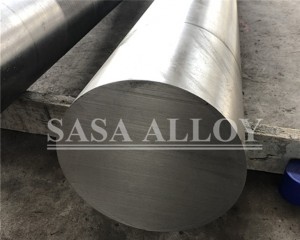
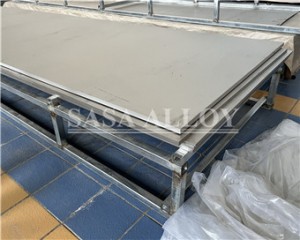
4J33 Ceramic Sealing Alloy Bar
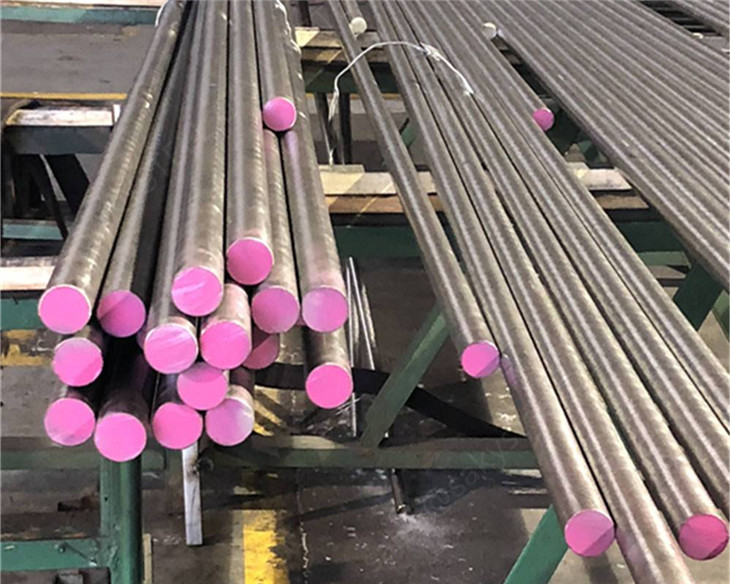
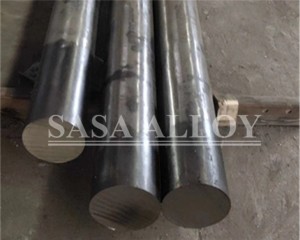
4J33 Ceramic Sealing Alloy Bar is a Fe-Ni-Co controlled expansion alloy bar developed for matched sealing with 95% alumina ceramic. It is also known as 4J33 Bar, Ni33Co17 Bar, 33HK Bar, KV-4 Bar, Fe-Ni-Co sealing alloy bar and ceramic-to-metal sealing alloy rod.
With a thermal expansion coefficient close to 95% Al2O3 ceramic over the service temperature range, 4J33 controlled expansion alloy is widely used in electric vacuum devices, electron tubes, magnetrons, ceramic seals, lead wires, lead frames, precision instruments, aerospace electronic components and hermetic sealing structures.
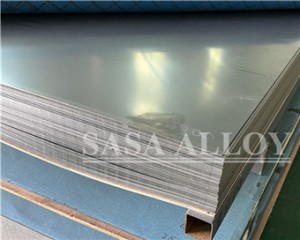
SASA ALLOY supplies 4J33 bars, 4J33 rods, 4J33 plates, 4J33 strips and customized precision expansion alloy materials in different sizes and surface conditions. MTC (Mill Test Certificate), EN 10204 3.1 certificate, PMI inspection, dimensional inspection, expansion coefficient testing and third-party inspection can be provided according to project requirements.
Product Parameters
| Item | Details |
|---|---|
| Product Name | 4J33 Ceramic Sealing Alloy Bar / Ni33Co17 Controlled Expansion Alloy Rod |
| Grade | 4J33 / 33HK / Ni33Co17 / KV-4 |
| Material Type | Iron-Nickel-Cobalt controlled expansion alloy / ceramic sealing alloy |
| Shape & Sizes | Round bar, rod, forged bar, plate, sheet, strip, wire; customized size available |
| Common Diameter | 6 mm – 200 mm for bar and rod; larger forged sizes available upon request |
| Length | 1000 mm – 6000 mm, cut-to-length available according to customer drawing |
| Surface Finish | Black, bright, peeled, turned, polished, ground |
| Standards | YB/T 5234, GB/T 15002, GB/T 14985 or customer technical specification |
| Tolerance | Standard tolerance, h9, h11, k12 or customized tolerance according to drawing |
| Certificate | MTC, EN 10204 3.1 certificate, PMI report, dimensional inspection report, expansion coefficient report and third-party inspection available |
Chemical Composition
The following chemical composition is a typical reference range for 4J33 / Ni33Co17 ceramic sealing alloy. Final chemical values should be confirmed according to the actual Mill Test Certificate.
| Element | Content (%) | Function in Alloy |
|---|---|---|
| Iron (Fe) | Balance | Base element for Fe-Ni-Co controlled expansion alloy structure |
| Nickel (Ni) | 32.1 – 33.6 | Controls thermal expansion and improves sealing compatibility |
| Cobalt (Co) | 14.0 – 15.2 | Supports matched expansion with alumina ceramic and sealing stability |
| Manganese (Mn) | ≤ 0.50 | Controlled residual element and processing support |
| Silicon (Si) | ≤ 0.30 | Controlled residual element for processing stability |
| Carbon (C) | ≤ 0.05 | Controlled impurity for sealing performance and workability |
| Phosphorus (P) | ≤ 0.020 | Controlled impurity for clean structure and reliability |
| Sulfur (S) | ≤ 0.020 | Controlled impurity for processing quality |
Mechanical Properties
4J33 Ceramic Sealing Alloy is mainly selected for controlled thermal expansion and ceramic sealing performance. Mechanical properties may vary depending on product form, heat treatment condition, bar diameter, cold work and final sealing process.
| Property | Reference Value | Engineering Meaning |
|---|---|---|
| Material Type | Ceramic sealing controlled expansion alloy | Designed for matched sealing with 95% alumina ceramic |
| Density | Approx. 8.27 g/cm³ | Useful for weight calculation and component design |
| Melting Point | Approx. 1450°C | Reference for thermal processing and sealing applications |
| Elastic Modulus | Approx. 139 GPa | Engineering reference for structural calculation |
| Electrical Resistivity | Approx. 0.46 μΩ·m | Useful for electronic and vacuum device design |
| Thermal Conductivity | Approx. 17.6 W/m·°C at 100°C | Reference for heat transfer and sealing structure design |
| Expansion Coefficient | Matched with 95% Al2O3 ceramic | Reduces thermal stress in ceramic-to-metal sealing |
| Weldability / Sealability | Good with proper process | Supports hermetic sealing and electric vacuum components |
Common Size Table
| Diameter / Thickness | Typical Length / Size | Surface Finish | Common Use |
|---|---|---|---|
| Bar Ø6 – 12 mm | 1000 – 3000 mm | Bright, polished, ground | Lead wires, small sealing pins, electronic component rods |
| Bar Ø14 – 30 mm | 2000 – 6000 mm | Peeled, turned, bright | Ceramic sealing parts, electric vacuum device components |
| Bar Ø32 – 80 mm | 3000 – 6000 mm | Black, peeled, rough turned | Magnetron parts, electron tube parts, machined sealing structures |
| Bar Ø85 – 200 mm | Cut-to-length | Forged, rough turned, machined | Large sealing components and custom precision parts |
| Plate / Strip / Wire | Customized | Hot rolled, cold rolled, polished | Lead frames, sealing rings, ceramic-to-metal assemblies |
Different Specifications Comparison
| Product Form | Main Feature | Recommended Application | Selection Advice |
|---|---|---|---|
| 4J33 Round Bar | Good machining allowance and stable expansion behavior | Sealing pins, ceramic sealing rods, electric vacuum components | Recommended for standard machined ceramic sealing parts |
| 4J33 Forged Bar | Suitable for larger sections and heavy sealing structures | Large vacuum device parts, magnetron components, custom sealing parts | Recommended for large size and project-specific components |
| 4J33 Bright Bar | Better surface finish and dimensional control | Precision electronic parts, lead parts, sealing assemblies | Recommended when tight tolerance and surface quality are important |
| 4J33 Ground Bar | Smooth surface and improved size accuracy | Precision sealing rods and CNC ceramic-to-metal parts | Recommended for final machining allowance control |
| 4J33 Plate / Strip | Suitable for stamped or formed sealing parts | Lead frames, sealing sheets, ceramic sealing rings | Recommended when flat geometry or stamping is required |
| 4J33 vs 4J29 | 4J33 is matched to 95% alumina ceramic | Alumina ceramic-to-metal sealing | Choose according to ceramic or glass expansion coefficient |
Equivalent Standards and International Names
| Standard / Name | Designation | Remarks |
|---|---|---|
| Chinese Grade | 4J33 | Ceramic sealing alloy / controlled expansion alloy |
| Russian Grade | 33HK / 33НК | Common equivalent or similar grade reference |
| Japanese Grade | KV-4 | Common ceramic sealing alloy reference |
| Chemical Type | Ni33Co17 / Fe-Ni-Co alloy | Nickel-cobalt controlled expansion sealing alloy system |
| Chinese Standard | YB/T 5234 / GB/T 14985 | Technical reference for ceramic sealing alloy products |
| Product Family | 4J Series Controlled Expansion Alloy | Includes 4J29, 4J32, 4J33, 4J36 and other precision expansion alloys |
| Common Product Forms | Bar, rod, plate, sheet, strip, wire, forged part | Different forms for sealing, electronic and vacuum device applications |
Production Process Flow
| Step | Process | Quality Control Focus |
|---|---|---|
| 1 | Raw Material Selection | Check Fe, Ni, Co content, raw material source and heat number traceability |
| 2 | Melting / Refining | Control nickel, cobalt and impurity elements |
| 3 | Ingot / Billet Preparation | Ensure suitable billet quality for rolling, forging or drawing |
| 4 | Hot Rolling / Forging | Control bar size, internal structure and deformation process |
| 5 | Heat Treatment / Annealing | Optimize expansion coefficient, workability and sealing performance |
| 6 | Controlled Cooling | Maintain stable expansion behavior and microstructure |
| 7 | Peeling / Turning / Grinding | Improve surface quality and dimensional tolerance |
| 8 | Expansion Coefficient Testing | Check ceramic matching performance if required by customer specification |
| 9 | Inspection and Testing | PMI, chemical analysis, dimensional inspection, surface inspection and gas tightness-related inspection if required |
| 10 | Packaging and Shipment | Protective wrapping, wooden case, label, heat number and shipping mark |
Product Inspection
| Inspection Item | Inspection Method | Purpose |
|---|---|---|
| Chemical Composition | Spectrometer analysis / laboratory test | Confirm 4J33 Fe-Ni-Co controlled expansion alloy grade and element control |
| PMI Test | Positive Material Identification | Prevent material mix-up and wrong grade shipment |
| Expansion Coefficient Test | Dilatometer test if required | Verify expansion matching with 95% alumina ceramic |
| Mechanical Test | Tensile strength, hardness or other required test | Verify mechanical performance according to order requirement |
| Gas Tightness Related Check | Customer-defined sealing test or material verification | Support hermetic ceramic-to-metal sealing applications |
| Dimension Inspection | Caliper, micrometer, straightness inspection | Confirm diameter, length, tolerance and straightness |
| Surface Inspection | Visual inspection and surface quality check | Check cracks, scratches, oxidation, peeling defects and surface finish |
| Ultrasonic Testing | UT inspection if required | Check internal defects for critical bars and forged sections |
| Certificate | MTC / EN 10204 3.1 / inspection report | Ensure material traceability and project documentation |
Product Packaging
| Packaging Item | Details | Benefit |
|---|---|---|
| Surface Protection | Plastic film, anti-rust paper, oil protection or protective wrapping | Protects bar surface from scratches and oxidation during transportation |
| Bundle Packing | Bars bundled with steel strips or protective belts | Prevents movement, bending and collision |
| Wooden Case / Wooden Pallet | Export-standard wooden case or pallet | Suitable for long-distance sea, air and truck shipment |
| Labeling | Grade, size, heat number, quantity, net weight and customer mark | Improves material traceability after delivery |
| Document Support | Packing list, invoice, MTC, EN 10204 3.1 certificate and inspection report if required | Supports customs clearance and project acceptance |
Applications & Machinability
Applications
| Industry | Typical Parts | Why 4J33 Bar Is Used |
|---|---|---|
| Medical Instruments | Precision electronic instrument parts, ceramic sealing parts, stable dimensional components | Matched expansion and reliable sealing support precision instrument assemblies |
| Aerospace | Electronic packaging parts, sensor sealing structures, ceramic-to-metal components | Stable expansion behavior supports reliable electronic and sensor packages |
| Marine Hardware | Sensor sealing parts, electronic feedthrough components, precision connectors | Used where ceramic sealing and dimensional stability are required; surface protection should be considered |
| Chemical Processing | Instrument sealing parts, electronic control components, sensor feedthrough structures | Suitable for sealed instrument parts; corrosion environment should be evaluated before use |
| Electric Vacuum & Electronics | Electron tubes, magnetrons, lead wires, lead frames, ceramic seals and vacuum device components | Matched thermal expansion with alumina ceramic helps reduce sealing stress and improve hermetic reliability |
Machinability, Welding and Heat Treatment
| Processing Property | Performance | Recommendation |
|---|---|---|
| Machinability | Good machinability, but not a free-cutting alloy like 303 stainless steel | Use rigid machines, sharp tools, suitable cutting speed and proper coolant |
| Forming Performance | Good processing performance after proper annealing | Plan forming and machining allowance according to final sealing structure |
| Welding / Brazing Performance | Good sealing and joining performance when proper procedure is used | Confirm ceramic type, atmosphere, surface oxidation and joining process before production |
| Heat Treatment | Annealing and controlled cooling are important for expansion behavior and sealing performance | Final heat treatment should follow expansion coefficient and ceramic sealing requirements |
| Cold Working | Cold working can affect thermal expansion and sealing behavior | Stress relief or annealing may be required after forming or machining |
| Surface Protection | Surface oxidation state may affect sealing quality | Use suitable cleaning, controlled oxidation and dry storage for sealing applications |
Why Choose SAKY ALLOY?
| Advantage | Description |
|---|---|
| Professional Precision Alloy Supply | SASA ALLOY supplies precision alloys including 4J33, 4J29 Kovar, 4J32 Super Invar, 4J36 Invar 36, 1J soft magnetic alloys, 2J permanent magnetic alloys, 3J elastic alloys and 6J resistance alloys for industrial and high-performance applications. |
| Customized Size Capability | Diameter, length, surface finish, tolerance, cutting service and machining allowance can be customized according to customer drawings or project requirements. |
| Quality Control and Traceability | Material traceability, heat number control, PMI testing, dimensional inspection, surface inspection, mechanical testing and expansion coefficient testing can be arranged. |
| Certificate Support | We can provide MTC (Mill Test Certificate / 质保书), EN 10204 3.1 certificate, PMI report, inspection report and other quality documents according to order requirements. |
| Export Packaging Experience | Export wooden cases, wooden pallets, protective wrapping, oil protection and clear labels help ensure safe delivery for international shipments. |
| Technical Service Support | Our team can support grade selection, equivalent standard checking, expansion coefficient requirement confirmation, ceramic sealing discussion and technical document preparation before shipment. |
FAQ
Q1: What is 4J33?
4J33 is a Fe-Ni-Co ceramic sealing alloy, also known as Ni33Co17, 33HK and KV-4. It is a controlled expansion alloy mainly used for matching sealing with 95% alumina ceramic.
Q2: What is the main application of 4J33 Ceramic Sealing Alloy?
4J33 is mainly used for ceramic-to-metal sealing, electric vacuum devices, electron tubes, magnetrons, lead wires, lead frames, ceramic seals, precision instruments and hermetic sealing structures.
Q3: Is 4J33 the same as Kovar?
4J33 is a Fe-Ni-Co controlled expansion sealing alloy similar in application to Kovar-type materials, but it is specifically designed to match 95% alumina ceramic. For exact replacement, chemical composition and expansion coefficient must be confirmed.
Q4: What ceramic is 4J33 suitable for sealing with?
4J33 is mainly used for matched sealing with 95% Al2O3 ceramic. The ceramic type and expansion coefficient should be confirmed before material selection.
Q5: Can SASA ALLOY provide 4J33 with MTC?
Yes. SASA ALLOY can provide MTC (Mill Test Certificate / 质保书), EN 10204 3.1 certificate, PMI report, dimensional inspection report, expansion coefficient report and third-party inspection documents according to customer requirements.
Q6: What sizes of 4J33 Bar are available?
Common diameters include 6 mm to 200 mm. Length, tolerance and surface finish can be customized. Plates, strips, wires and cut-to-length parts can also be supplied according to project requirements.
Q7: Is 4J33 easy to machine?
4J33 has good machinability, but it is not a free-cutting alloy like 303 stainless steel. Rigid equipment, sharp tools, suitable cutting speed and proper coolant are recommended.
Q8: Can 4J33 be welded or sealed?
Yes. 4J33 has good sealing and joining performance when proper ceramic-to-metal sealing, brazing or welding processes are used. Surface cleaning, oxidation state and heat treatment should be controlled.
Q9: What should be confirmed before ordering 4J33?
Customers should confirm grade, product form, ceramic type, expansion coefficient requirement, diameter, length, quantity, surface finish, tolerance, heat treatment condition and certificate requirements.
Q10: How can I get a quotation for 4J33?
Please send your required grade, product form, diameter, length, quantity, surface finish, tolerance, ceramic sealing requirement, expansion coefficient requirement and certificate requirements to SASA ALLOY. Our team will check availability, production route, delivery time and price for your project.