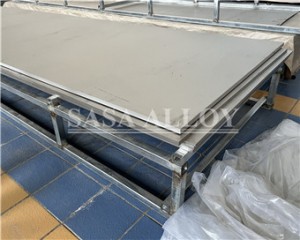
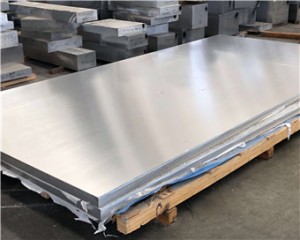
4J50 Controlled Expansion Alloy Bar FeNi50 Sealing Alloy
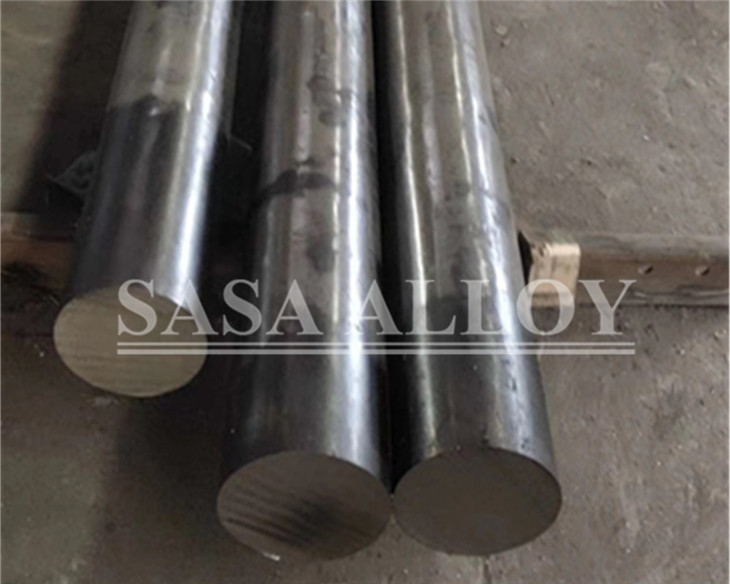
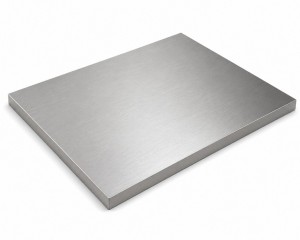
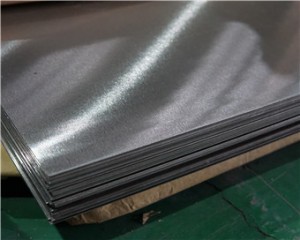
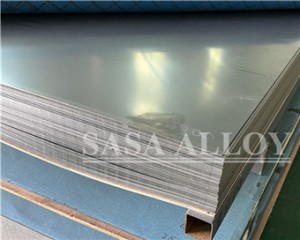
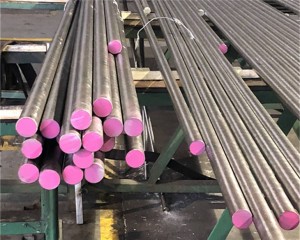
4J50 Controlled Expansion Alloy Bar is an iron-nickel precision alloy bar containing approximately 50% nickel with iron as the balance. It is also commonly described as FeNi50 Bar, Alloy 50 Bar, 4J50 Round Bar, fixed expansion alloy bar, glass sealing alloy bar and nickel iron sealing alloy. Its controlled thermal expansion characteristics make it suitable for glass-to-metal seals, electric vacuum devices, relays, lamps, electronic packages and precision instruments.
SASA ALLOY supplies 4J50 round bar, FeNi50 rod, Alloy 50 forged bar, bright bar, peeled bar, polished bar, centerless ground bar and customized machined components. Diameter, length, tolerance, surface finish, delivery condition and inspection requirements can be customized according to drawings and project specifications.
Product Parameters
| Item | Product Details |
|---|---|
| Product Name | 4J50 Controlled Expansion Alloy Bar / FeNi50 Sealing Alloy Bar |
| Grade | 4J50 / FeNi50 / Alloy 50 |
| Material Family | Iron-nickel controlled expansion alloy and glass sealing alloy |
| Common International Names | Alloy 50, FeNi50, Nilo 51, N50, Vacodil 500, 50H and NS-1 references |
| Available Shapes | Round bar, rod, forged bar, flat bar, square bar, wire, strip and machined parts |
| Round Bar Diameter | Approximately 3 mm to 300 mm; larger forged sizes available upon request |
| Length | 1000 mm to 6000 mm or customized cut-to-length |
| Surface Finish | Black, bright, peeled, turned, polished, ground or machined |
| Delivery Condition | Annealed, hot rolled, forged, cold drawn, stress relieved or customer specified |
| Reference Standards | YB/T 5235, GB/T 15018, DIN 17745 or customer-approved specification |
| Tolerance | Commercial tolerance, h9, h11, ground tolerance or drawing-specific tolerance |
| Documents | MTC, EN 10204 3.1, PMI report, dimensional report and third-party inspection |
Chemical Composition
4J50 is produced by controlling nickel content within a narrow range to obtain predictable thermal expansion behavior. The following chemical composition is a typical reference for FeNi50 controlled expansion alloy. Final values must comply with the agreed purchase specification and actual Mill Test Certificate.
| Element | Typical Content (%) | Technical Function |
|---|---|---|
| Nickel (Ni) | 49.5–50.5 | Controls thermal expansion, Curie point and alloy structure |
| Iron (Fe) | Balance | Forms the base of the iron-nickel sealing alloy |
| Carbon (C) | ≤ 0.05 | Controlled to maintain ductility and stable processing behavior |
| Manganese (Mn) | ≤ 0.80 | Supports melting, deoxidation and hot-working control |
| Silicon (Si) | ≤ 0.30 | Controlled residual affecting sealing and processing quality |
| Aluminum (Al) | ≤ 0.10 | Restricted to preserve expansion and sealing characteristics |
| Phosphorus (P) | ≤ 0.020 | Controlled impurity for ductility and material cleanliness |
| Sulfur (S) | ≤ 0.020 | Controlled impurity for reliable forming and sealing performance |
Mechanical Properties
Mechanical properties vary according to product form, bar diameter, cold reduction, annealing temperature and final delivery condition. The values below are typical engineering references for annealed 4J50 material and are not guaranteed for every product dimension.
| Property | Typical Reference | Engineering Meaning |
|---|---|---|
| Tensile Strength | Approximately 490–540 MPa annealed | Provides strength for sealing, electronic and precision parts |
| 0.2% Yield Strength | Approximately 160–250 MPa | Relevant to forming, machining and component loading |
| Elongation | Approximately 30–40% | Indicates good ductility in annealed condition |
| Hardness | Approximately 70–85 HRB annealed | Supports machining and forming process planning |
| Elastic Modulus | Approximately 155–166 GPa | Used for dimensional and structural calculations |
| Average Expansion, 20–100°C | Approximately 9.8 × 10⁻⁶/°C | Reference value for low-temperature sealing design |
| Average Expansion, 20–400°C | Approximately 9.4 × 10⁻⁶/°C | Important for glass and ceramic matching over a wider range |
| Magnetic Behavior | Ferromagnetic below its Curie region | Should be considered in electronic and instrument design |
Common Size Table
| Diameter | Typical Length | Common Finish | Typical Use |
|---|---|---|---|
| 3–10 mm | 1000–3000 mm | Bright, cold drawn or ground | Sealing pins, terminals and small precision rods |
| 12–30 mm | 2000–6000 mm | Bright, peeled, polished or ground | Relay parts, lamp components and machined seals |
| 32–80 mm | 2000–6000 mm | Black, peeled or rough turned | Electronic housings and machined sealing components |
| 85–150 mm | Cut-to-length | Forged, rough turned or machined | Large sealing rings and precision instrument parts |
| Above 150 mm | Customized | Forged and rough machined | Project-specific forgings and large alloy components |
Different Specifications Comparison
| Product Form | Main Feature | Recommended Application | Selection Advice |
|---|---|---|---|
| 4J50 Round Bar | Standard solid form for machining | Pins, rods, supports and sealing parts | Recommended for general CNC-machined components |
| 4J50 Forged Bar | Available in larger sections and custom sizes | Large rings, housings and sealing forgings | Select when rolled bar dimensions are insufficient |
| 4J50 Bright Bar | Cleaner surface and improved dimensional control | Electronic parts and precision automatic machining | Suitable when surface quality is important |
| 4J50 Ground Bar | Tight diameter tolerance and smooth finish | Precision shafts, pins and close-tolerance seals | Choose for h9 or drawing-specific tolerances |
| 4J50 Flat Bar | Rectangular stock for machined components | Supports, sealing blocks and electronic fixtures | Choose when rectangular geometry is required |
| 4J50 Wire or Strip | Suitable for drawing, stamping and forming | Electronic terminals, seals and formed components | Select when thin or flexible geometry is needed |
Comparison with Other Controlled Expansion Alloys
| Grade | Nominal Alloy | Main Characteristic | Typical Use |
|---|---|---|---|
| 4J36 / Invar 36 | Fe-36Ni | Very low expansion near room temperature | Gauges, optical systems and precision structures |
| 4J42 / Alloy 42 | Fe-42Ni | Lower expansion than 4J50 | Lead frames, glass seals and electronic packages |
| 4J46 / Alloy 46 | Fe-46Ni | Intermediate controlled expansion range | Selected glass and ceramic sealing systems |
| 4J50 / FeNi50 | Fe-50Ni | Higher expansion than 4J42 and 4J46 | Soft glass seals and electric vacuum devices |
| 4J52 / Alloy 52 | Approximately Fe-50.5Ni | Closely controlled glass sealing alloy | Electronic tubes, lamps and hermetic devices |
| 4J29 / Kovar Type | Fe-Ni-Co | Matched expansion with hard glass and ceramics | Hermetic packages and vacuum feedthroughs |
Equivalent Standards and International Names
| System | Designation or Reference | Remarks |
|---|---|---|
| Chinese Grade | 4J50 | Fixed-expansion precision alloy designation |
| Chemical Designation | FeNi50 | Approximately 50% nickel with iron balance |
| Common Commercial Name | Alloy 50 | General supplier reference for FeNi50 sealing alloy |
| United Kingdom Reference | Nilo 51 | Commercial cross-reference requiring specification review |
| French Reference | N50 | Regional or commercial reference |
| German Trade Reference | Vacodil 500 | Trade-name reference; verify exact producer specification |
| Russian Reference | 50H / 50Н | Common regional reference for Fe-Ni expansion alloy |
| Japanese Reference | NS-1 | Commercial or regional cross-reference |
| Chinese Product Standard | YB/T 5235 / GB/T 15018 | Applicable according to product form and purchase order |
Production Process Flow
| Step | Process | Quality Control Focus |
|---|---|---|
| 1 | Raw Material Selection | Confirm nickel and iron purity and traceability |
| 2 | Vacuum or Controlled Melting | Control nickel range, residual elements and gas content |
| 3 | Ingot Casting | Manage segregation, shrinkage and internal soundness |
| 4 | Homogenization | Improve composition and microstructure uniformity |
| 5 | Hot Rolling or Forging | Control working temperature, reduction and grain structure |
| 6 | Annealing | Restore ductility and stabilize expansion behavior |
| 7 | Cold Drawing and Straightening | Improve size accuracy, surface and straightness |
| 8 | Peeling, Turning or Grinding | Achieve specified surface finish and tolerance |
| 9 | Inspection and Testing | Verify chemistry, dimensions, expansion and surface quality |
| 10 | Marking and Export Packing | Maintain heat-number traceability and transport protection |
Product Inspection
| Inspection Item | Method | Purpose |
|---|---|---|
| Chemical Composition | Spectrometer or laboratory analysis | Confirm nickel content and 4J50 grade compliance |
| PMI Testing | Positive Material Identification | Reduce material mix-up and substitution risk |
| Thermal Expansion Test | Dilatometer testing over the specified range | Verify compatibility with the selected sealing material |
| Mechanical Testing | Tensile, yield, elongation and hardness tests | Confirm delivery condition and engineering properties |
| Dimensional Inspection | Caliper, micrometer and straightness measurement | Confirm diameter, length, tolerance and straightness |
| Surface Inspection | Visual inspection and surface evaluation | Detect scale, cracks, pits, scratches and defects |
| Ultrasonic Testing | UT when technically applicable | Evaluate internal soundness of large bars and forgings |
| Third-Party Inspection | SGS, BV, TÜV or appointed agency | Provide independent pre-shipment verification |
| Document Review | MTC and EN 10204 3.1 review | Maintain heat-number traceability and compliance |
Product Packaging
| Packaging Item | Packaging Method | Purpose |
|---|---|---|
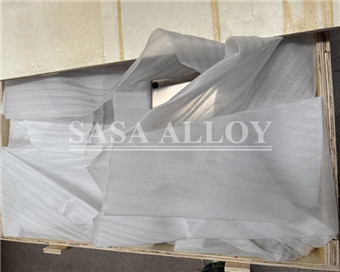
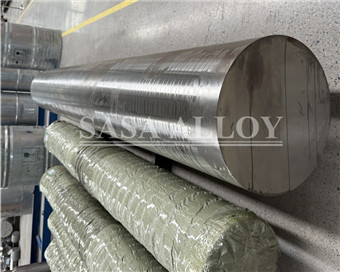
| Surface Protection | Anti-rust oil, VCI paper, plastic film or wrapping | Reduce oxidation, moisture and scratching |
| Bundle Packing | Bars secured with protected straps | Prevent movement, bending and impact |
| End Protection | Plastic caps, foam or wooden blocks | Protect cut or machined ends |
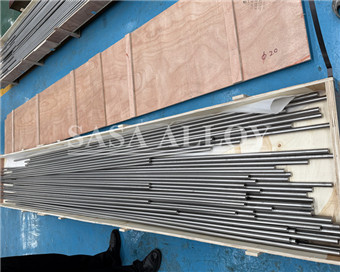
| Wooden Case or Pallet | Export-standard reinforced packing | Support sea, air and truck transport |
| Product Marking | Grade, size, heat number and quantity | Maintain identification and traceability |
| Shipping Documents | Packing list, invoice, MTC and reports | Support customs clearance and acceptance |
Applications & Machinability
Industrial Applications
| Industry | Typical Components | Selection Reason |
|---|---|---|
| Medical Instruments | Sealed sensors, electronic housings and precision supports | Controlled expansion helps protect temperature-sensitive assemblies |
| Aerospace | Instrument parts, connectors, relays and electronic packages | Provides dimensional stability during temperature cycling |
| Marine Hardware | Sealed sensors, feedthroughs and control equipment parts | Useful for sealed electronics, but corrosion protection is required |
| Chemical Processing | Instrument seals, sensor housings and electrical feedthroughs | Supports hermetic assemblies when chemical exposure is controlled |
| Electric Vacuum Industry | Vacuum tubes, magnetrons, relays and lamp seals | Expansion characteristics suit selected soft-glass sealing systems |
| Electronic Packaging | Hermetic packages, terminals and sealed connectors | Helps reduce thermal stress at metal-to-glass interfaces |
| Precision Instruments | Thermostat rods, measuring parts and calibrated assemblies | Predictable expansion supports dimensional control |
Machinability, Welding and Heat Treatment
| Processing Property | Performance | Recommendation |
|---|---|---|
| Machinability | Moderate; not as free-cutting as 303 stainless steel | Use rigid equipment, sharp carbide tools and adequate coolant |
| Cold Forming | Good in properly annealed condition | Use intermediate annealing for heavy cold reduction |
| Hot Working | Suitable for controlled forging and hot rolling | Control working temperature and cooling rate |
| Welding | Generally weldable with a qualified procedure | Limit heat input and verify post-weld expansion behavior |
| Brazing and Sealing | Suitable for selected glass and ceramic seals | Confirm cleaning, oxide condition and sealing atmosphere |
| Heat Treatment | Annealing restores ductility and controls final condition | Use a qualified cycle matched to expansion requirements |
| Hardening Response | Not a precipitation-hardening alloy | Strength is increased mainly through cold working |
| Corrosion Resistance | Moderate and below 304 or 316 stainless steel | Use plating, coating or dry protection where necessary |
Why Choose SASA ALLOY?
| Supplier Advantage | Customer Value |
|---|---|
| Precision Alloy Experience | Supply support for 4J50, FeNi50, controlled expansion, soft magnetic and precision resistance alloys. |
| Customized Sizes | Diameter, length, machining allowance, finish and tolerance can be customized. |
| Heat Number Control | Material markings and inspection documents can be linked to the original production heat. |
| Certificate Support | We can provide MTC (Mill Test Certificate / 质保书) and EN 10204 3.1 certificate according to order requirements. |
| Inspection Capability | PMI, chemical analysis, mechanical testing, thermal expansion testing and UT can be arranged. |
| Anti-Fake Material Control | Grade verification and document review help reduce material substitution risk. |
| Third-Party Inspection | SGS, BV, TÜV or customer-appointed inspection can be supported. |
| Export Packaging | Protective wrapping, wooden cases, pallets and custom shipping marks are available. |
FAQ
What is 4J50 Controlled Expansion Alloy Bar?
4J50 Controlled Expansion Alloy Bar is an iron-nickel precision alloy containing approximately 50% nickel. It is designed to provide controlled thermal expansion for glass seals, vacuum electronics, relays, lamps and precision components.
Is 4J50 the same as FeNi50 or Alloy 50?
4J50 is commonly described as FeNi50 or Alloy 50. However, commercial names and regional grades may have different composition or property limits, so the applicable standard and expansion requirements should be compared before substitution.
What is 4J50 alloy used for?
4J50 is used for glass-to-metal seals, electric vacuum tubes, magnetrons, relays, lamps, sealed connectors, electronic packages, thermostat rods, precision instruments and temperature-sensitive assemblies.
What is the nickel content of 4J50?
Typical 4J50 material contains approximately 49.5% to 50.5% nickel, with iron as the balance. Final chemistry should be confirmed by the applicable standard and Mill Test Certificate.
What is the thermal expansion coefficient of 4J50?
Typical average values are approximately 9.8 × 10⁻⁶/°C from 20°C to 100°C and 9.4 × 10⁻⁶/°C from 20°C to 400°C. The exact test interval must be stated because expansion changes with temperature.
Can SASA ALLOY provide 4J50 Bar with MTC?
Yes. We can provide MTC, EN 10204 3.1 certificate, chemical analysis, dimensional inspection, PMI report and other documents according to the purchase order.
Can the expansion coefficient be tested?
Yes. Dilatometer testing can be arranged. The customer should specify the test temperature range, maximum or target expansion coefficient, specimen condition and applicable test method.
Is 4J50 easy to machine?
4J50 has moderate machinability but is not a free-cutting alloy like 303 stainless steel. Rigid equipment, sharp carbide tools, suitable feeds and sufficient coolant are recommended.
Can 4J50 be welded?
4J50 can generally be welded using a qualified procedure. Welding heat input and post-weld condition should be controlled because they may affect dimensional stability and sealing performance.
Can 4J50 be heat treated?
Annealing is commonly used to restore ductility, relieve stress and stabilize the material condition. 4J50 is not a precipitation-hardening alloy, so strength is mainly adjusted through cold working and annealing.
Is 4J50 corrosion resistant?
4J50 has moderate atmospheric corrosion resistance but is not equivalent to stainless steel. Plating, coating, protective oil or controlled storage may be needed in humid, marine or chemical environments.
What information is needed for a quotation?
Please provide grade, standard, diameter, length, quantity, surface finish, tolerance, delivery condition, expansion coefficient, test temperature range, inspection documents, packaging requirements and destination.
```