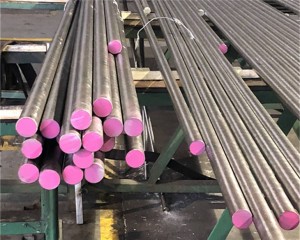
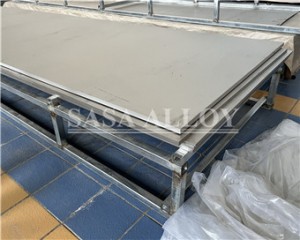
4J32 Super Invar Alloy Bar
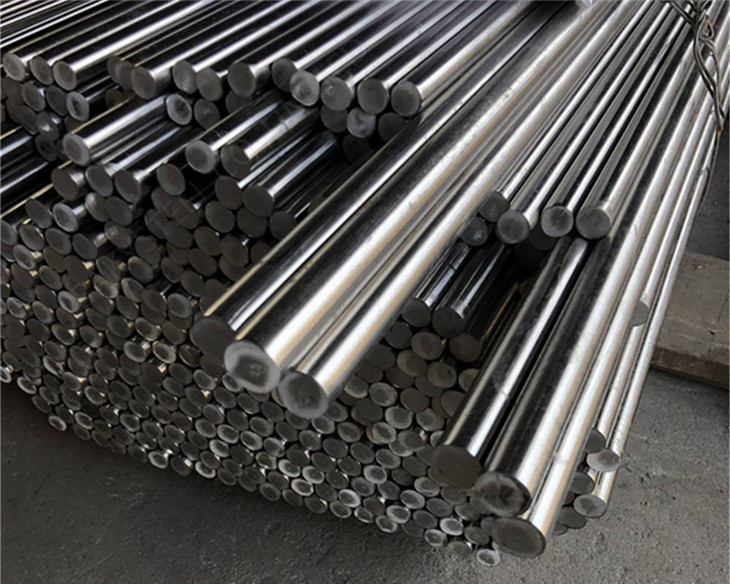
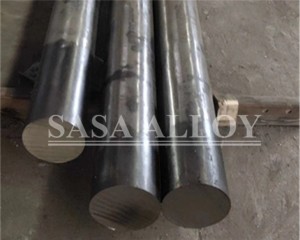
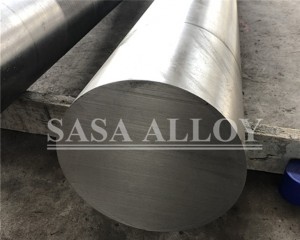
4J32 Super Invar Alloy Bar is a Fe-Ni-Co controlled expansion alloy bar designed for ultra-low thermal expansion and excellent dimensional stability around room temperature. It is also known as Super Invar 32-5 Bar, UNS K93500 Bar, FeNi32Co4Cu Bar, low expansion alloy bar and precision controlled expansion alloy rod.
SASA ALLOY supplies 4J32 bars, 4J32 rods, Super Invar round bars, plates, strips and precision machined alloy materials in customized diameter, length, tolerance and surface finish. MTC (Mill Test Certificate), EN 10204 3.1 certificate, PMI inspection, dimensional inspection, expansion coefficient testing and third-party inspection can be provided according to project requirements.
Product Parameters
| Item | Details |
|---|---|
| Product Name | 4J32 Super Invar Alloy Bar / UNS K93500 Controlled Expansion Alloy Rod |
| Grade | 4J32 / Super Invar 32-5 / UNS K93500 / FeNi32Co4Cu |
| Material Type | Iron-Nickel-Cobalt controlled expansion alloy / low expansion precision alloy |
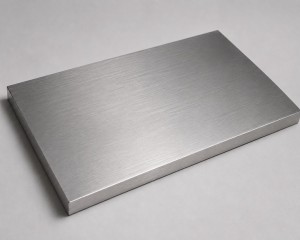
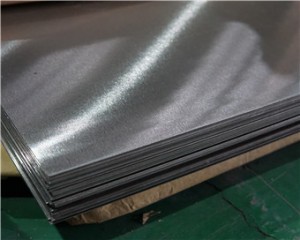
| Shape & Sizes | Round bar, rod, forged bar, plate, sheet, strip; customized size available |
| Common Diameter | 6 mm – 200 mm for bar and rod; larger forged sizes available upon request |
| Length | 1000 mm – 6000 mm, cut-to-length available according to customer drawing |
| Surface Finish | Black, bright, peeled, turned, polished, ground |
| Standards | ASTM F1684, GB/T 15002, GB/T 14985, ASTM F30 or customer technical specification |
| Tolerance | Standard tolerance, h9, h11, k12 or customized tolerance according to drawing |
| Certificate | MTC, EN 10204 3.1 certificate, PMI report, dimensional inspection report, expansion coefficient report and third-party inspection available |
Chemical Composition
The following chemical composition is a typical reference range for 4J32 / Super Invar 32-5 / UNS K93500 controlled expansion alloy. Final chemical values should be confirmed according to the actual Mill Test Certificate.
| Element | Content (%) | Function in Alloy |
|---|---|---|
| Iron (Fe) | Balance | Base element for Fe-Ni-Co controlled expansion alloy structure |
| Nickel (Ni) | 31.5 – 33.5 | Controls low thermal expansion and austenitic structure stability |
| Cobalt (Co) | 3.2 – 4.2 | Further reduces expansion coefficient around room temperature |
| Copper (Cu) | 0.40 – 0.80 | Helps improve alloy structure stability |
| Manganese (Mn) | 0.20 – 0.60 | Controlled residual element and processing support |
| Silicon (Si) | ≤ 0.30 | Controlled residual element for processing stability |
| Carbon (C) | ≤ 0.05 | Controlled impurity for dimensional stability and workability |
| Phosphorus (P) | ≤ 0.020 | Controlled impurity for clean structure and reliability |
| Sulfur (S) | ≤ 0.020 | Controlled impurity for processing quality |
Mechanical Properties
4J32 Super Invar Alloy is mainly selected for low thermal expansion and dimensional stability. Mechanical properties and expansion performance may vary depending on bar diameter, heat treatment condition, cold work, machining allowance and final stress relief.
| Property | Reference Value | Engineering Meaning |
|---|---|---|
| Material Type | Controlled expansion alloy | Designed for precision low expansion and dimensional stability applications |
| Coefficient of Thermal Expansion | Very low near room temperature | Suitable for high-accuracy dimensional components and precision instruments |
| Typical CTE, 30–100°C | Approx. 0.84 μm/m·°C | Reference value for Super Invar 32-5 / UNS K93500 annealed condition |
| Density | Approx. 8.1 g/cm³ | Useful for weight calculation and precision component design |
| Tensile Strength | Condition dependent | Depends on heat treatment, cold work and product form |
| Hardness | Condition dependent | Can be adjusted by processing and heat treatment condition |
| Dimensional Stability | Excellent around room temperature | Important for optical, laser, measuring and aerospace components |
| Low-Temperature Stability | Lower than 4J36 in some conditions | Confirm service temperature and stability requirement before selection |
Common Size Table
| Diameter / Thickness | Typical Length / Size | Surface Finish | Common Use |
|---|---|---|---|
| Bar Ø6 – 12 mm | 1000 – 3000 mm | Bright, polished, ground | Small precision pins, measuring parts, instrument rods |
| Bar Ø14 – 30 mm | 2000 – 6000 mm | Peeled, turned, bright | Laser components, optical supports, precision shafts |
| Bar Ø32 – 80 mm | 3000 – 6000 mm | Black, peeled, rough turned | Precision machinery, aerospace low expansion parts, standards of length |
| Bar Ø85 – 200 mm | Cut-to-length | Forged, rough turned, machined | Large dimensional stable components and custom machined parts |
| Plate / Strip | Customized | Hot rolled, cold rolled, polished | Optical platforms, precision plates, scientific instrument parts |
Different Specifications Comparison
| Product Form | Main Feature | Recommended Application | Selection Advice |
|---|---|---|---|
| 4J32 Round Bar | Good dimensional stability and machining allowance | Precision rods, shafts, instrument parts, optical supports | Recommended for standard low expansion machined parts |
| 4J32 Forged Bar | Suitable for larger sizes and heavy precision components | Large optical frames, aerospace assemblies, measuring bases | Recommended for large size and custom low expansion components |
| 4J32 Bright Bar | Better surface finish and dimensional control | Laser parts, scientific instruments, high-accuracy measuring components | Recommended when tight tolerance and surface quality are important |
| 4J32 Ground Bar | Smooth surface and improved size accuracy | Precision shafts, gauge parts, CNC low expansion parts | Recommended for final machining allowance control |
| 4J32 Plate / Sheet | Suitable for flat dimensionally stable parts | Optical platforms, precision base plates, laser equipment parts | Recommended when flat geometry and low expansion are required |
| 4J32 vs 4J36 | 4J32 has lower expansion near room temperature | Ultra-precision dimensional stability applications | Choose 4J36 when wider stability or general Invar application is required |
Equivalent Standards and International Names
| Standard / Name | Designation | Remarks |
|---|---|---|
| Chinese Grade | 4J32 | Controlled expansion alloy / Super Invar alloy |
| UNS Number | UNS K93500 | Common international designation for Super Invar 32-5 |
| Common Trade Name | Super Invar 32-5 / Super Invar | Widely used low expansion alloy name |
| Chemical Type | FeNi32Co4Cu | Iron-nickel-cobalt-copper controlled expansion alloy system |
| International Standard | ASTM F1684 | Common reference for iron-nickel and iron-nickel-cobalt expansion alloys |
| Related Grade | 4J36 / Invar 36 / UNS K93600 | General low expansion alloy with wider industrial use |
| Product Family | 4J Series Controlled Expansion Alloy | Includes 4J29, 4J32, 4J33, 4J36 and other precision expansion alloys |
| Common Product Forms | Bar, rod, plate, sheet, strip, wire, forged part | Different forms for optical, aerospace, scientific and precision applications |
Production Process Flow
| Step | Process | Quality Control Focus |
|---|---|---|
| 1 | Raw Material Selection | Check Fe, Ni, Co, Cu content, raw material source and heat number traceability |
| 2 | Melting / Refining | Control nickel, cobalt, copper and impurity elements |
| 3 | Ingot / Billet Preparation | Ensure suitable billet quality for rolling, forging or drawing |
| 4 | Hot Rolling / Forging | Control bar size, internal structure and deformation process |
| 5 | Heat Treatment / Annealing | Optimize expansion coefficient and dimensional stability |
| 6 | Stress Relief | Reduce machining stress and improve dimensional stability |
| 7 | Peeling / Turning / Grinding | Improve surface quality and dimensional tolerance |
| 8 | Expansion Coefficient Testing | Check low expansion performance if required by customer specification |
| 9 | Inspection and Testing | PMI, chemical analysis, dimensional inspection, surface inspection and mechanical test if required |
| 10 | Packaging and Shipment | Protective wrapping, wooden case, label, heat number and shipping mark |
Product Inspection
| Inspection Item | Inspection Method | Purpose |
|---|---|---|
| Chemical Composition | Spectrometer analysis / laboratory test | Confirm 4J32 Fe-Ni-Co controlled expansion alloy grade and element control |
| PMI Test | Positive Material Identification | Prevent material mix-up and wrong grade shipment |
| Expansion Coefficient Test | Dilatometer test if required | Verify low thermal expansion performance for precision applications |
| Mechanical Test | Tensile strength, hardness or other required test | Verify mechanical performance according to order requirement |
| Dimension Inspection | Caliper, micrometer, straightness inspection | Confirm diameter, length, tolerance and straightness |
| Surface Inspection | Visual inspection and surface quality check | Check cracks, scratches, oxidation, peeling defects and surface finish |
| Ultrasonic Testing | UT inspection if required | Check internal defects for critical bars and forged sections |
| Certificate | MTC / EN 10204 3.1 / inspection report | Ensure material traceability and project documentation |
Product Packaging
| Packaging Item | Details | Benefit |
|---|---|---|
| Surface Protection | Plastic film, anti-rust paper, oil protection or protective wrapping | Protects bar surface from scratches and oxidation during transportation |
| Bundle Packing | Bars bundled with steel strips or protective belts | Prevents movement, bending and collision |
| Wooden Case / Wooden Pallet | Export-standard wooden case or pallet | Suitable for long-distance sea, air and truck shipment |
| Labeling | Grade, size, heat number, quantity, net weight and customer mark | Improves material traceability after delivery |
| Document Support | Packing list, invoice, MTC, EN 10204 3.1 certificate and inspection report if required | Supports customs clearance and project acceptance |
Applications & Machinability
Applications
| Industry | Typical Parts | Why 4J32 Bar Is Used |
|---|---|---|
| Medical Instruments | Precision instrument supports, stable dimensional components, measuring parts | Ultra-low expansion helps maintain accuracy in precision instrument assemblies |
| Aerospace | Low expansion structural parts, optical supports, satellite instrument components | Excellent dimensional stability supports aerospace precision and thermal stability requirements |
| Marine Hardware | Precision sensor supports, measuring fixtures, stable instrument parts | Used where dimensional stability is important; surface protection should be considered |
| Chemical Processing | Instrument frames, measuring fixtures, precision control components | Suitable for precision dimensional control parts; corrosion environment should be evaluated before use |
| Optics, Laser & Scientific Instruments | Laser bases, optical benches, mirror supports, gauge parts and standards of length | Very low thermal expansion near room temperature helps maintain high measurement accuracy |
Machinability, Welding and Heat Treatment
| Processing Property | Performance | Recommendation |
|---|---|---|
| Machinability | Machinable but not a free-cutting alloy like 303 stainless steel | Use rigid machines, sharp tools, suitable cutting speed and proper coolant |
| Forming Performance | Can be processed into bars, plates, strips and machined parts under proper condition | Plan forming and machining allowance according to final dimensional stability requirement |
| Welding Performance | Welding is possible with proper procedure, but dimensional stability and thermal expansion behavior should be considered | Confirm welding procedure, stress relief and final expansion property requirement before fabrication |
| Heat Treatment | Annealing and stress relief are important for low expansion and dimensional stability | Final heat treatment should follow expansion coefficient target and project specification |
| Cold Working | Cold working can affect structure stability and expansion behavior | Stress relief and expansion coefficient verification may be required after machining or forming |
| Surface Protection | Surface oxidation may occur during storage and transportation | Use oil protection, dry storage and export protective packaging |
Why Choose SASA ALLOY?
| Advantage | Description |
|---|---|
| Professional Precision Alloy Supply | SASA ALLOY supplies precision alloys including 4J32, 4J29 Kovar, 4J33, 4J36 Invar 36, 1J soft magnetic alloys, 2J permanent magnetic alloys, 3J elastic alloys and 6J resistance alloys for industrial and high-performance applications. |
| Customized Size Capability | Diameter, length, surface finish, tolerance, cutting service and machining allowance can be customized according to customer drawings or project requirements. |
| Quality Control and Traceability | Material traceability, heat number control, PMI testing, dimensional inspection, surface inspection, mechanical testing and expansion coefficient testing can be arranged. |
| Certificate Support | We can provide MTC (Mill Test Certificate / 质保书), EN 10204 3.1 certificate, PMI report, inspection report and other quality documents according to order requirements. |
| Export Packaging Experience | Export wooden cases, wooden pallets, protective wrapping, oil protection and clear labels help ensure safe delivery for international shipments. |
| Technical Service Support | Our team can support grade selection, equivalent standard checking, expansion coefficient requirement confirmation and technical document preparation before shipment. |
FAQ
Q1: What is 4J32?
4J32 is a Fe-Ni-Co controlled expansion alloy, also known as Super Invar 32-5, UNS K93500 and FeNi32Co4Cu. It is selected for ultra-low thermal expansion and excellent dimensional stability around room temperature.
Q2: What is the main feature of 4J32 Super Invar Alloy?
The main feature of 4J32 is its very low thermal expansion coefficient near room temperature. It is commonly used for high-accuracy instruments, optical parts, laser equipment, measuring devices and precision dimensional components.
Q3: Is 4J32 the same as Super Invar?
Yes. 4J32 is commonly known as Super Invar or Super Invar 32-5. It is often referenced as UNS K93500 in international procurement.
Q4: What is the difference between 4J32 and 4J36?
4J32 generally has lower thermal expansion near room temperature than 4J36 Invar 36. However, 4J36 may have better general stability across broader applications. The final choice depends on service temperature, expansion coefficient requirement and dimensional stability target.
Q5: Can SASA ALLOY provide 4J32 with MTC?
Yes. SASA ALLOY can provide MTC (Mill Test Certificate / 质保书), EN 10204 3.1 certificate, PMI report, dimensional inspection report, expansion coefficient report and third-party inspection documents according to customer requirements.
Q6: What sizes of 4J32 Bar are available?
Common diameters include 6 mm to 200 mm. Length, tolerance and surface finish can be customized. Plates, strips and cut-to-length parts can also be supplied according to project requirements.
Q7: Is 4J32 easy to machine?
4J32 is machinable, but it is not a free-cutting alloy like 303 stainless steel. Rigid equipment, sharp tools, suitable cutting speed and proper coolant are recommended. Stress relief may be required after machining for dimensional stability.
Q8: Can 4J32 be welded?
4J32 can be welded with proper procedures, but welding heat input may affect dimensional stability and expansion behavior. Stress relief and expansion property verification may be required after welding or fabrication.
Q9: What applications use 4J32?
4J32 is used in precision instruments, optical systems, laser equipment, aerospace components, satellite instrument parts, standards of length, scientific instruments, measuring devices and high-accuracy mechanical assemblies.
Q10: How can I get a quotation for 4J32?
Please send your required grade, product form, diameter, length, quantity, surface finish, tolerance, heat treatment condition, expansion coefficient requirement and certificate requirements to SASA ALLOY. Our team will check availability, production route, delivery time and price for your project.