
The chemical composition of Inconel 601 sheet typically consists of the following elements: Nickel (Ni): Approximately 58-63% Chromium (Cr): Approximately 21-25% Iron (Fe): Approximately 13-17% Aluminum (Al): Approximately 1-1.7% Manganese (Mn): Approximately 1% Silicon (Si): Approximately 0.5% Carbon (C): Approximately 0.1% Sulfur... Read more »

Inconel 600 Sheets offer several advantages over other materials in various applications. Some of the key advantages include: 1. Corrosion resistance: Inconel 600 Sheets exhibit exceptional corrosion resistance in a wide range of environments, including high-temperature oxidation, acids, alkaline solutions, chlorides, and... Read more »

Inconel 600 Sheets exhibit excellent corrosion resistance in a wide range of environments. They are known for their resistance to both oxidizing and reducing conditions, making them suitable for applications in various corrosive environments. Specifically, Inconel 600 Sheets are resistant to corrosion... Read more »

Inconel 601 bar, a nickel-chromium alloy, finds applications in various fields due to its exceptional properties. Here are some of the main fields of application for Inconel 600 bar: 1. Aerospace Industry: Inconel 601 bar is extensively used in aerospace applications that... Read more »
Quick answer: The defining characteristics of an Inconel 600 flange are not only corrosion resistance and temperature capability. A purchase-ready flange requires UNS N06600, a material standard such as ASTM B564 where applicable, the flange dimensional standard, NPS, pressure class, type, facing,... Read more »
Quick answer: Inconel 600 bar is considered for machined components that need a nickel-chromium alloy with useful oxidation resistance, fabricability and resistance to selected corrosive media. Typical fields include heat-treatment equipment, chemical/process equipment, furnace hardware and nuclear-related components. It is not a... Read more »
Quick answer: Inconel 600 sheet mechanical properties depend on thickness, delivery condition, cold work, heat treatment, specimen orientation and test temperature. Manufacturer literature gives useful typical annealed room-temperature values—about 655 MPa tensile strength, 310 MPa 0.2% yield strength and 40% elongation—but purchase... Read more »
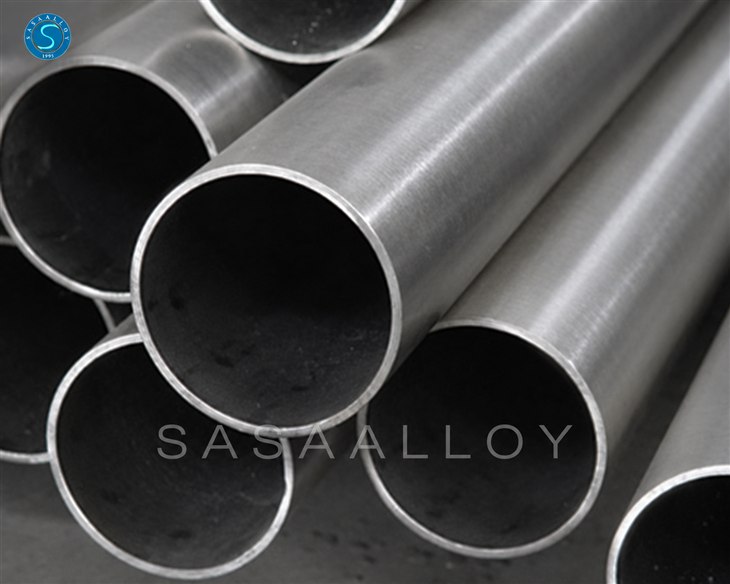
Inconel 600 PIPE and TUBING Are Widly Use in Various Applications Due to their Excellent Properties, Including High Tempeature Resistance, Corrosion Resistance, An d good mechanical stream. Here are some application areas where inconel 600 pipe and tubing are suitable: 1. Chemical... Read more »
Quick answer: Inconel 600 fittings are used in selected chemical-processing, heat-treatment, furnace, petrochemical and nuclear-related systems where UNS N06600 fits the service environment and design code. They are not universally resistant to every acid, chloride, seawater or sour condition. The fitting type,... Read more »
Quick answer: Inconel 600 flanges may be considered for selected oil, gas, petrochemical and heat-processing systems when UNS N06600 is compatible with the actual fluid and temperature. The alloy name alone does not establish suitability, pressure class or sour-service compliance. A complete... Read more »

Quick answer: UNS N08811 identifies Incoloy 800HT, but “seamless shell taper fitting” is not a complete order description. A reliable RFQ should state the component drawing, material/product standard, fitting or forging route, dimensions and tolerances, construction, solution-heat-treated condition, surface, examination, pressure-code requirements... Read more »
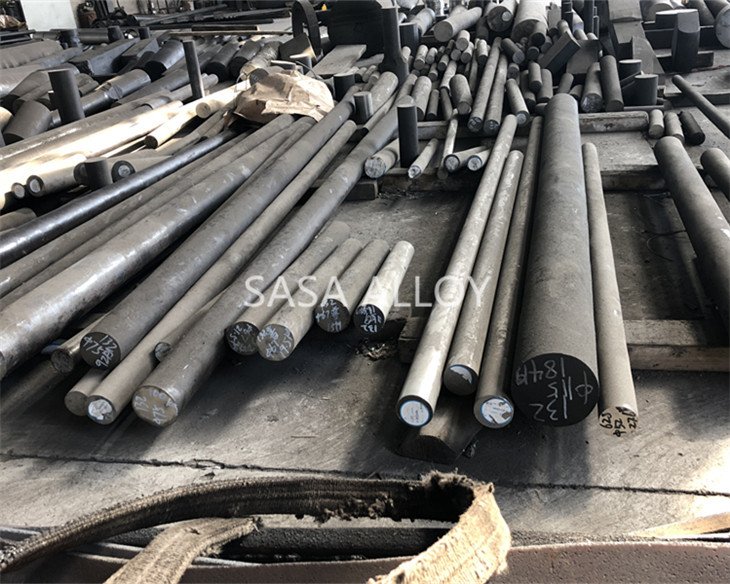
Quick answer: A typical GH4169 / Alloy 718 bar route includes controlled melting, ingot or billet conditioning, hot working, solution treatment, optional precipitation hardening, straightening, machining or grinding, and inspection. The exact route is not universal. It must follow the ordered product... Read more »