Quick answer: A typical GH4169 / Alloy 718 bar route includes controlled melting, ingot or billet conditioning, hot working, solution treatment, optional precipitation hardening, straightening, machining or grinding, and inspection. The exact route is not universal. It must follow the ordered product specification, section size, delivery condition and downstream fabrication plan.
GH4169 is a Chinese designation commonly associated with the Alloy 718 / UNS N07718 family. Buyers should still state the governing document because a grade name alone does not define melting route, bar dimensions, heat treatment, mechanical properties, surface condition or test reports. The matching commercial product is Inconel 718 bar.
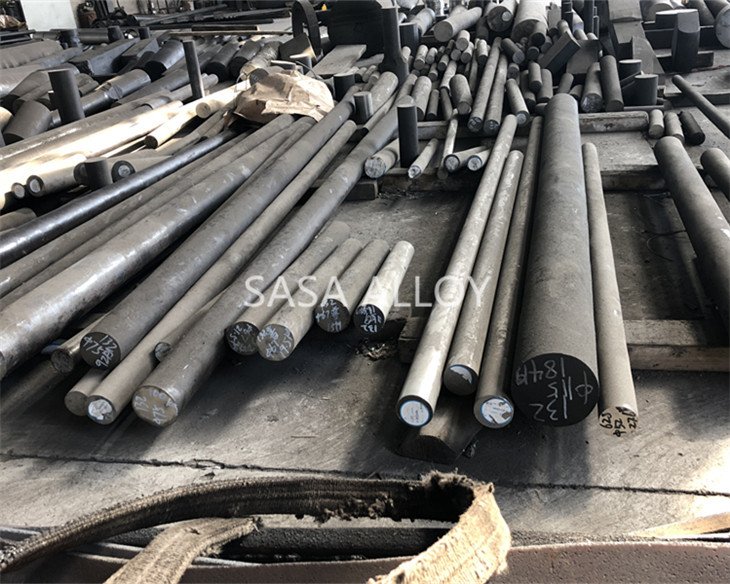
Typical Manufacturing Route
| Stage | Purpose | Purchase-order control |
|---|---|---|
| Melting and refining | Establish chemistry and cleanliness | State any specification-required melting or remelting route; do not assume it |
| Homogenization and billet preparation | Reduce segregation effects and prepare workable stock | Confirm whether records or macrostructure acceptance are required |
| Hot forging or rolling | Develop bar shape and break down the cast structure | Define product form, size range, reduction and acceptance through the governing specification |
| Solution treatment | Place strengthening constituents in solution and set the delivery microstructure | State the exact condition and approved procedure |
| Precipitation hardening | Develop the final strengthened condition where required | Define whether aging occurs before delivery or after component fabrication |
| Finishing | Straighten, peel, turn, grind or cut the bar | Specify dimensional tolerance, surface class and removal of surface defects |
| Inspection | Verify identity, dimensions and specified properties | List tests, sampling, acceptance values and certificate format |
Why Heat Treatment Must Be Linked to the Fabrication Plan
Alloy 718 is normally easier to machine, form and weld before final precipitation hardening. If an aged bar is ordered when the fabricator expects annealed stock, machining cost and distortion risk can change. Conversely, an annealed bar should not be accepted as proof of final aged-component properties. The enquiry should name the supply condition and clearly assign final heat-treatment responsibility.
Inspection Records Buyers Commonly Need
- Heat or lot traceability tied to the material certificate.
- Chemical analysis against the ordered specification.
- Heat-treatment condition and, where required, thermal-process records.
- Tensile, yield, elongation and hardness results in the specified condition.
- Dimensions, straightness and surface-condition inspection.
- Ultrasonic, penetrant or other NDE only when the governing document or purchase order defines the method and acceptance criteria.
- Grain size, macrostructure or additional tests when explicitly required by the application specification.
GH4169 / Inconel 718 Bar RFQ
| Field | Required detail | Risk if omitted |
|---|---|---|
| Material identity | GH4169 and/or UNS N07718 / W.Nr. 2.4668 | Different naming systems may be interpreted inconsistently |
| Specification | ASTM, AMS, GB/GJB or project document and revision | Grade name is mistaken for a complete acceptance standard |
| Dimensions | Diameter or section, length, tolerances and quantity | Quotation uses commercial rather than drawing tolerances |
| Condition | Annealed, solution treated, aged or other defined state | Machining and property expectations do not match |
| Surface | Black, peeled, turned, ground or drawing-defined finish | Machining allowance and defect-removal scope are unclear |
| Testing | Tests, sampling, direction, acceptance and documents | A generic certificate is expected to cover unspecified checks |
Frequently Asked Questions
Is vacuum remelting always required for GH4169 bar? No. A melting or remelting route should be required only when it appears in the governing specification, drawing or purchase order. State it explicitly rather than assuming it from the grade name.
Should Alloy 718 bar be purchased aged? That depends on the fabrication plan. Annealed or solution-treated stock is often selected before machining, forming or welding; final aging responsibility must be assigned by the approved process.
Conclusion
The GH4169 bar production process is a controlled sequence, not a single fixed recipe. Start with the governing specification and end-use fabrication plan, then define melting requirements, hot-worked form, heat-treatment responsibility, dimensions, surface and inspection. This keeps the quotation and the final acceptance tied to the same material condition.
Send a Complete Enquiry
Provide the designation, governing document, bar dimensions, delivery condition, surface, quantity and inspection package. SASA Alloy will review the requested scope before quotation.
Post time: Nov-20-2018