Inconel 706 and Inconel 718 are precipitation-hardening nickel alloys used where strength must be retained at elevated temperature. They may appear in similar component families, but their chemistry, heat-treatment response, segregation behavior and manufacturing priorities are different. Material selection should therefore begin with component size, operating temperature, loading mode and required properties—not alloy popularity.
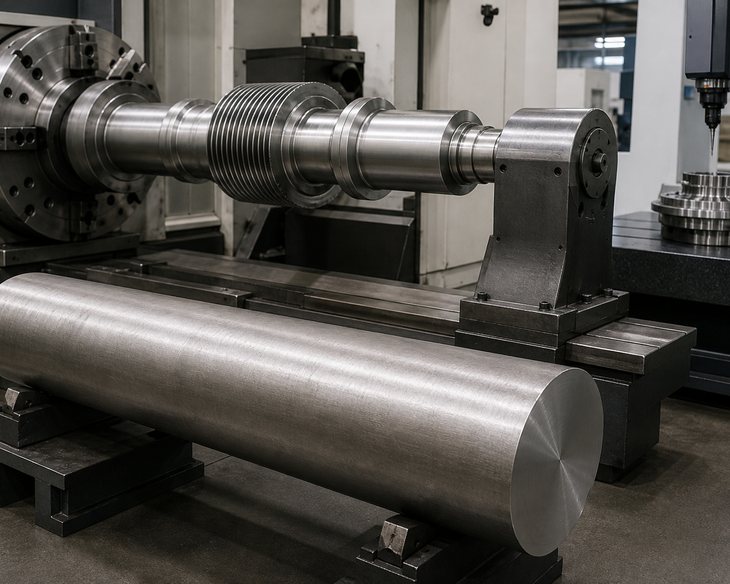
Inconel 706 and 718 at a Glance
| Selection Factor | Inconel 706 | Inconel 718 |
|---|---|---|
| UNS designation | N09706 | N07718 |
| General design direction | Large forgings and rotating components | Broad high-strength component range |
| Manufacturing priority | Improved large-section processing and segregation control | Established strength, fatigue and fabrication capability |
| Order review | Section size and heat-treatment route are critical | Condition, properties and product form must be defined |
The comparison is qualitative. Certified mechanical properties must be taken from the applicable material specification and the agreed heat-treatment condition.
Why Inconel 706 Is Considered for Large Components
Inconel 706 contains nickel, chromium, iron and precipitation-hardening additions. Compared with 718, its alloy design reduces some elements associated with segregation during melting and large-section processing. This can make 706 attractive for large turbine wheels, shafts, discs, rings and similar components where forgeability, heat-treatment uniformity and inspection of a thick section are major concerns.
This does not mean that 706 is automatically preferable for every large part. The forging ratio, thermal history, section thickness, sampling position and required property distribution must be considered. For bar procurement, see the ASTM B637 Inconel 706 UNS N09706 round bar page.
Why Inconel 718 Remains Widely Specified
Inconel 718 combines high strength with useful corrosion and oxidation resistance over a broad industrial range. It has an extensive specification history for bars, forgings, sheets, fasteners and machined components. Its relatively controlled precipitation response can support complex fabrication routes when solution and aging treatments are correctly specified.
Its broad use does not remove the need for detailed purchasing requirements. Buyers should identify the product form, solution or aged condition, required mechanical properties, testing location and any supplementary inspection. Relevant products include Inconel 718 bar and Inconel 718 sheet and plate.
Heat Treatment Is Part of the Material Specification
Both alloys obtain important mechanical properties through controlled heat treatment. A purchase order that lists only “Inconel 706” or “Inconel 718” is incomplete for strength-critical service. It should define the governing specification, delivery condition and required property level.
For large sections, heating rate, soak time, cooling rate and furnace uniformity can affect precipitation and property distribution. Heat treatment should be agreed with reference to the component design and applicable standard rather than copied from an unrelated product form.
Product Form, Section Size and Testing
ASTM B637 covers precipitation-hardening and cold-worked nickel alloy bars, forgings and forging stock for moderate- or high-temperature service. The standard is a useful purchase reference, but the buyer must still identify alloy, condition, dimensions, tests and supplementary requirements.
- Bar: confirm diameter, tolerance, straightness, finish and test location.
- Forging stock: confirm forging route, reduction and subsequent heat treatment.
- Finished forging: confirm drawing, sampling plan, mechanical testing and NDT.
- Large section: review property uniformity and acceptance locations across the section.
Application-Based Selection Logic
Large Turbine Rotors and Discs
Inconel 706 may be evaluated when large-section forgeability, segregation control and uniform heat treatment are central design concerns. Operating temperature and required creep/fatigue performance still govern acceptance.
Aerospace and High-Strength Hardware
Inconel 718 is frequently specified for fasteners, shafts, rings, discs and structural components where a mature supply base and established property requirements are important.
Oil, Gas and Chemical Equipment
718 is widely considered for high-strength corrosion-resistant components. However, sour-service restrictions, environmental cracking and hardness requirements must be checked against the service specification.
RFQ Checklist
- Alloy and UNS designation
- Product form and dimensions
- Applicable standard and revision
- Solution-treated or aged condition
- Required tensile, hardness, creep or fatigue criteria
- Sampling location and test orientation
- NDT, PMI and third-party inspection requirements
- Surface, machining allowance, marking and packaging
Frequently Asked Questions
Is Inconel 706 stronger than 718?
Not as a universal rule. Strength depends on temperature, product form, section size and heat-treatment condition. Compare certified requirements for the exact specification and condition.
Can 706 replace 718 directly?
No automatic substitution should be made. Chemistry, heat treatment, design allowables and qualification requirements differ. Engineering approval is required.
What should be specified when buying Inconel 706 bar?
State UNS N09706, the governing standard, diameter, tolerance, condition, mechanical properties, test scope, marking and documentation.
Send alloy, diameter, condition, quantity, standard and test requirements for review through the SASA ALLOY Inconel 706 bar page.
Post time: Aug-11-2026