Inconel 600 Round Bar Specifications: ASTM B166 vs AMS 5665
Inconel 600 round bar is identified as UNS N06600 or W.Nr. 2.4816. ASTM B166 is the common ASTM product specification for Alloy 600 rod, bar and wire, while AMS 5665 controls Alloy 600 bars, forgings, rings and related stock for aerospace procurement. They describe the same alloy family but are not automatically interchangeable because product form, size range, condition, testing and purchaser requirements can differ.
A complete order should state the required standard and revision, product form, diameter, length, manufacturing condition, tolerance, surface finish, quantity and inspection documents. Writing only “Inconel 600 bar” leaves important acceptance requirements undefined.
Quick Answer
Use ASTM B166 or ASME SB-166 when the order requires Alloy 600 rod, bar or wire under the ASTM/ASME system. Use AMS 5665 when an aerospace drawing or approved material list specifically requires that AMS specification for bars, forgings, rings or related stock.
Do not substitute ASTM B166 material for AMS 5665 material, or the reverse, based only on the UNS N06600 designation. Confirm the specified revision, form, dimensions, condition, tests and required approval before accepting an alternative.
View Inconel 600 Round BarSend Your Bar RFQ
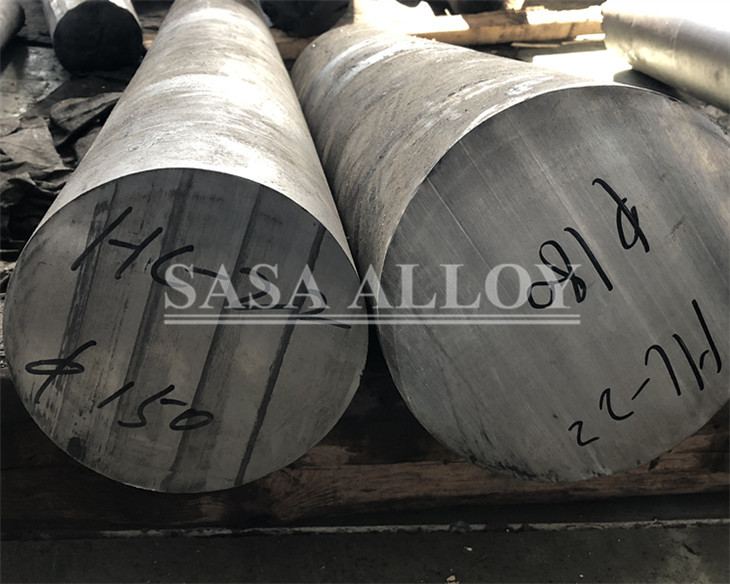
What Is Inconel 600 Round Bar?
Inconel 600 is a nickel-chromium-iron alloy. Its common material identifiers are UNS N06600, W.Nr. 2.4816 and the generic designation Alloy 600. It is a solid-solution-strengthened alloy rather than a precipitation-hardening grade such as Alloy 718.
Round bar is used as machining stock for furnace hardware, chemical-processing components, heat-treatment equipment, electrical and thermal-processing parts, and other components where the design calls for Alloy 600. Suitability must still be checked against the actual temperature, medium, stress, fabrication route and governing code. The alloy name alone does not establish a component's allowable service conditions.
ASTM B166 vs AMS 5665
The two standards can both be associated with Alloy 600 bar, but they belong to different specification systems and have different scopes. The controlling drawing, purchase order, construction code or approved material list determines which document applies.
| Item | ASTM B166 | AMS 5665 |
|---|---|---|
| Specification system | ASTM material specification; ASME SB-166 may be specified in an ASME context. | SAE Aerospace Material Specification. |
| Product scope | Hot-finished and cold-worked rounds, squares, hexagons and rectangles, plus cold-worked wire, for listed alloys including UNS N06600. | Alloy 600 bars, forgings, flash-welded rings and stock for specified downstream manufacture, subject to the applicable revision. |
| Typical purchasing context | General industrial procurement under ASTM or ASME documentation. | Aerospace drawings, controlled material lists and approved supplier requirements. |
| Can one replace the other? | Not automatically. Obtain engineering and purchasing approval after comparing the exact revision, form, size, condition, tests and documentation. | |
UNS N06600 Chemical Composition
The composition below summarizes the commonly published Alloy 600 limits. The certificate and the ordered specification revision remain the acceptance documents for a particular heat.
| Element | Ni | Cr | Fe | C | Mn | Si | Cu | S |
|---|---|---|---|---|---|---|---|---|
| Weight % | 72.0 min | 14.0–17.0 | 6.0–10.0 | 0.15 max | 1.00 max | 0.50 max | 0.50 max | 0.015 max |
Composition limits identify the alloy but do not prove that a bar meets every dimensional, mechanical, heat-treatment, inspection or documentation requirement of the ordered standard.
Bar Form, Manufacturing Condition and Heat Treatment
ASTM B166 distinguishes product forms and manufacturing conditions such as hot-finished and cold-worked material. AMS 5665 also controls the material form and condition within its scope. These details affect dimensions, surface, mechanical properties and subsequent machining.
- Identify the exact form. State round bar rather than using the broader terms rod, bar, forging stock or ring stock interchangeably.
- State the required condition. Specify hot-finished, cold-worked, annealed or another drawing-defined condition instead of asking the supplier to infer it.
- Avoid precipitation-hardening terminology. Alloy 600 is solid-solution strengthened. Do not copy an aging schedule written for Alloy 718 or Monel K-500.
- Confirm downstream processing. Tell the supplier whether the bar will be machined, forged, welded or exposed to a controlled high-temperature process.
Diameter, Length, Tolerance and Surface
A catalogue diameter range is not a complete specification and does not prove current stock. State the nominal diameter, permitted diameter tolerance, length and length tolerance required by the drawing. Include straightness, out-of-roundness or machining allowance when these characteristics affect the finished part.
Surface terms such as black, peeled, ground, bright or polished describe different processing and inspection expectations. A ground bar may support tighter dimensional control or machining preparation, but the purchase order must define the required finish and tolerance. Surface appearance alone cannot establish alloy grade or compliance.
Mechanical Properties and Test Documents
Mechanical-property requirements depend on the selected standard, revision, product form, size and condition. Do not use a single typical tensile value from a data sheet as the acceptance criterion for every Inconel 600 bar.
- Material certificate. Specify the certificate type and the chemistry, mechanical-test and heat-treatment records required.
- Traceability. State whether heat-number or lot traceability must continue through cutting, machining and packaging.
- Dimensional inspection. Define the measurements, sampling and report format required by the project.
- Additional inspection. Identify ultrasonic, penetrant, third-party witness or customer-specific testing only when the governing documents require it.
What to Include in an Inconel 600 Round Bar RFQ
- Material identity. Inconel 600 / Alloy 600 / UNS N06600, with W.Nr. 2.4816 when required.
- Governing standard. ASTM B166, ASME SB-166 or AMS 5665, including the required revision.
- Form and condition. Round bar, required manufacturing condition and any downstream processing restrictions.
- Dimensions. Diameter, diameter tolerance, length, length tolerance, straightness and machining allowance where applicable.
- Surface and quantity. Required surface finish, individual lengths or weights, total quantity and packing needs.
- Quality requirements. Certificate, traceability, tests, inspection records, marking and third-party involvement.
Common Specification Mistakes
- Ordering by grade alone. UNS N06600 identifies the alloy but not the complete product and acceptance requirements.
- Calling ASTM and AMS equivalent. Similar alloy chemistry does not make the specifications contractually interchangeable.
- Omitting the standard revision. Projects may approve one revision and reject another even when the material designation is unchanged.
- Using typical data as guaranteed data. Acceptance comes from the ordered specification and the actual heat or lot records.
- Assuming advertised sizes are live stock. Confirm the exact size, condition, quantity and delivery basis in the quotation.
Frequently Asked Questions
What is the ASTM standard for Inconel 600 round bar?
ASTM B166 covers UNS N06600 in specified rod, bar and wire forms. ASME SB-166 may be required when the project uses the corresponding ASME material specification.
What is AMS 5665?
AMS 5665 is an SAE aerospace material specification for a corrosion- and heat-resistant nickel alloy in bar, forging, ring and related stock forms. The purchase order must state the required revision and product details.
Is ASTM B166 equivalent to AMS 5665?
No automatic equivalence should be assumed. Both may identify Alloy 600 material, but their scope, dimensional rules, condition, tests and documentation must be compared against the governing design requirements.
Is UNS N06600 the same as W.Nr. 2.4816?
They are commonly used identifiers for Alloy 600 in different designation systems. They do not replace the need to specify the applicable product standard and condition.
Can Alloy 600 round bar be age hardened?
Alloy 600 is solid-solution strengthened and is not normally strengthened by the precipitation-aging schedules used for Alloy 718 or Monel K-500. Required condition and processing should follow the governing material and fabrication documents.
Conclusion
A reliable Inconel 600 round bar order must connect UNS N06600 to the correct product specification. ASTM B166 is a common industrial bar specification, while AMS 5665 serves a controlled aerospace procurement context. Neither should be substituted for the other without document review and approval.
Before requesting a quotation, confirm the standard revision, round-bar condition, diameter, tolerance, length, surface, quantity, certificate and inspection scope. These details are more useful than a broad grade name or catalogue size range.
Post time: Oct-20-2026