Quick answer: Inconel 718 is a precipitation-hardenable nickel alloy, not a conventional hot-work die steel. It may be considered for a hot extrusion tool, insert or supporting component only after the designer verifies temperature, contact stress, wear, thermal cycling and lubrication. An RFQ must define the actual component, governing specification, delivery condition, final heat treatment, target hardness, dimensions and inspection—not only “high-hardness Inconel 718.”
The original phrase “high-hardness hot extrusion die steel Inconel 718” combines a service description with the wrong material family. Inconel 718 bar is a nickel-chromium alloy strengthened by precipitation heat treatment. Whether it is suitable for a tooling component depends on the complete design and the delivered metallurgical condition.
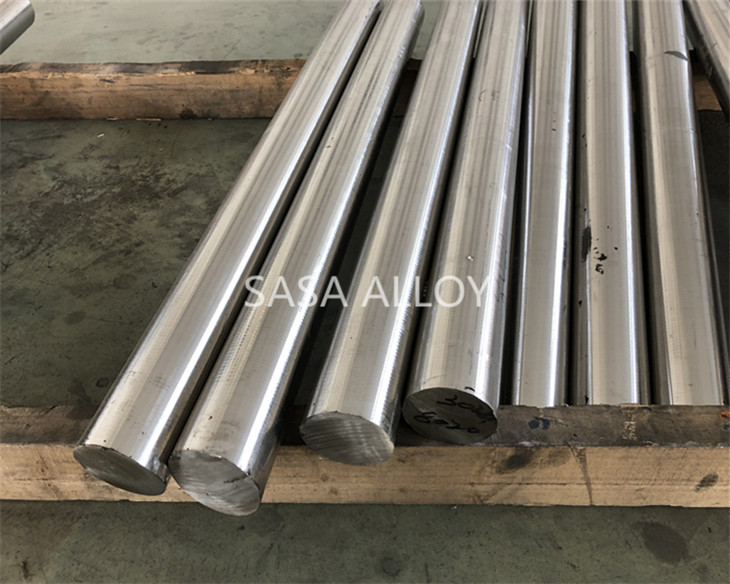
Why Inconel 718 Is Not Simply “Die Steel”
| Term | What it means | Buyer implication |
|---|---|---|
| Inconel 718 / UNS N07718 | A nickel-alloy grade identity | Does not define shape, heat treatment or final properties by itself |
| Hot-work tool or insert | A component exposed to heat, load, contact and repeated cycles | The designer must define the operating envelope and failure criteria |
| High hardness | A measured property tied to condition and test method | State the required scale, range, location and governing acceptance document |
| Die steel | A steel-based tooling category | Should not be used as a substitute name for Alloy 718 |
Condition Controls the Expected Hardness
Alloy 718 is commonly supplied in an annealed or solution-treated condition for machining and forming, then precipitation hardened when the governing specification and component route require it. A hardness value copied from a datasheet is not a purchase guarantee because section size, prior processing, solution treatment, aging cycle, sampling location and test scale all affect the reported result.
| Ordering question | What to state | Why it matters |
|---|---|---|
| Supply condition | Annealed, solution treated, aged, or another specification-defined condition | Separates machinable delivery stock from final component properties |
| Heat-treatment responsibility | Mill, processor, fabricator or end user | Prevents duplicate or missing thermal processing |
| Hardness acceptance | Scale, target/range, test location and sampling | Makes the requirement measurable |
| Mechanical testing | Required tests, temperature, orientation and acceptance limits | Avoids treating typical brochure data as order limits |
Hot-Work Tooling Questions to Resolve Before Material Selection
- Component role: complete die, replaceable insert, mandrel, container liner, support or another part.
- Thermal exposure: steady and peak metal-contact temperature, dwell time, cycle frequency and cooling method.
- Mechanical loading: contact pressure, bending, impact, fatigue and stress concentration at corners or threads.
- Wear system: workpiece alloy, scale, lubrication, galling risk and acceptable dimensional loss.
- Fabrication route: rough machining, heat treatment, finish machining, grinding, joining and coating if applicable.
- Acceptance: dimensions, hardness map, mechanical tests, surface examination, traceability and agreed NDE.
Inconel 718 Bar RFQ Checklist
| RFQ field | Information to provide |
|---|---|
| Grade and specification | Inconel 718 / UNS N07718 plus the applicable ASTM, AMS or project specification and revision |
| Bar form | Round, square, flat or forged stock; nominal dimensions and tolerances |
| Condition | Required delivery condition and who performs final heat treatment |
| Hardness | Scale, required range, test locations and reporting |
| Machining allowance | Finished component size versus ordered stock size |
| Inspection | Chemistry, mechanical tests, dimensional report and any drawing-required NDE |
| Commercial scope | Quantity, cut lengths, packing, destination and required documentation |
Conclusion
Inconel 718 can provide a useful combination of strength and heat resistance, but it should not be purchased as generic “die steel.” Define the tool function, service conditions, governing document, bar size, delivery condition, final heat treatment, hardness acceptance and inspection. That information allows a supplier to quote the intended material state without making design assumptions.
Send a Complete Enquiry
Send the component type, grade/specification, bar size, condition, target hardness, machining allowance, quantity and inspection requirements. SASA Alloy will review the requested material scope against the enquiry.
Post time: Nov-20-2018