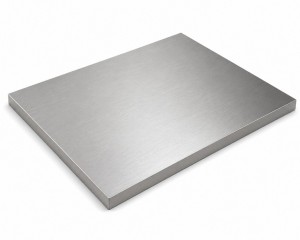
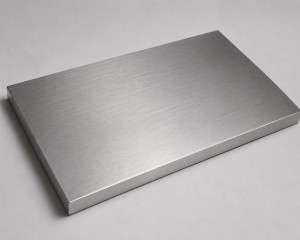
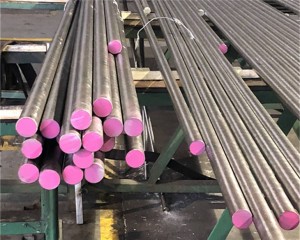
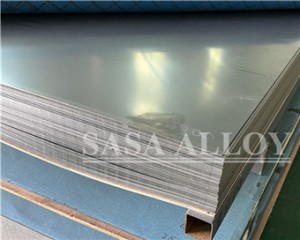
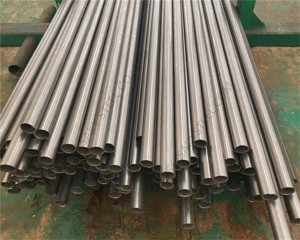
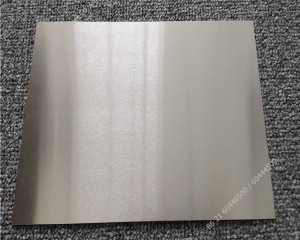
6J40 Precision Resistance Alloy Strip Constantan Type Electrical Alloy
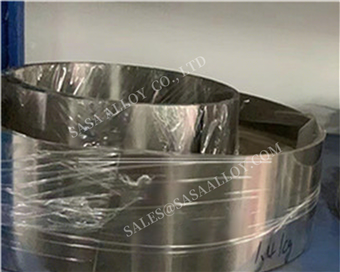
6J40 Precision Resistance Alloy Strip is a copper-nickel electrical resistance alloy designed for stable resistivity, a relatively low temperature coefficient of resistance and reliable electrical performance over a practical temperature range. It is commonly described as 6J40 Constantan Strip, CuNi40 Strip, Constantan Alloy Strip, precision resistance ribbon, copper nickel resistance foil and electrical resistance alloy coil.
Product Parameters
| Item | Product Details |
|---|---|
| Product Name | 6J40 Precision Resistance Alloy Strip / Constantan Type Electrical Alloy |
| Grade | 6J40 / 6J40X / 6J40P / CuNi40 Constantan Type |
| Material Family | Copper-nickel precision electrical resistance alloy |
| Available Forms | Strip, ribbon, foil, coil, sheet, flat wire and slit strip |
| Typical Thickness | 0.01 mm to 3.0 mm; thinner precision foil available upon request |
| Typical Width | 1 mm to 600 mm; precision slitting available |
| Coil Inner Diameter | Customized according to thickness, width and winding requirement |
| Surface Finish | Bright, annealed, cleaned, pickled, oxidized or customer specified |
| Edge Condition | Slit edge, deburred edge, rounded edge or precision sheared edge |
| Delivery Condition | Soft annealed, quarter hard, half hard, hard or customer specified |
| Reference Standard | GB/T 6145-2010 or customer-approved technical specification |
| Thickness Tolerance | Standard tolerance or precision tolerance according to drawing |
| Width Tolerance | Standard slit tolerance or customized narrow-width tolerance |
| Typical Resistivity | Approximately 0.48–0.50 μΩ·m at 20°C |
| Certificates | MTC, EN 10204 3.1, composition and electrical test reports |
Chemical Composition
6J40 is primarily a copper-nickel resistance alloy with a controlled manganese addition. The chemical balance is selected to provide stable electrical resistivity, useful thermoelectric characteristics and good processing performance. The following values are typical references; final limits should be confirmed according to the purchase specification and actual Mill Test Certificate.
| Element | Typical Content (%) | Technical Function |
|---|---|---|
| Copper (Cu) | Balance | Base metal providing conductivity, ductility and corrosion resistance |
| Nickel + Cobalt (Ni + Co) | Approximately 39.0–41.0 | Raises electrical resistance and stabilizes resistance behavior |
| Manganese (Mn) | Approximately 1.0–2.0 | Adjusts resistivity, temperature coefficient and processing properties |
| Iron (Fe) | Controlled residual | Restricted to maintain stable electrical properties |
| Silicon (Si) | Controlled residual | Controlled for material cleanliness and rolling performance |
| Carbon (C) | Controlled residual | Restricted to preserve ductility and electrical stability |
| Sulfur and Phosphorus | Controlled impurities | Limited to support rolling, forming and long-term reliability |
Mechanical Properties
The mechanical properties of 6J40 resistance alloy strip depend on thickness, cold reduction, annealing cycle and final temper. Soft annealed strip provides better forming performance, while hard-rolled strip offers higher tensile strength and improved dimensional stability for precision stamping.
| Property | Typical Reference | Engineering Meaning |
|---|---|---|
| Tensile Strength, Annealed | Approximately 350–500 MPa | Suitable for forming, winding and precision fabrication |
| Tensile Strength, Cold Rolled | Approximately 500–850 MPa | Provides greater strength and shape stability |
| Elongation, Annealed | Typically 20% or higher | Supports bending, winding, stamping and forming |
| Elongation, Hard Temper | Condition and thickness dependent | Lower ductility should be considered during stamping |
| Density | Approximately 8.9 g/cm³ | Used for coil weight and logistics calculations |
| Electrical Resistivity at 20°C | Approximately 0.48–0.50 μΩ·m | Primary value for resistance element design |
| Temperature Coefficient of Resistance | Low and condition dependent | Helps maintain stable resistance as temperature changes |
| Thermal Conductivity | Approximately 20–25 W/m·K | Relevant to heat dissipation and resistor design |
| Magnetic Property | Generally non-magnetic in normal service | Useful for electrical measuring and sensor applications |
| Typical Continuous Service | Up to about 400°C, application dependent | Actual limit depends on atmosphere, load and stability requirement |
Common Size Table
| Thickness | Typical Width | Common Condition | Typical Application |
|---|---|---|---|
| 0.01–0.05 mm | 1–200 mm | Precision foil, soft or hard | Foil resistors, strain gauges and miniature sensors |
| 0.06–0.10 mm | 2–300 mm | Bright annealed or cold rolled | Precision resistors, shunts and measuring elements |
| 0.12–0.30 mm | 3–400 mm | Soft, half hard or hard | Current-sensing shunts and stamped resistor parts |
| 0.40–1.00 mm | 5–500 mm | Annealed or cold rolled | Industrial resistor elements and electrical components |
| 1.20–3.00 mm | 10–600 mm | Strip or flat resistance stock | Heavy shunts, bus-type resistors and machined elements |
| Custom Foil | Precision slit width | Customer-specified temper | Special electronic and instrumentation projects |
Different Specifications Comparison
| Product Form | Main Feature | Recommended Application | Selection Advice |
|---|---|---|---|
| 6J40 Strip | Standard flat product with customizable width | Resistors, shunts and stamped components | Suitable for general precision electrical applications |
| 6J40 Ribbon | Narrow width with controlled cross-section | Wound resistors, measuring elements and sensors | Choose when accurate resistance per unit length is required |
| 6J40 Foil | Ultra-thin material for etched or laminated parts | Foil resistors and strain gauges | Confirm pinhole control, flatness and surface cleanliness |
| 6J40 Coil | Continuous length for automatic production | Stamping, slitting and high-volume resistor production | Confirm coil ID, OD, weight and winding direction |
| 6J40 Flat Wire | Rounded or controlled edges for winding | Precision windings and compact resistance elements | Specify edge radius and width-to-thickness ratio |
| Oxidized 6J40 Strip | Controlled oxide surface where required | Special resistor or insulation-related assemblies | Confirm oxide color, adhesion and electrical requirement |
Comparison with Similar Resistance Alloys
| Alloy | Alloy Family | Main Characteristic | Typical Selection |
|---|---|---|---|
| 6J40 / Constantan Type | Copper-nickel alloy | Stable resistivity, low TCR and useful thermoelectric EMF | Precision resistors, strain gauges and thermocouples |
| Manganin Type | Copper-manganese-nickel alloy | Very low TCR and low thermoelectric EMF against copper | Precision standards, shunts and measuring resistors |
| CuNi23 | Lower-nickel copper alloy | Lower resistivity than 6J40 | Lower-resistance components and moderate heating applications |
| Nichrome 80/20 | Nickel-chromium alloy | Higher resistivity and higher temperature capability | Heating elements and high-temperature resistors |
| FeCrAl Alloy | Iron-chromium-aluminum alloy | High-temperature oxidation resistance | Industrial furnace and electric heating elements |
Equivalent Standards and International Names
| Naming System | Designation or Reference | Remarks |
|---|---|---|
| Chinese Grade | 6J40 | Precision copper-nickel electrical resistance alloy |
| Product Variants | 6J40X / 6J40P / 6J40D | Variant identification should follow the order standard |
| Chinese Standard | GB/T 6145-2010 | Precision manganin and constantan alloy products |
| Common International Name | Constantan | General commercial name for Cu-Ni resistance alloy |
| Chemical Reference | CuNi40 | Nominal copper-nickel grade reference used in inquiries |
| Commercial Reference | CuNi44 | Common Constantan reference requiring property comparison |
| Alternative Trade Names | Eureka / Advance / Ferry Type | Commercial names may follow different manufacturer specifications |
| Material Family | Copper-Nickel Resistance Alloy | Used in resistance, measurement and thermoelectric applications |
Production Process Flow
| Step | Production Process | Quality Control Focus |
|---|---|---|
| 1 | Raw Material Selection | Confirm copper, nickel and manganese purity and traceability |
| 2 | Controlled Melting | Control composition, impurities and melt homogeneity |
| 3 | Casting | Reduce segregation, porosity and internal defects |
| 4 | Homogenization | Improve composition and microstructure uniformity |
| 5 | Hot Rolling | Produce strip slab and control surface condition |
| 6 | Intermediate Annealing | Restore ductility before further reduction |
| 7 | Precision Cold Rolling | Control thickness, flatness, temper and resistance uniformity |
| 8 | Final Annealing or Temper Rolling | Achieve specified strength, elongation and electrical properties |
| 9 | Precision Slitting | Control width, burr height, edge condition and camber |
| 10 | Electrical Testing and Packaging | Verify resistivity, dimensions, surface and heat traceability |
Product Inspection
| Inspection Item | Inspection Method | Purpose |
|---|---|---|
| Chemical Composition | Spectrometer or laboratory chemical analysis | Confirm copper, nickel and manganese content |
| Electrical Resistivity | Four-wire or approved resistance test method | Verify resistance performance at the specified temperature |
| Temperature Coefficient | Resistance measurement over a controlled temperature range | Confirm electrical stability during temperature change |
| Thermoelectric EMF | EMF test against copper or specified reference material | Support thermocouple and precision measurement applications |
| Mechanical Testing | Tensile strength, elongation and hardness testing | Confirm temper and forming capability |
| Thickness Inspection | Micrometer, gauge or online thickness measurement | Confirm thickness and coil-to-coil consistency |
| Width and Edge Inspection | Width gauge, burr check and edge examination | Verify slit width, burr, camber and edge quality |
| Surface Inspection | Visual inspection and surface quality evaluation | Detect scratches, oxidation, pits, stains and rolling marks |
| Coil Flatness | Flatness, wave and camber measurement | Support precision stamping and automatic feeding |
| Third-Party Inspection | SGS, BV, TÜV or customer-appointed agency | Provide independent verification before shipment |
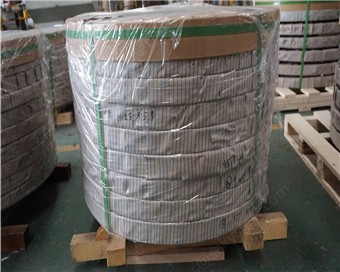
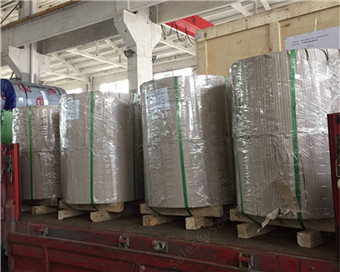
Product Packaging
| Packaging Item | Packaging Method | Purpose |
|---|---|---|
| Surface Protection | Protective paper, plastic film, PE wrapping or VCI material | Reduce moisture, oxidation, stains and scratches |
| Interlayer Protection | Paper or plastic interlayer for precision surfaces | Prevent coil layers from rubbing during transport |
| Coil Winding | Oscillate wound or level wound according to strip width | Support automatic feeding and continuous production |
| Spool or Core | Plastic, paper, steel or wooden core as required | Maintain coil shape and protect narrow strip |
| Sealed Packaging | Moisture-resistant bag with desiccant when required | Improve protection during sea and long-term transportation |
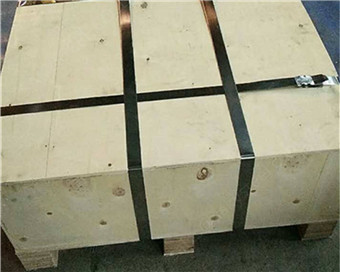
| Wooden Case or Pallet | Export-standard wooden case or reinforced pallet | Protect coils during loading, stacking and shipment |
| Product Marking | Grade, heat number, size, temper, weight and coil number | Maintain identification and material traceability |
Applications & Machinability
Industrial Applications
| Industry | Typical Components | Why 6J40 Is Used |
|---|---|---|
| Medical Instruments | Precision sensors, resistance elements and measuring circuits | Stable resistivity supports accurate electronic measurement |
| Aerospace | Strain gauges, temperature sensors and precision resistor assemblies | Low TCR helps maintain electrical stability during temperature changes |
| Marine Hardware | Current sensors, control instruments and sealed electrical devices | Copper-nickel composition offers useful atmospheric corrosion resistance |
| Chemical Processing | Instrumentation resistors, thermocouples and monitoring equipment | Suitable for protected electrical instruments in controlled environments |
| Precision Resistors | Foil resistors, wound resistors and calibrated resistance elements | Provides stable resistance and repeatable electrical performance |
| Current Measurement | Electrical shunts, battery-management shunts and current sensors | Controlled resistance supports accurate current calculation |
| Strain Measurement | Bonded strain gauges and load-measurement elements | Good strain sensitivity, fatigue behavior and processability |
| Temperature Measurement | Copper-constantan and iron-constantan thermocouple components | Useful thermoelectric EMF supports temperature sensing |
Machinability, Forming, Welding and Heat Treatment
| Processing Property | Performance | Recommendation |
|---|---|---|
| Machinability | Moderate; not a free-cutting alloy like 303 stainless steel | Use sharp tools, rigid support and suitable cutting lubricant |
| Cold Rolling | Excellent capability for precision thickness reduction | Use controlled reduction and intermediate annealing |
| Stamping | Good in soft or selected temper condition | Control burr, tool clearance and rolling direction |
| Bending and Forming | Good ductility in annealed condition | Specify bend radius according to thickness and temper |
| Welding Performance | Generally weldable and solderable with a qualified process | Control surface cleanliness and verify joint resistance |
| Brazing and Soldering | Suitable when appropriate filler and flux are selected | Avoid overheating that may alter resistance properties |
| Heat Treatment | Suitable for annealing and stress relief | Use controlled atmosphere to prevent excessive surface oxidation |
| Hardening Response | Not a precipitation-hardening alloy | Strength and temper are controlled mainly by cold rolling |
| Corrosion Resistance | Good atmospheric resistance for a copper-nickel alloy | Use additional protection in aggressive chemicals or seawater exposure |
Why Choose SASA Alloy?
| Supplier Advantage | Customer Value |
|---|---|
| Precision Resistance Alloy Supply | Supply support for 6J40, Constantan, Manganin, CuNi resistance alloys and customized electrical alloy strip. |
| Customized Strip Dimensions | Thickness, slit width, coil weight, inner diameter, edge condition and temper can be customized. |
| Electrical Property Control | Resistivity, TCR and thermoelectric EMF requirements can be reviewed according to the application. |
| Heat Number Traceability | Coil markings, production records and test documents can be connected to the original heat number. |
| Certificate Support | We can provide MTC (Mill Test Certificate / 质保书) and EN 10204 3.1 certificate according to order requirements. |
| Dimensional Inspection | Thickness, width, camber, flatness, burr and coil dimensions can be inspected before shipment. |
| Anti-Fake Material Control | Chemical testing, heat-number review and electrical property verification reduce substitution risk. |
| Third-Party Inspection | SGS, BV, TÜV or customer-appointed inspection can be arranged when required. |
| Export Packaging Experience | Moisture-resistant wrapping, wooden cases, pallets and customized shipping marks are available. |
FAQ
What is 6J40 Precision Resistance Alloy Strip?
6J40 Precision Resistance Alloy Strip is a copper-nickel electrical resistance alloy with controlled resistivity and a relatively low temperature coefficient of resistance. It is used in precision resistors, current shunts, strain gauges, sensors and measuring instruments.
Is 6J40 a Constantan alloy?
Yes. 6J40 is generally classified as a Constantan-type copper-nickel resistance alloy. However, commercial Constantan grades may use different nickel, manganese, resistivity and TCR limits, so the technical specification must be confirmed.
Is 6J40 the same as CuNi40 or CuNi44?
6J40 is often compared with CuNi40 and CuNi44 resistance alloys, but the designations are not automatically interchangeable. Chemical composition, resistivity, TCR, thermoelectric EMF and product condition should be compared before substitution.
What is the resistivity of 6J40?
A typical electrical resistivity reference is approximately 0.48 to 0.50 μΩ·m at 20°C. The exact permitted range should be agreed according to the product standard, temper, thickness and application.
What is 6J40 strip used for?
6J40 strip is used for precision resistors, current shunts, foil resistors, strain gauges, thermocouples, load cells, battery-management current sensors, measuring instruments and electronic control components.
Can 6J40 strip be supplied in custom widths?
Yes. Precision slitting can be provided according to the required width, tolerance, edge condition, burr limit, coil weight and winding method. Narrow ribbon and flat wire can also be discussed.
Can 6J40 be used for strain gauges?
Constantan-type alloys are widely used for strain-gauge elements because of their stable resistance characteristics, useful strain sensitivity and suitable fatigue performance. The exact foil condition and temperature compensation requirement must be specified.
Can 6J40 be welded or soldered?
6J40 can generally be welded, brazed or soldered using a qualified process. Surface cleanliness, filler selection and heat input should be controlled, and the electrical resistance of the completed joint should be verified.
Is 6J40 suitable for heat treatment?
6J40 can be annealed or stress relieved to adjust ductility and temper. It is not a precipitation-hardening alloy, so strength and hardness are controlled mainly through cold rolling and annealing.
Can SASA ALLOY provide electrical test reports?
Electrical resistivity, temperature coefficient of resistance and thermoelectric EMF testing can be discussed according to the order specification, sample condition and required test temperature.
Can 6J40 Strip be supplied with MTC?
Yes. SASA Alloy can provide MTC (Mill Test Certificate / 质保书), EN 10204 3.1 certificate, chemical analysis, electrical test reports, dimensional inspection reports and other documents according to the purchase order.
What information is needed for a quotation?
Please provide grade, applicable standard, thickness, width, quantity, temper, surface finish, edge condition, coil inner diameter, coil weight, resistivity, TCR, inspection documents, packaging requirements and delivery destination.