ASTM B575 Hastelloy C-4 UNS N06455 Sheet and Plate
Product Overview
Hastelloy C-4 (UNS N06455 / W.Nr. 2.4610) is a nickel-chromium-molybdenum alloy with low carbon and silicon contents. It is used for chemical-processing equipment that requires resistance to aggressive media together with good stability after welding and thermal exposure.
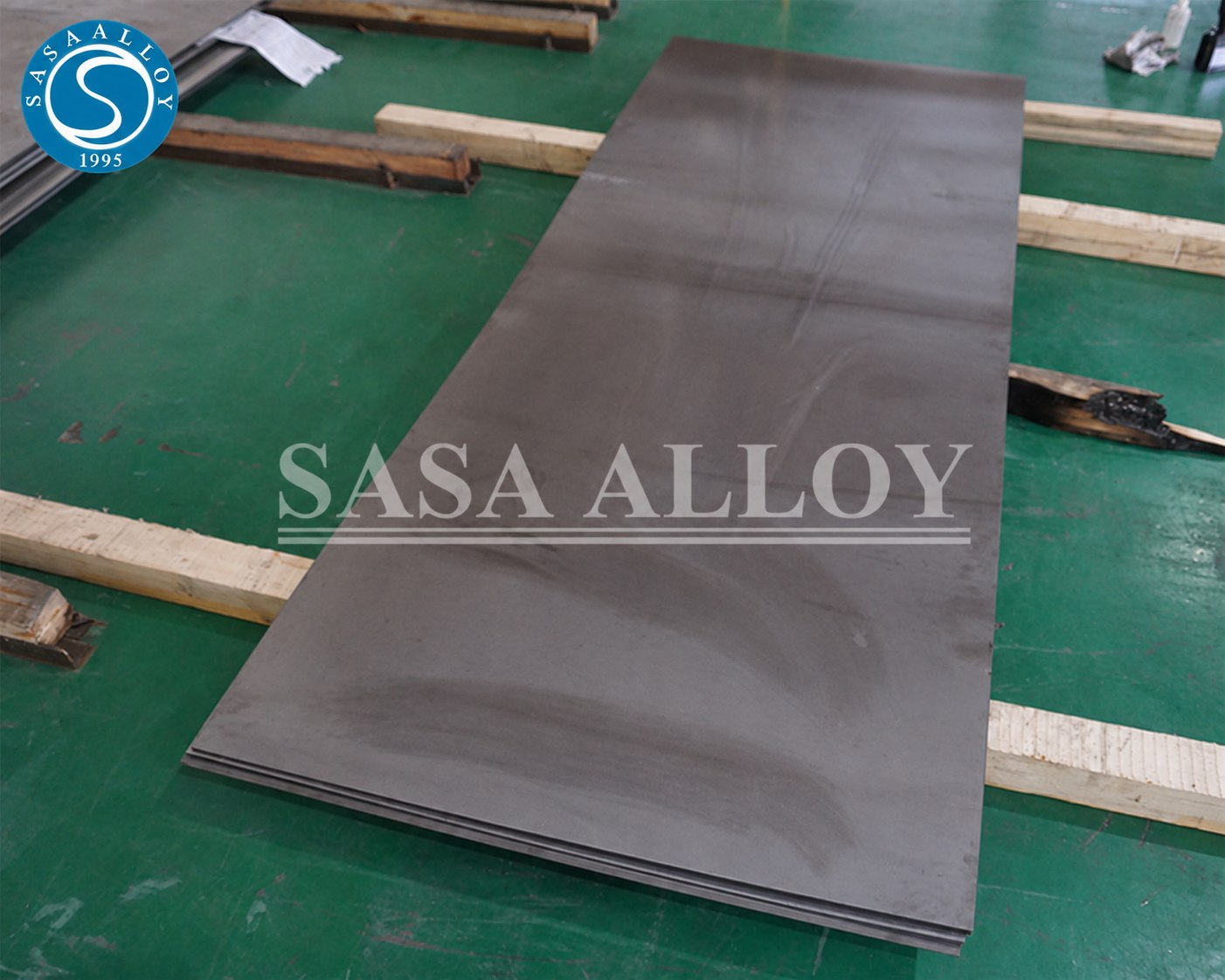
SASA Alloy supplies ASTM B575 / ASME SB-575 sheet, plate and cut pieces in the solution-annealed condition. Material can be supplied to size with the required surface, tolerances, inspection and documentation stated in the purchase order.
Specifications and Supply Range
| Grade | Hastelloy C-4 / UNS N06455 / W.Nr. 2.4610 |
|---|---|
| Product Forms | Sheet, plate, strip, cut plate and machined blank |
| Standard | ASTM B575 / ASME SB-575 |
| Condition | Solution annealed |
| Surface | Pickled, descaled or as specified |
| Thickness | 0.5–50 mm |
| Width × Length | Width 100–2000 mm; length 500–6000 mm, or cut to drawing |
The dimensions above describe common market production capability, not current stock. Final availability is confirmed against the complete enquiry.
Chemical Composition
Specification limits, weight percent. Nickel is the balance.
| Cr | Mo | Fe | C | Si | Mn | Co | Ni |
|---|---|---|---|---|---|---|---|
| 14.5–17.5 | 14.0–17.0 | ≤3.0 | ≤0.009 | ≤0.05 | ≤1.0 | ≤2.0 | Balance |
Mechanical Properties
| Condition | 0.2% Yield Strength | Tensile Strength | Elongation |
|---|---|---|---|
| Solution annealed | ≥305 MPa for sheet ≤5 mm; thickness-dependent values apply | 700–900 MPa | ≥40% |
Final acceptance values follow the applicable material specification, product thickness and purchase order.
Corrosion Resistance and Welding
The chromium and molybdenum contents provide resistance to a range of oxidizing and reducing chemical environments. The low carbon and silicon levels reduce the tendency to form detrimental grain-boundary precipitates during welding and thermal exposure, which is an important reason for selecting C-4 for welded chemical equipment.
Material suitability must be reviewed against the actual process media, concentration, contaminants, operating temperature and pressure. Welding procedures, filler metal and post-fabrication requirements should be defined by the project specification.
Processing and Inspection Options
| Processing | Cut-to-size plate, profiles, holes, machining allowance, edge preparation and formed blanks can be reviewed from drawings. |
|---|---|
| Inspection | PMI, chemical analysis, tensile, hardness, dimensional inspection and applicable ultrasonic or penetrant testing can be arranged when specified. |
| Documentation | EN 10204 3.1 MTC, inspection reports and third-party witnessing can be included in the order. |
Applications
- Chemical reactors, columns and pressure vessels
- Heat exchangers, condensers and process equipment
- Acid-handling components, piping parts and liners
- Pollution-control equipment and fabricated chemical-process components
Ordering Information
For quotation, please provide:
- Grade, standard and required condition
- Thickness × width × length and quantity
- Surface, flatness, dimensional tolerances and cutting requirements
- Required testing, certificate and third-party inspection
- Packing, destination and requested delivery schedule
Frequently Asked Questions
What standard covers Hastelloy C-4 sheet and plate?
ASTM B575 and ASME SB-575 cover applicable nickel-chromium-molybdenum alloy plate, sheet and strip, including UNS N06455.
Why is Alloy C-4 used for welded chemical equipment?
Its composition provides good thermal stability and helps limit detrimental precipitation in weld heat-affected zones. The process media and welding procedure still require project review.
Can C-4 plate be supplied cut to drawing?
Yes. Send the drawing, dimensions, tolerances, edge condition, machining allowance and inspection requirements for review.
Is the listed size range current stock?
No. It represents common supply capability. Current availability is confirmed against the required dimensions, quantity and delivery schedule.