GH4133A Nickel-Based Superalloy Round Bar
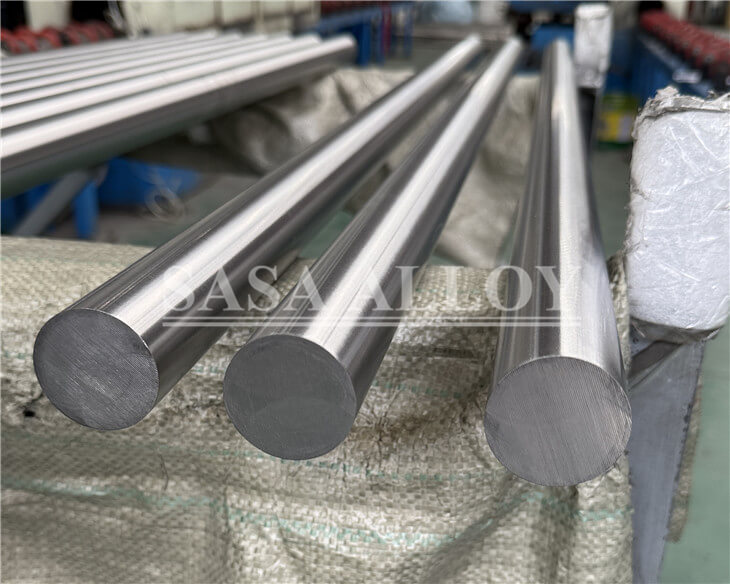
GH4133A Nickel-Based Superalloy Round Bar
GH4133A is a precipitation-strengthened nickel-based wrought superalloy developed for high-temperature load-bearing components operating below approximately 750°C.
Compared with earlier GH33-series alloy development, GH4133A is characterized by a more strongly alloyed strengthening system, fine and relatively uniform grain structure, high yield strength and good hot-working capability. These characteristics make the alloy particularly suitable for forged and machined components that must retain strength under combined thermal and mechanical loading.
GH4133A round bar is primarily selected as starting material for turbine-disc blanks, rings, shafts, bolts, rods and other high-temperature structural parts where grain control, hot-working response and elevated-temperature strength are more important than general corrosion resistance alone.
GH4133A Round Bar Quick Information
What Makes GH4133A Different?
GH4133A is not positioned as a general-purpose nickel alloy. Its value lies in the combination of grain control, high-temperature strength and hot-forging performance required by rotating and heavily loaded components.
| Fine Grain Structure A fine and relatively uniform grain structure supports improved strength consistency in forged and heat-treated components. | High Yield Strength The alloy is used where resistance to deformation under high mechanical load is a key design requirement. | Hot Workability GH4133A is suitable for hot forging and forming into discs, rings and other load-bearing shapes. | 750°C-Class Service Designed for high-temperature structural service below approximately 750°C. |
GH4133A Round Bar Supply & Processing
For GH4133A, the bar is often an intermediate material rather than the final component. Purchasing requirements should therefore consider not only diameter and length, but also downstream forging, heat treatment, machining allowance and grain-structure requirements.
| Item | Supply Option | Buyer Focus |
|---|---|---|
| Round Bar | Hot Rolled / Forged | Diameter, length, surface and straightness |
| Forging Stock | Bar or billet for further forging | Forging reduction, grain condition and machining allowance |
| Machined Blank | Cut and rough-machined according to drawing | Finished dimension and machining tolerance |
| Heat-Treated Bar | According to agreed technical specification | Mechanical properties and final microstructure |
GH4133A and Related High-Temperature Alloys
GH4133A is often considered together with other Chinese wrought superalloys used for high-temperature structural and turbine components. The table below is intended to show material positioning rather than direct equivalence.
| Grade | Material Type | Relative Position | Typical Component Focus |
|---|---|---|---|
| GH4133A | Ni-Based Precipitation-Strengthened Superalloy | Fine grain, high yield strength and good hot-working response | Turbine discs, rings and high-temperature load-bearing parts |
| GH4033 | Ni-Based Wrought Superalloy | Earlier alloy basis with lower degree of strengthening | High-temperature structural components |
| GH4133B | Modified Ni-Based Superalloy | Further modification for improved high-temperature performance and notch behavior | Turbine-disc and critical rotating components |
| GH4169 | Ni-Fe-Based Precipitation-Strengthened Superalloy | Broader industrial and aerospace usage with high strength and good processability | Discs, shafts, fasteners and structural hot-section parts |
These grades are not direct substitutes. Final material selection should be based on design temperature, load, fatigue requirement, forging route and the applicable material specification.
GH4133A Alloying System
GH4133A belongs to the nickel-chromium precipitation-strengthened superalloy family. Its high-temperature strength is associated with a nickel-based matrix and precipitation-strengthening additions such as aluminum, titanium and niobium.
| Element / Group | Main Metallurgical Function |
|---|---|
| Ni | Forms the main high-temperature matrix and provides structural stability at elevated temperature. |
| Cr | Contributes to oxidation and hot-corrosion resistance. |
| Al + Ti | Key precipitation-strengthening additions supporting high yield and elevated-temperature strength. |
| Nb | Supports precipitation strengthening and the overall high-temperature strength system. |
For procurement and inspection, final chemical composition limits should follow the agreed GH4133A technical specification and batch-specific MTC. Publicly available GH4133 / GH33A chemistry tables should not automatically be treated as guaranteed GH4133A acceptance limits without specification confirmation.
High-Temperature Performance Focus
For GH4133A, room-temperature tensile strength alone does not fully describe material suitability. Turbine and rotating-component applications depend on a combination of yield strength, fatigue resistance, creep resistance, grain stability and forging quality.
| Property | Why It Matters for GH4133A |
|---|---|
| Yield Strength | Important for resisting permanent deformation in highly loaded rotating components. |
| Fatigue Resistance | Critical where turbine components experience repeated start-stop and cyclic mechanical loading. |
| Creep / Stress-Rupture Behavior | Relevant to components exposed to sustained load at elevated temperature. |
| Grain Size & Uniformity | Strongly influences mechanical consistency, forging response and fatigue behavior. |
| Hot Workability | Important because round bar is frequently converted into forged discs, rings and other critical shapes. |
Why Forging & Grain Control Matter for GH4133A
GH4133A is particularly sensitive to the relationship between forging deformation, reheating cycles and final grain structure. Research on GH4133A has specifically examined repeated-heating forging because insufficient or uneven deformation can lead to coarse-grain zones in turbine forgings.
For bar intended for critical forgings, procurement should therefore consider not only chemistry and tensile properties, but also the downstream forging route, reduction ratio, grain requirement and heat-treatment condition.
Need GH4133A bar for forging, machining or turbine-component production?
Typical Applications of GH4133A Round Bar
GH4133A is primarily associated with high-temperature rotating and load-bearing components rather than general chemical-processing equipment.
| Turbine Discs Forged disc blanks and rotating components operating under high centrifugal load | Bearing Rings High-temperature load-bearing rings and structural ring components | High-Temperature Shafts Machined or forged shaft components requiring elevated-temperature strength |
| Hot-Section Fasteners High-temperature bolts, tie rods and load-bearing threaded parts | Forged Blanks Starting stock for discs, rings and custom aerospace forgings | Industrial Turbine Parts Selected high-temperature structural components below the alloy's service-temperature range |
GH4133A Round Bar Inspection
For critical GH4133A bar applications, inspection should be matched to the intended component and purchasing specification rather than treated as a generic nickel-alloy inspection package.
| Inspection Item | Purpose |
|---|---|
| Chemical Analysis / PMI | Verify alloy identity and heat chemistry according to the agreed specification. |
| Mechanical Testing | Confirm tensile and yield behavior in the specified heat-treatment condition. |
| Ultrasonic Testing | Used where internal soundness is required for critical bar or forging stock. |
| Grain Size / Metallography | Evaluate grain condition and microstructural uniformity when specified. |
| Dimensional Inspection | Check bar diameter, length, straightness and machining allowance. |
| MTC | Provides batch-specific chemistry, mechanical data and traceability. |
GH4133A Round Bar Packaging
Frequently Asked Questions
What is GH4133A mainly used for?
GH4133A is mainly used for high-temperature load-bearing and rotating components such as turbine-disc blanks, rings, shafts and other forged aerospace or turbine parts.
What is the typical service temperature of GH4133A?
GH4133A is generally associated with service below approximately 750°C. Actual allowable temperature depends on stress, component design, exposure time and the applicable technical specification.
Why is grain size important for GH4133A?
Grain size and uniformity influence yield strength, fatigue behavior, forging response and overall mechanical consistency. Grain control is therefore particularly important when GH4133A bar is used as starting stock for turbine-disc or other critical forgings.
Is GH4133A the same as GH4133 or GH33A?
GH4133, GH33A and GH4133A appear in different historical, commercial and technical sources. For purchasing purposes, the exact ordered designation and chemical/mechanical acceptance criteria should be confirmed against the customer's drawing, technical specification or required material standard rather than relying only on a trade-name equivalence.
Can GH4133A round bar be supplied for further forging?
Yes. GH4133A round bar can be supplied as forging stock subject to the required diameter, heat-treatment condition, inspection level and downstream forging specification.
Request GH4133A Round Bar
Send your required diameter, length, quantity, heat-treatment condition, applicable specification and inspection requirements. SASA ALLOY can review the requirement for bar supply, forging stock or machined blanks.