Alloy 28/Nickel 28 Round Bar
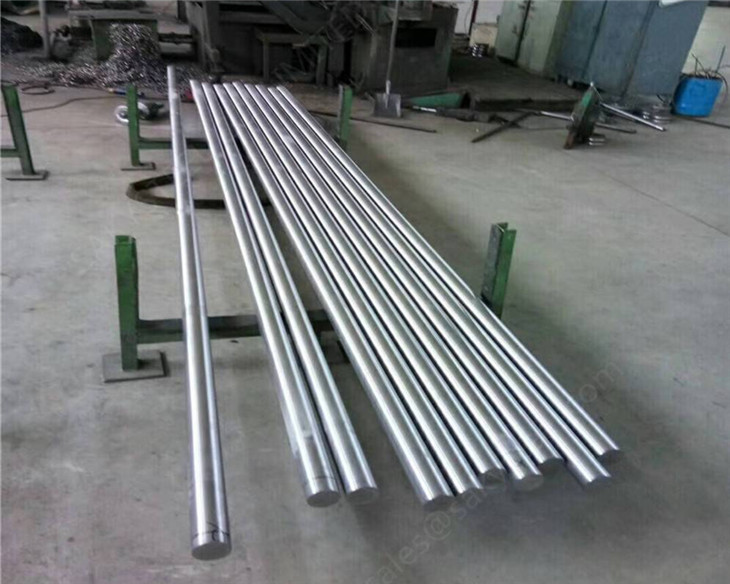
Alloy 28 Bar – UNS N08028 Nickel Alloy Round Bar
Alloy 28 Bar, also known as UNS N08028 Bar, 1.4563 Bar and Sanicro 28 Bar, is a high-performance nickel-iron-chromium-molybdenum-copper corrosion resistant alloy bar. It is designed for aggressive environments containing sulfuric acid, phosphoric acid, chloride media, sour gas and other corrosive chemicals.
SASA ALLOY supplies Alloy 28 round bars, rods, forged bars and bright bars in customized diameter, length, tolerance and surface finish. MTC (Mill Test Certificate), EN 10204 3.1 certificate, PMI test, UT inspection and third-party inspection can be provided according to customer project requirements.
Product Parameters
| Item | Details |
|---|---|
| Product Name | Alloy 28 Bar / UNS N08028 Bar / Sanicro 28 Bar / 1.4563 Bar |
| Grade | Alloy 28 / UNS N08028 / W.Nr. 1.4563 / X1NiCrMoCu31-27-4 |
| Material Type | Nickel-Iron-Chromium-Molybdenum-Copper corrosion resistant alloy |
| Shape & Sizes | Round bar, rod, forged bar, bright bar; common diameter 6 mm – 300 mm, customized size available |
| Length | 1000 mm – 6000 mm, cut-to-length available according to customer drawing |
| Surface Finish | Black, bright, peeled, turned, polished, ground |
| Standards | ASTM B473, ASTM B668, ASTM B709, ASTM B829, EN 10272, EN 10088, ISO 9724 or customer specification |
| Tolerance | Standard tolerance, h9, h11, k12 or customized tolerance according to project requirement |
| Certificate | MTC, EN 10204 3.1 certificate, PMI report, UT report and third-party inspection available |
Chemical Composition
The following chemical composition is a typical reference range for Alloy 28 / UNS N08028 material. Final values should be confirmed according to the actual Mill Test Certificate.
| Element | Content (%) | Function in Alloy |
|---|---|---|
| Nickel (Ni) | 30.0 – 34.0 | Improves corrosion resistance and austenitic structure stability |
| Chromium (Cr) | 26.0 – 28.0 | Provides resistance to oxidizing media and localized corrosion |
| Iron (Fe) | Balance | Base element supporting alloy structure and mechanical strength |
| Molybdenum (Mo) | 3.0 – 4.0 | Enhances resistance to pitting, crevice corrosion and reducing acids |
| Copper (Cu) | 0.6 – 1.4 | Improves resistance to sulfuric acid and reducing environments |
| Manganese (Mn) | ≤ 2.0 | Controlled alloying and residual element |
| Silicon (Si) | ≤ 0.7 | Controlled for processing and weldability |
| Carbon (C) | ≤ 0.03 | Low carbon helps reduce intergranular corrosion risk |
| Phosphorus (P) | ≤ 0.03 | Controlled impurity element |
| Sulfur (S) | ≤ 0.03 | Controlled impurity element |
| Nitrogen (N) | ≤ 0.11 | Supports strength and corrosion resistance in austenitic structure |
Mechanical Properties
The following mechanical properties are typical reference values for Alloy 28 bar in solution annealed condition. Actual values may vary depending on diameter, heat treatment condition and production route.
| Property | Reference Value | Engineering Meaning |
|---|---|---|
| Tensile Strength | Approx. 500 – 750 MPa | Provides reliable strength for machined parts and pressure-related components |
| Yield Strength | Approx. ≥ 220 MPa | Supports service stability under industrial load conditions |
| Elongation | Approx. ≥ 35% | Good ductility for forming, machining and fabrication |
| Density | Approx. 8.0 g/cm³ | Useful for bar weight calculation and logistics planning |
| Hardness | Condition dependent | Can be checked according to customer specification |
Common Size Table
| Diameter | Typical Length | Surface Finish | Common Application |
|---|---|---|---|
| 6 – 20 mm | 1000 – 3000 mm | Bright, polished, ground | Precision pins, small shafts, instrument parts |
| 22 – 50 mm | 2000 – 6000 mm | Peeled, turned, bright | Fasteners, valve stems, pump shafts |
| 55 – 100 mm | 3000 – 6000 mm | Black, peeled, rough turned | Chemical equipment parts, marine hardware, flange blanks |
| 110 – 200 mm | Cut-to-length | Black, rough turned, forged | Heavy-duty machining, pressure equipment parts |
| Above 200 mm | Customized | Forged, rough turned | Project fabrication and large machined components |
Different Specifications Comparison
| Product Form | Main Feature | Recommended Application | Selection Advice |
|---|---|---|---|
| Alloy 28 Round Bar | General bar stock with good corrosion resistance and machining performance | Pump shafts, valve stems, fasteners, machined parts | Recommended for most standard machining requirements |
| Alloy 28 Forged Bar | Better internal structure and suitable for large sizes | Heavy-duty chemical equipment and pressure components | Recommended for critical load-bearing components |
| Alloy 28 Bright Bar | Better surface quality and dimensional control | Precision parts, aerospace components, medical instruments | Recommended for tight tolerance and better appearance |
| Alloy 28 Ground Bar | Improved tolerance and smooth surface finish | Precision shafts, instrument parts and CNC machining | Recommended when final machining allowance is limited |
Equivalent Standards and International Names
| Standard / Name | Designation | Remarks |
|---|---|---|
| Common Trade Name | Alloy 28 / Incoloy Alloy 028 / Sanicro 28 | Commonly used in international procurement |
| UNS Number | UNS N08028 | Widely used nickel alloy designation |
| Werkstoff Number | 1.4563 | European material number |
| EN Name | X1NiCrMoCu31-27-4 | European chemical designation |
| ISO Designation | 4563-080-28-I | International reference designation |
| Typical Bar Standard | ASTM B473 / ASTM B829 / ISO 9724 | Used for nickel alloy bar and rod procurement |
| Related Pipe / Tube Standard | ASTM B668 | Used for UNS N08028 seamless pipe and tube |
| Related Plate / Sheet Standard | ASTM B709 | Used for UNS N08028 plate, sheet and strip |
Production Process Flow
| Step | Process | Quality Control Focus |
|---|---|---|
| 1 | Raw Material Selection | Check alloy grade, heat number and raw material traceability |
| 2 | Melting / Refining | Control Ni, Cr, Mo, Cu and impurity elements |
| 3 | Hot Rolling / Forging | Ensure bar size, structure uniformity and internal quality |
| 4 | Solution Annealing | Improve corrosion resistance and metallurgical stability |
| 5 | Straightening | Control straightness for machining and fabrication |
| 6 | Peeling / Turning / Grinding | Improve surface quality and dimensional tolerance |
| 7 | Cutting to Length | Meet customer drawing or project length requirement |
| 8 | Inspection and Testing | PMI, dimension inspection, surface inspection, mechanical test and UT if required |
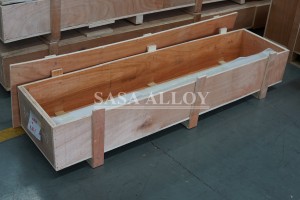
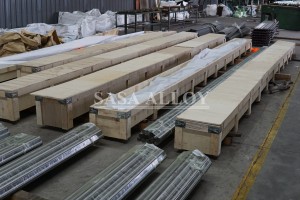
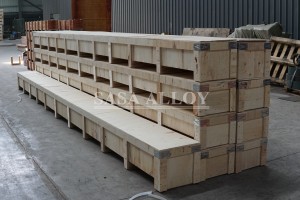
| 9 | Packaging and Shipment | Export wooden case, product label, heat number and shipping mark |
Product Inspection
| Inspection Item | Inspection Method | Purpose |
|---|---|---|
| Chemical Composition | Spectrometer analysis / laboratory test | Confirm UNS N08028 grade and alloy elements |
| PMI Test | Positive Material Identification | Prevent material mix-up and wrong grade shipment |
| Mechanical Test | Tensile strength, yield strength, elongation, hardness if required | Verify engineering performance |
| Dimension Inspection | Caliper, micrometer, straightness inspection | Confirm diameter, length, tolerance and straightness |
| Surface Inspection | Visual inspection and surface quality check | Check cracks, scratches, peeling defects and surface finish |
| Ultrasonic Testing | UT inspection if required | Check internal defects for critical bars |
| Third-Party Inspection | SGS, BV, TUV or customer-appointed inspection | Provide independent verification for project orders |
| Certificate | MTC / EN 10204 3.1 | Ensure material traceability and project documentation |
Product Packaging
| Packaging Item | Details | Benefit |
|---|---|---|
| Surface Protection | Plastic film, anti-rust paper or protective wrapping | Protects the bar surface during transportation |
| Bundle Packing | Bars bundled with steel strips or protective belts | Prevents movement, bending and collision |
| Wooden Case / Wooden Pallet | Export-standard fumigation wooden case or pallet | Suitable for long-distance sea, air and truck shipment |
| Labeling | Grade, size, heat number, quantity and customer shipping mark | Improves traceability after delivery |
| Document Support | Packing list, invoice, MTC, EN 10204 3.1 certificate and inspection report if required | Supports customs clearance and project acceptance |
Applications & Machinability
Applications
| Industry | Typical Parts | Why Alloy 28 Bar Is Used |
|---|---|---|
| Medical Instruments | Non-implant precision instruments, laboratory fixtures, corrosive cleaning equipment parts | Good corrosion resistance and stable surface quality for aggressive cleaning environments |
| Aerospace | Precision components, corrosion-resistant fasteners, special machined parts | Reliable strength, good ductility and resistance to aggressive service environments |
| Marine Hardware | Marine shafts, bolts, pump parts, valve stems and seawater-contact components | High resistance to chloride pitting, crevice corrosion and stress corrosion cracking |
| Chemical Processing | Heat exchanger parts, acid processing equipment, pumps, valves, scrubbers and tanks | Excellent resistance to sulfuric acid, phosphoric acid, acidic chloride media and mixed corrosive environments |
| Oil & Gas | Downhole service components, sour gas equipment, pipeline fittings and fasteners | Good performance in chloride-containing and sour service environments |
Machinability, Welding and Heat Treatment
| Processing Property | Performance | Recommendation |
|---|---|---|
| Machinability | Machinable, but not a free-cutting alloy like 303 stainless steel | Use rigid machines, carbide tools, low to moderate cutting speed and sufficient coolant |
| Welding Performance | Good weldability when proper nickel alloy or high-alloy stainless welding procedures are used | Use suitable filler metal, clean joint surfaces and control heat input |
| Heat Treatment | Usually supplied in solution annealed condition; not typically strengthened by precipitation hardening | Final heat treatment should follow project specification and MTC requirement |
| Cold Working | Can be cold worked, but work hardening should be considered | Intermediate annealing may be required for heavy cold forming |
Why Choose SASA ALLOY?
| Advantage | Description |
|---|---|
| Professional Alloy Supply | SASA ALLOY supplies Alloy 28, Alloy 20, Alloy 31, Hastelloy, Inconel, Incoloy, Monel, nickel alloy bars, pipes, plates, flanges and fittings for chemical, marine, oil gas, aerospace and energy industries. |
| Customized Size Capability | Diameter, length, surface finish, tolerance and cutting service can be customized according to customer drawings or project requirements. |
| Strict Quality Control | Material traceability, heat number control, PMI testing, dimensional inspection, surface inspection, mechanical testing and third-party inspection can be arranged. |
| Certificate Support | We can provide MTC (Mill Test Certificate / 质保书), EN 10204 3.1 certificate, PMI report, UT report and other quality documents according to order requirements. |
| Export Packaging Experience | Export wooden cases, wooden pallets, protective wrapping and clear labels help ensure safe delivery for international shipments. |
| Industrial Service Support | Our team can support grade selection, equivalent standard checking, technical document preparation and project specification confirmation before shipment. |
FAQ
Q1: What is Alloy 28 Bar?
Alloy 28 Bar is a nickel-iron-chromium-molybdenum-copper corrosion resistant alloy bar. It is used in chemical processing, oil and gas, marine hardware, aerospace components and acid handling equipment where strong resistance to sulfuric acid, phosphoric acid, chloride stress corrosion cracking, pitting and crevice corrosion is required.
Q2: What is the equivalent grade of Alloy 28?
Alloy 28 is commonly equivalent to UNS N08028, W.Nr. 1.4563, X1NiCrMoCu31-27-4 and Sanicro 28. For project orders, buyers should confirm the required standard, heat treatment condition and MTC data before purchasing.
Q3: Can SASA ALLOY provide Alloy 28 Bar with MTC?
Yes. SASA ALLOY can provide MTC (Mill Test Certificate / 质保书), EN 10204 3.1 certificate, PMI test report, UT report and third-party inspection documents according to customer requirements.
Q4: What sizes of Alloy 28 Bar are available?
Common diameters include 6 mm to 300 mm. Length, tolerance and surface finish can be customized. Cut-to-length service is available for machining and project fabrication.
Q5: Is Alloy 28 Bar easy to machine?
Alloy 28 Bar is machinable, but it is not a free-cutting material like 303 stainless steel. Carbide tools, rigid equipment, proper cutting speed and sufficient coolant are recommended to reduce work hardening and improve machining quality.
Q6: Can Alloy 28 Bar be welded?
Yes. Alloy 28 has good weldability when suitable welding procedures and filler metals are used. Heat input, surface cleaning and post-weld inspection should be controlled to maintain corrosion resistance.
Q7: What industries use Alloy 28 Bar?
Alloy 28 Bar is used in chemical processing equipment, marine hardware, oil and gas sour service, acid production, pollution control equipment, heat exchangers, pumps, valves, fasteners and precision machined parts.
Q8: How can I get a quotation for Alloy 28 Bar?
Please send your required grade, diameter, length, quantity, surface finish, tolerance, standard and certificate requirements to SASA ALLOY. Our team will check production route, delivery time and price for your project.