Introduction
Stainless steel flat bar is increasingly used in solar mounting systems and green building projects because of its long service life, corrosion resistance and low maintenance requirements in outdoor environments.
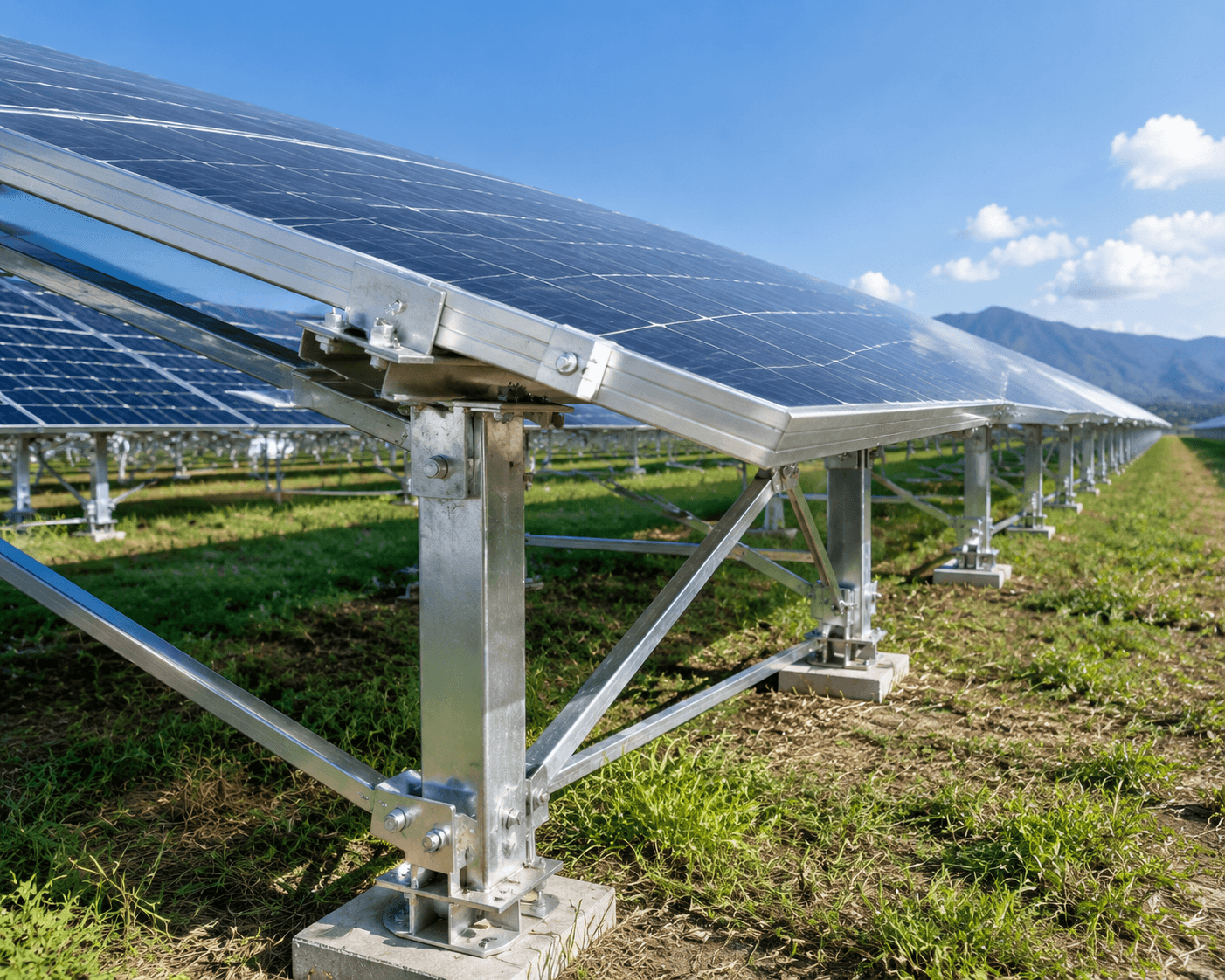
Solar structures are continuously exposed to weather conditions including rain, humidity, ultraviolet radiation, temperature changes and, in some regions, salt-containing coastal air. These conditions make material durability an important factor when selecting structural components.
Compared with conventional galvanized steel, stainless steel flat bar provides excellent corrosion resistance without relying on a protective coating layer. This makes it suitable for applications where long-term reliability and reduced maintenance are important considerations.
Quick Answer: Why Is Stainless Steel Flat Bar Used in Solar Mounting?
- Stainless steel provides excellent resistance to outdoor corrosion and weather exposure.
- 304 stainless steel is commonly used in general outdoor environments.
- 316 stainless steel is preferred for coastal and chloride-rich environments.
- Its durability and recyclability support sustainable construction goals.
Why Stainless Steel Flat Bar Is Used in Solar Mounting Systems
Solar mounting systems require materials that can maintain structural performance for decades. Since photovoltaic installations are normally designed for long service periods, corrosion resistance and material stability are critical considerations.
Stainless steel flat bars are often used as structural connectors, support components, brackets and reinforcement parts because they combine strength with excellent environmental resistance.
Outdoor Exposure Challenges for Solar Structures
- Continuous moisture exposure from rain and humidity.
- Temperature expansion and contraction cycles.
- Ultraviolet radiation and environmental aging.
- Salt spray exposure in coastal areas.
- Chemical contamination in industrial environments.
These factors can accelerate corrosion of traditional carbon steel structures if protective coatings are damaged or degraded over time.
How Stainless Steel Resists Environmental Corrosion
The corrosion resistance of stainless steel comes from its chromium content. Chromium reacts with oxygen to form a thin passive oxide film on the surface, which protects the underlying metal from further oxidation.
Unlike galvanized steel, which depends on a zinc coating for protection, stainless steel maintains corrosion resistance through its alloy structure.
| Protection Method | Material | Characteristics |
|---|---|---|
| Passive chromium oxide layer | Stainless Steel | Self-repairing protective layer formed naturally on the surface |
| Zinc coating | Galvanized Steel | Protection depends on coating thickness and coating condition |
Stainless Steel Flat Bar vs Galvanized Steel for Solar Structures
Both stainless steel and galvanized steel are widely used in outdoor construction. The appropriate choice depends on project requirements, environmental conditions, expected service life and maintenance strategy.
| Factor | Stainless Steel Flat Bar | Galvanized Steel |
|---|---|---|
| Corrosion Resistance | Excellent due to alloy composition | Depends on zinc coating protection |
| Long-term Outdoor Performance | Suitable for demanding environments | Performance affected by coating damage |
| Maintenance Requirement | Generally lower maintenance | May require coating inspection |
| Recyclability | Highly recyclable | Recyclable |
id=”solar_flatbar_part2″
304 and 316 Stainless Steel Flat Bar Selection for Solar Projects
The selection between 304 and 316 stainless steel flat bar depends mainly on environmental exposure, especially the presence of chlorides, humidity and coastal conditions.
Both grades provide excellent corrosion resistance compared with carbon steel, but 316 stainless steel contains molybdenum, which improves resistance to chloride-induced pitting and crevice corrosion.
| Environment | Recommended Grade | Reason |
|---|---|---|
| Inland solar farms with normal weather exposure | 304 Stainless Steel | Provides good corrosion resistance for general outdoor applications |
| Urban solar installations | 304 or 316 | Depends on pollution, humidity and maintenance requirements |
| Coastal solar projects | 316 Stainless Steel | Higher resistance to chloride-containing environments |
| Marine or high salt exposure areas | 316 Stainless Steel | Improved resistance to pitting and crevice corrosion |
Why 316 Stainless Steel Is Preferred in Coastal Solar Applications
Solar mounting systems located near the ocean are exposed to airborne salt particles and chloride ions. These conditions increase the risk of localized corrosion, especially in connection areas and fastener locations.
The molybdenum addition in 316 stainless steel improves resistance to chloride attack, making it a common choice for coastal renewable energy projects.
Stainless Steel and Green Building Requirements
Green building projects focus not only on energy efficiency but also on the environmental impact, durability and lifecycle performance of construction materials.
Stainless steel can support sustainable building objectives because it combines long service life, corrosion resistance and excellent recyclability.
How Stainless Steel Supports Sustainable Construction
- Long service life reduces the need for frequent replacement.
- High corrosion resistance helps reduce maintenance requirements.
- Stainless steel can be recycled repeatedly without losing essential properties.
- Durable materials can contribute to improved lifecycle performance of buildings.
Green building rating systems such as LEED evaluate factors including material selection, durability, recycled content and environmental impact. Stainless steel may contribute to sustainable construction strategies depending on the overall project design and documentation.
Service Life Comparison Between Stainless Steel and Galvanized Steel
The service life of outdoor structural materials depends on environment, design, installation quality and maintenance practices. In solar mounting systems, corrosion protection is particularly important because structures are expected to operate reliably for decades.
| Factor | Stainless Steel | Galvanized Steel |
|---|---|---|
| Corrosion Protection | Provided by alloy composition and passive film | Provided mainly by zinc coating |
| Effect of Surface Damage | Passive layer can reform naturally | Damaged coating may expose steel substrate |
| Maintenance Demand | Generally lower | May require coating inspection |
| Suitable Environment | General outdoor to severe environments | Many outdoor applications depending on coating condition |
Surface Treatment Recommendations for Solar Stainless Steel Flat Bar
Surface finish selection affects appearance, cleanliness and long-term maintenance of stainless steel components used in solar and architectural projects.
2B Finish
2B finish is a commonly supplied stainless steel surface with a smooth and practical appearance. It is suitable for many structural and industrial applications where appearance requirements are moderate.
Brushed Finish
Brushed finishes are often selected for visible architectural applications because they provide a uniform appearance and help hide minor surface marks.
Passivation Treatment
Passivation removes surface contaminants and supports the formation of a stable passive layer, improving surface cleanliness for demanding outdoor applications.
Applications of Stainless Steel Flat Bar in Renewable Energy Projects
With the continuous development of renewable energy infrastructure, material selection has become increasingly important for solar mounting systems and related outdoor structures.
Stainless steel flat bars can be used in various renewable energy applications where corrosion resistance, structural reliability and long service life are required.
| Application | Function of Stainless Steel Flat Bar |
|---|---|
| Solar Panel Mounting Systems | Used for brackets, connectors, reinforcement components and structural supports |
| Ground-Mounted Solar Farms | Provides corrosion-resistant support components for outdoor installations |
| Commercial Green Buildings | Used in architectural structures requiring durability and appearance |
| Energy Storage Facilities | Suitable for components exposed to outdoor environmental conditions |
Stainless Steel Flat Bar Standards for Solar Structures
Stainless steel flat bars used in structural and industrial applications are commonly supplied according to international standards that define chemical composition, mechanical properties and dimensional requirements.
| Standard | Description |
|---|---|
| ASTM A276 | Standard specification for stainless steel bars and shapes |
| ASTM A484 | General requirements for stainless steel bars and shapes |
| EN 10088 | European stainless steel grades and technical delivery conditions |
| EN 10278 | Dimensions and tolerances for bright steel products |
Key Factors When Choosing Stainless Steel Flat Bar for Solar Projects
Before selecting stainless steel flat bar for renewable energy applications, engineers and buyers should evaluate several factors to ensure long-term performance.
- Environmental conditions including humidity, rainfall and salt exposure.
- Required service life of the solar installation.
- Material grade selection between 304 and 316 stainless steel.
- Surface finish and fabrication requirements.
- Connection design and installation conditions.
- Required documentation such as material certificates and inspection records.
FAQ
Why is stainless steel used for solar mounting systems?
Stainless steel is used in solar mounting systems because it provides excellent corrosion resistance, long-term durability and low maintenance requirements in outdoor environments.
Is stainless steel better than galvanized steel for solar structures?
Stainless steel can provide better long-term corrosion resistance in demanding environments, especially where coating damage or salt exposure may affect galvanized steel performance.
Which stainless steel grade is suitable for coastal solar projects?
316 stainless steel is commonly selected for coastal solar projects because its molybdenum content improves resistance to chloride-related corrosion.
Can stainless steel contribute to green building projects?
Yes. Stainless steel can support sustainable construction objectives through its durability, recyclability and ability to maintain performance over long service periods.
How long can stainless steel solar structures last?
The service life depends on material grade, environmental conditions, design and maintenance. Properly selected stainless steel components can provide reliable long-term performance in outdoor applications.
Stainless Steel Flat Bar Supply Support
SAKY STEEL supplies stainless steel flat bars for industrial, architectural and renewable energy applications, including 304, 304L, 316 and 316L grades.
Products can be supplied with customized dimensions, surface finish options, material certificates and inspection documentation according to project requirements.
For stainless steel flat bar applications, please provide the required grade, dimensions, quantity and working environment for material evaluation.
Conclusion
Stainless steel flat bar provides a durable material option for solar mounting systems and green building projects where corrosion resistance, service life and sustainability are important considerations.
Compared with galvanized steel, stainless steel offers excellent corrosion resistance through its alloy structure and can reduce long-term maintenance requirements in demanding environments.
By selecting the appropriate grade, surface treatment and design approach, stainless steel flat bars can support reliable renewable energy infrastructure and modern sustainable construction.
Post time: Jul-24-2026