Introduction
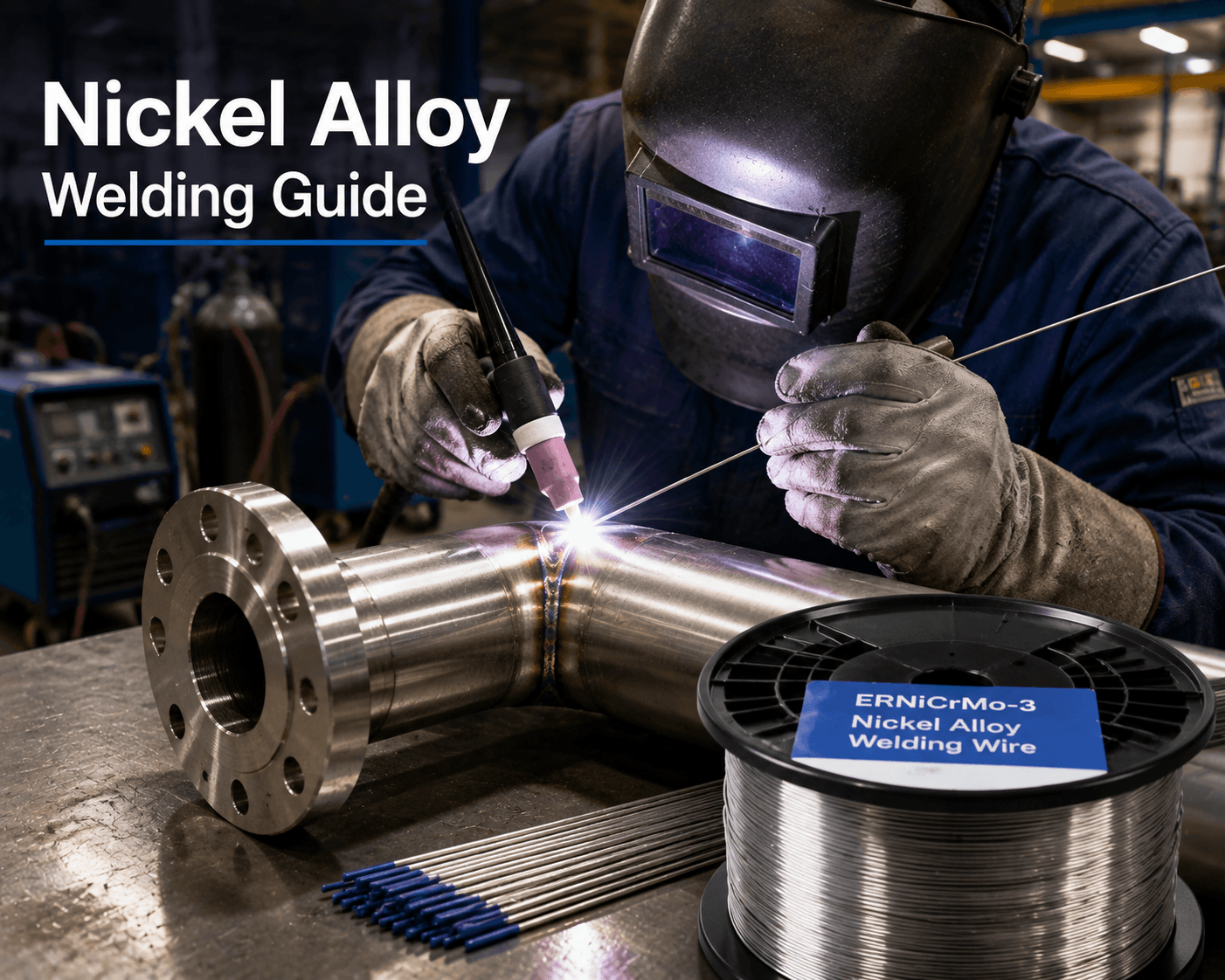
Nickel alloy welding and fabrication require specialized knowledge because nickel-based materials are designed to maintain strength, corrosion resistance and stability under demanding service conditions.
Nickel alloys are widely used in aerospace, chemical processing, marine engineering, power generation and high-temperature equipment due to their excellent mechanical properties and corrosion resistance.
However, their unique metallurgical characteristics make welding and fabrication different from conventional stainless steels and carbon steels. Proper welding processes, filler metal selection, heat control and fabrication methods are essential for achieving reliable performance.
Quick Answer: How Are Nickel Alloys Welded?
- GTAW (TIG), GMAW (MIG) and laser welding are commonly used for nickel alloys.
- Filler metals should match the base alloy and service environment.
- Heat input control is important to prevent cracking and distortion.
- Proper surface preparation improves weld quality.
Why Is Nickel Alloy Welding Challenging?
Nickel alloys contain high levels of nickel combined with elements such as chromium, molybdenum, iron and other alloying additions. These elements provide excellent corrosion resistance and high-temperature strength but also influence welding behavior.
High Alloy Content
The complex chemical composition of nickel alloys requires careful control of welding parameters. Improper procedures may affect corrosion resistance and mechanical properties.
Heat Input Control
Nickel alloys generally require controlled heat input during welding. Excessive heat may increase distortion, affect microstructure and create unfavorable welding conditions.
Surface Cleanliness
Nickel alloy welding requires clean surfaces because contamination from oil, sulfur, lead or other materials may negatively affect weld quality.
Nickel Alloy Welding Processes
Different welding methods are selected according to component design, thickness, production requirements and required weld quality.
| Welding Process | Characteristics | Typical Applications |
|---|---|---|
| GTAW / TIG Welding | Excellent control and high weld quality | Precision components, thin sections, critical equipment |
| GMAW / MIG Welding | Higher productivity for larger components | Industrial fabrication |
| Laser Welding | Low heat input and precise welding | Advanced manufacturing applications |
| SMAW | Suitable for repair and field applications | Maintenance work |
Nickel Alloy Filler Metal Selection Guide
Selecting the correct filler metal is a critical step in nickel alloy welding. The filler metal should provide compatible chemical composition, corrosion resistance and mechanical properties with the base material.
Different nickel alloy families, including Inconel, Incoloy, Hastelloy and Monel, require different filler metals depending on alloy composition and service conditions.
| Base Alloy | Recommended Filler Metal | Typical Application |
|---|---|---|
| Inconel 600 / 601 | ERNiCr-3 | High temperature equipment and oxidation-resistant components |
| Inconel 625 | ERNiCrMo-3 | Marine, chemical processing and corrosion-resistant applications |
| Inconel 718 | ERNiFeCr-2 | Aerospace and high-strength components |
| Hastelloy C276 / C22 | ERNiCrMo-4 / ERNiCrMo-10 | Severe corrosion environments |
| Monel 400 | ERNiCu-7 | Marine and chemical applications |
ERNiCr-3 vs ERNiCrMo-3 Welding Wire
ERNiCr-3 and ERNiCrMo-3 are two widely used nickel alloy welding wires. The main difference is the addition of molybdenum, which improves corrosion resistance in more aggressive environments.
| Filler Wire | Main Characteristics | Matching Materials |
|---|---|---|
| ERNiCr-3 | Nickel-chromium filler with good oxidation and corrosion resistance | Inconel 600, 601, 800 series, stainless steel dissimilar welding |
| ERNiCrMo-3 | Nickel-chromium-molybdenum filler with enhanced corrosion resistance | Inconel 625, Hastelloy alloys, high corrosion environments |
Nickel Alloy Fabrication Methods
Nickel alloys require appropriate fabrication methods because of their high strength, work hardening characteristics and corrosion-resistant properties.
| Fabrication Process | Considerations | Applications |
|---|---|---|
| Cutting | Requires suitable tools due to work hardening tendency | Plates, bars, pipes and components |
| Machining | Lower cutting speed and proper tooling are commonly required | Precision components |
| Forming | Controlled forming processes help prevent cracking | Tubes, vessels and fabricated parts |
| Welding | Requires compatible filler metal and heat control | Industrial equipment and assemblies |
Nickel Alloy Welding Defects and Solutions
Although nickel alloys have excellent weldability when proper procedures are followed, incorrect welding parameters may result in defects that affect service performance.
| Defect | Possible Cause | Prevention |
|---|---|---|
| Cracking | Incorrect filler selection, contamination or excessive heat input | Clean surface and control welding parameters |
| Porosity | Poor shielding gas protection or surface contamination | Improve gas protection and preparation |
| Distortion | Excessive heat input | Optimize welding sequence and heat control |
Nickel Alloy Grade Welding and Fabrication Guide
Different nickel alloy families have different chemical compositions and service characteristics. Selecting suitable fabrication methods and welding materials according to the alloy grade is essential for maintaining performance.
| Nickel Alloy Family | Common Grades | Fabrication and Welding Considerations |
|---|---|---|
| Inconel | 600, 601, 625, 718 | Requires controlled heat input and suitable nickel alloy filler metals |
| Hastelloy | C276, C22, B2 | Designed for severe corrosion environments; proper filler selection is critical |
| Monel | Monel 400, K500 | Commonly welded with nickel-copper filler metals |
| Incoloy | 800, 800H, 825 | Used for high-temperature and corrosion-resistant equipment |
Nickel Alloy Welding Standards
Nickel alloy welding procedures and filler materials are commonly specified according to international welding standards. The applicable standard depends on industry requirements and project specifications.
| Standard | Application |
|---|---|
| AWS A5.14 | Specification for nickel and nickel alloy welding electrodes and rods |
| ASME Section IX | Welding procedure qualification requirements |
| EN ISO 18274 | Nickel and nickel alloy welding consumables |
Nickel Alloy Welding Applications
Nickel alloys are selected for applications requiring excellent corrosion resistance, high-temperature strength and long-term reliability.
| Industry | Typical Applications |
|---|---|
| Aerospace | Engine components, high-temperature parts and welded assemblies |
| Chemical Processing | Reactors, pipelines, heat exchangers and corrosion-resistant equipment |
| Power Generation | Boilers, turbines and high-temperature components |
| Marine Engineering | Marine equipment and seawater-resistant components |
| Oil and Gas | Corrosion-resistant piping and pressure equipment |
FAQ
What is nickel alloy welding?
Nickel alloy welding is a welding process used to join nickel-based materials while maintaining corrosion resistance, mechanical strength and high-temperature performance.
Which welding wire is used for nickel alloys?
The suitable welding wire depends on the base alloy. Common nickel alloy fillers include ERNiCr-3, ERNiCrMo-3, ERNiFeCr-2 and ERNiCu-7.
Can nickel alloys be welded to stainless steel?
Yes. Nickel alloys can be welded to stainless steel using suitable filler metals and qualified welding procedures.
Do nickel alloys require preheating before welding?
Many nickel alloys do not require traditional preheating, but proper surface preparation, heat input control and welding procedure control are important.
What causes defects during nickel alloy welding?
Common causes include contamination, incorrect filler selection, excessive heat input and unsuitable welding parameters.
Nickel Alloy Welding Materials from SASA ALLOY
SASA ALLOY provides nickel alloy welding materials including Inconel welding wire, nickel alloy filler metals and customized welding solutions for industrial applications.
Available materials include ERNiCr-3, ERNiCrMo-3, ERNiFeCr-2 and other nickel alloy welding consumables according to application requirements.
Technical support is available for filler metal selection, alloy matching, product specifications and application requirements.
For nickel alloy welding material inquiries, please provide base material grade, welding process, wire diameter, quantity and application information.
Conclusion
Nickel alloy welding and fabrication require proper material selection, suitable welding processes and controlled fabrication methods to achieve reliable performance.
Understanding nickel alloy grades, filler metal selection and welding requirements helps engineers and buyers select the correct materials for demanding industrial environments.
With appropriate welding procedures and quality control, nickel alloys provide long-term service performance in aerospace, chemical, energy and marine applications.
Post time: Jul-27-2026