Introduction
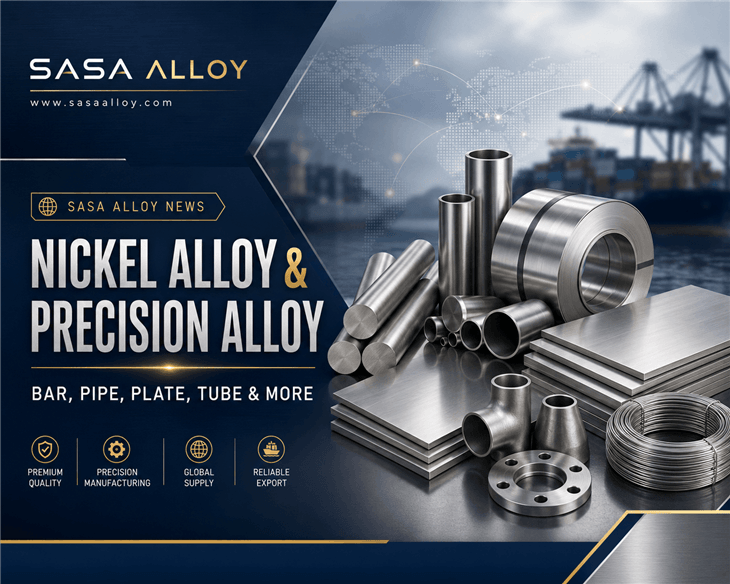
Nickel alloy price drivers are the material, production, inspection and commercial factors used to calculate the cost of nickel alloy bars, plates, sheets, pipes, tubes, wires, forgings and machined components. The main drivers are alloy grade, product form, dimensions, manufacturing route, order quantity, heat treatment, testing, certification, machining, export packing and the market cost of nickel and other alloying elements.
Purchasing teams use these factors to compare quotations and determine why two offers for a product described as “nickel alloy pipe” or “Inconel plate” may differ substantially. A technically valid comparison requires the same UNS grade, product standard, dimensions, delivery condition, testing scope, certificate type, packing and delivery terms. The lowest unit price may exclude processing or inspection that another supplier has included.
Key Takeaways
- Grade chemistry is a major price factor because nickel, molybdenum, cobalt, niobium, copper and chromium have different material costs.
- Bar, plate, seamless pipe, welded pipe and forging prices cannot be compared using chemistry alone.
- Unusual dimensions and tight tolerances increase processing time and reduce manufacturing yield.
- MTC, EN 10204 3.1, PMI, UT, corrosion testing and third-party inspection should be included in the RFQ.
- A reliable quotation must define both the technical specification and the commercial delivery scope.
How Nickel Alloy Prices Are Built
Nickel alloy quotations generally combine raw-material cost with manufacturing and conversion charges. Raw-material cost reflects the alloy chemistry and current input-metal values. Conversion charges cover melting, remelting, forging, rolling, extrusion, drawing, heat treatment, machining, testing, surface finishing and packaging.
Final Price = Alloy Material Cost + Production Conversion + Processing + Inspection + Certification + Packing + Logistics
This formula is a purchasing model rather than a universal pricing rule. Some quotations are based on finished weight, while others include starting-material weight, cutting loss or minimum production quantity. Buyers should confirm whether the price is per kilogram, metric ton, meter, piece or finished component.
Main Nickel Alloy Price Drivers
| Price Driver | Why It Changes Cost | What the Buyer Should Specify |
|---|---|---|
| Alloy grade | Different nickel, molybdenum, cobalt, chromium, copper and niobium contents create different material premiums. | Trade name, UNS number and accepted equivalent designation. |
| Product form | Plate, bar, seamless pipe, welded pipe, wire and forgings use different production routes. | Exact form and applicable product specification. |
| Dimensions | Large, thin, heavy-wall or unusual sizes may require dedicated starting material and additional processing. | Finished dimensions, length, tolerance and machining allowance. |
| Quantity | Setup, testing and documentation costs are distributed across the order quantity. | Pieces, meters or total weight by size and grade. |
| Delivery condition | Solution annealing, aging, stress relief and controlled cooling require additional operations. | Annealed, solution-treated, aged or another specified condition. |
| Surface and machining | Grinding, polishing, peeling, turning, beveling and precision cutting add production stages. | Surface finish, roughness, cut length, ends and finished tolerance. |
| Testing and certification | Laboratory testing, NDT, reporting and inspection witnessing add time and cost. | MTC, EN 10204 3.1, PMI, UT, pressure or corrosion testing. |
| Packing and logistics | Wooden cases, pallets, moisture protection, long packages and freight affect delivered cost. | Destination, Incoterm, package limits and transport method. |
How Grade Chemistry Affects Price
Nickel alloy grades are designed for different corrosion, strength and temperature requirements. Their prices therefore reflect both alloying content and manufacturing difficulty. A high-molybdenum corrosion-resistant alloy generally has a different material cost from a nickel-chromium alloy intended for oxidation resistance.
| Grade Family | Example Grade | Material Benefit | Main Pricing Influence |
|---|---|---|---|
| Commercially pure nickel | Nickel 200 / 201 | Good performance in selected caustic and reducing environments. | Nickel content, purity, carbon control and product-form availability. |
| Nickel-chromium-molybdenum | Alloy 625 / UNS N06625 | Strength and corrosion resistance in selected chloride, marine and chemical services. | Nickel, chromium, molybdenum and niobium content. |
| Nickel-iron-chromium-molybdenum-copper | Alloy 825 / UNS N08825 | Resistance in selected sulfuric acid, phosphoric acid and oil-and-gas environments. | Nickel, molybdenum and copper additions plus product availability. |
| Low-carbon nickel-chromium-molybdenum | Alloy C276 / UNS N10276 | Resistance to a broad range of aggressive chemical environments. | High nickel and molybdenum content, tungsten addition and limited size availability. |
| Nickel-chromium-iron | Alloy 600 / UNS N06600 | Oxidation resistance and performance in selected high-temperature and caustic conditions. | Nickel-chromium content, condition and required high-temperature properties. |
| Precipitation-hardening nickel alloy | Alloy 718 / UNS N07718 | High strength after controlled heat treatment. | Complex chemistry, remelting requirements, heat treatment and property testing. |
An expensive grade is not automatically the best material for an application. Alloy 625 may be selected for chloride-bearing or marine systems, while Alloy 600 may be more appropriate for a selected high-temperature environment. Material selection should be based on temperature, pressure, chemical concentration, impurities, load and fabrication requirements.
How Product Form Changes the Price
The same alloy grade can have different prices as bar, plate, seamless pipe or forging because each form requires a different starting material and production process. A plate may be rolled from slab, while a seamless pipe may require billet piercing, extrusion, cold drawing and several intermediate heat treatments.
| Product Form | Typical Production Route | Important Cost Driver |
|---|---|---|
| Plate and sheet | Melting, slab production, rolling, heat treatment and finishing | Thickness, width, flatness, surface and cutting yield |
| Bar and rod | Casting, forging or rolling, heat treatment and finishing | Diameter, remelting route, peeling, grinding and UT |
| Seamless pipe and tube | Billet or hollow preparation, extrusion, drawing, annealing and testing | OD-wall combination, number of drawing passes and NDT |
| Welded pipe and tube | Plate or strip forming, welding, heat treatment and examination | Weld process, plate input, examination and pressure testing |
| Forging | Billet preparation, forging, heat treatment, testing and machining | Forging ratio, shape, machining allowance and test locations |
| Wire | Rod preparation, repeated drawing, annealing and spooling | Diameter, tensile range, surface and coil or spool format |
Size, Tolerance and Manufacturing Yield
Non-standard dimensions affect price because they may require dedicated raw material or create unusable offcuts. A narrow plate cut from a wider sheet may be priced using the input plate weight. A short bar with a finished diameter may require an oversized forged or rolled bar before machining.
Thin-wall seamless tube, heavy-wall pipe, large-diameter bar and extra-wide plate may also fall outside routine production ranges. These products can require more processing passes, special tooling or a minimum production quantity.
Tighter tolerances increase measurement and processing requirements. Buyers should identify which dimensions are functionally critical rather than requesting precision tolerances for every surface. Diameter tolerance, straightness, flatness, ovality, wall variation and surface roughness should be stated separately when applicable.
Standards and Certification Costs
The product standard determines the material scope, manufacturing route, dimensions, heat treatment and required tests. It must match the supplied form. A bar standard should not be used as the sole specification for plate or pipe.
| Material and Form | Common ASTM Reference | Purchasing Check |
|---|---|---|
| Alloy 625 bar | ASTM B446 | Grade, diameter, condition, mechanical properties and finishing |
| Alloy 625 plate and sheet | ASTM B443 | Thickness, dimensions, condition, finish and flatness |
| Alloy 625 seamless pipe and tube | ASTM B444 | OD, wall, length, condition and required examination |
| Alloy 825 plate and sheet | ASTM B424 | Grade, thickness, solution treatment and mechanical properties |
| Alloy 825 seamless pipe and tube | ASTM B423 | Dimensions, condition, testing and general pipe requirements |
| Alloy C276 bar | ASTM B574 | UNS grade, dimensions, condition and actual test values |
| Alloy C276 seamless pipe and tube | ASTM B622 | Seamless construction, dimensions, testing and certification |
The current edition and complete scope of each specification should be confirmed before order placement. ASME, EN, DIN, NACE or project specifications may introduce additional requirements that affect price and lead time.
MTC and EN 10204 3.1
A Mill Test Certificate should identify the material grade, UNS number, product standard, heat number, dimensions, delivery condition, chemical composition and applicable mechanical properties. EN 10204 3.1 documentation should be requested before material is allocated or production begins.
Certificate requirements can affect price when additional testing, document review or traceability procedures are needed. Buyers can review the verified Nickel Alloy MTC Guide for more information about UNS designations, heat numbers and chemical-analysis checks.
Supplementary Inspection
PMI, UT, eddy-current testing, hydrostatic testing, intergranular corrosion testing, dimensional reports and third-party inspection are separate requirements. They should not be assumed to be included in a standard quotation.
PMI can support alloy identity verification but does not replace full laboratory chemical analysis. Hydrostatic testing is relevant to appropriate pipe and tube products, while it has no normal application to solid bar or plate. Inspection method, acceptance criteria and sampling should be stated in the purchase specification.
Application-Based Price Considerations
| Application | Common Material Direction | Additional Price Driver |
|---|---|---|
| Chemical processing | Alloy C276, C22, 625, 825 or another medium-specific grade | Corrosion testing, traceability and solution-treatment requirements |
| Offshore and seawater systems | Alloy 625 or another project-approved alloy | NDT, pressure testing, documentation and protective packing |
| High-temperature equipment | Alloy 600, 601, 617 or another temperature-specific alloy | Heat treatment, elevated-temperature properties and surface condition |
| Oil and gas equipment | Alloy 625, 825, 718 or project-approved material | NACE or project requirements, UT, PMI and third-party inspection |
| Heat exchangers | Selected corrosion-resistant seamless or welded tube grade | Wall tolerance, eddy current, hydrostatic testing and cleanliness |
How to Compare Nickel Alloy Quotations
- ✅ Confirm that each quotation uses the same UNS grade and product standard.
- ✅ Compare seamless and welded pipe separately.
- ✅ Check whether dimensions are standard mill sizes or finished processed sizes.
- ✅ Confirm whether pricing is based on theoretical, actual or input material weight.
- ✅ Compare heat treatment, surface, machining and cutting requirements.
- ✅ Verify whether MTC, EN 10204 3.1 and additional reports are included.
- ✅ Review testing scope, sampling and third-party inspection cost.
- ✅ Compare export packing, Incoterm, freight and destination charges.
- ✅ Confirm quotation validity because alloy input costs and freight may change.
Nickel Alloy RFQ Checklist
Include the following information to receive a technically comparable quotation:
- Trade name, UNS grade and accepted equivalent designation
- Bar, plate, sheet, pipe, tube, wire, forging or machined form
- Applicable ASTM, ASME, EN or project standard
- Finished dimensions, tolerances and length
- Quantity by size, piece, meter or total weight
- Solution-annealed, aged or other required condition
- Surface finish, roughness, cutting and machining
- MTC or EN 10204 3.1 certificate requirement
- PMI, UT, EC, hydrostatic or corrosion-testing requirements
- Third-party inspection and document-approval requirements
- Heat-number marking and traceability
- Export packing and maximum package weight
- Destination, Incoterm and required delivery schedule
Related Nickel Alloy Resources
The following verified SASA ALLOY pages provide additional information for material selection and quotation preparation:
- SASA ALLOY Product Range for nickel alloy bars, plates, pipes, fittings and other product forms.
- Nickel Alloy Products for commercially pure nickel and related alloy grades.
- Nickel Alloy MTC Guide for certificate, UNS grade and heat-number checks.
- Seamless vs Welded Nickel Alloy Pipe for product-form and inspection comparison.
Frequently Asked Questions
What are the main nickel alloy price drivers?
The main drivers are alloy chemistry, product form, dimensions, quantity, manufacturing route, heat treatment, surface processing, testing, certification, packing and freight. A valid price comparison requires the same complete specification.
Why is Alloy C276 generally priced differently from Alloy 600?
The grades use different alloying systems and are designed for different service conditions. Alloy C276 contains substantial molybdenum and tungsten additions for aggressive corrosion environments, while Alloy 600 is a nickel-chromium-iron alloy commonly selected for other corrosion and high-temperature conditions.
Why can seamless nickel alloy pipe cost more than welded pipe?
Seamless pipe may require billet or hollow preparation, extrusion, repeated cold working, intermediate annealing and additional dimensional control. Welded pipe begins with plate or strip and has a different production and inspection route.
Do certificates increase nickel alloy prices?
Standard MTC documentation may be part of the normal supply scope, while EN 10204 3.1, additional testing, special report formats or third-party witnessing may add cost. Certificate requirements should be confirmed before production.
Why do small nickel alloy orders have a higher unit price?
Setup, cutting, testing, documentation and packing costs must be distributed across fewer kilograms or pieces. Small orders may also require purchasing a larger standard raw-material size than the finished quantity.
What information is needed for a nickel alloy quotation?
Provide the grade, UNS number, product form, standard, dimensions, tolerances, quantity, condition, surface, inspection documents, packing, destination and requested delivery date. Drawings should be included for machined or custom components.
Request a Nickel Alloy Price Review
A technically complete RFQ allows the quotation to reflect the correct alloy input, manufacturing route, processing, inspection and export scope. Send SASA ALLOY the UNS grade, product form, standard, dimensions, quantity, condition, certification requirements, packing and destination for a project-specific price review.
Post time: Jul-17-2026