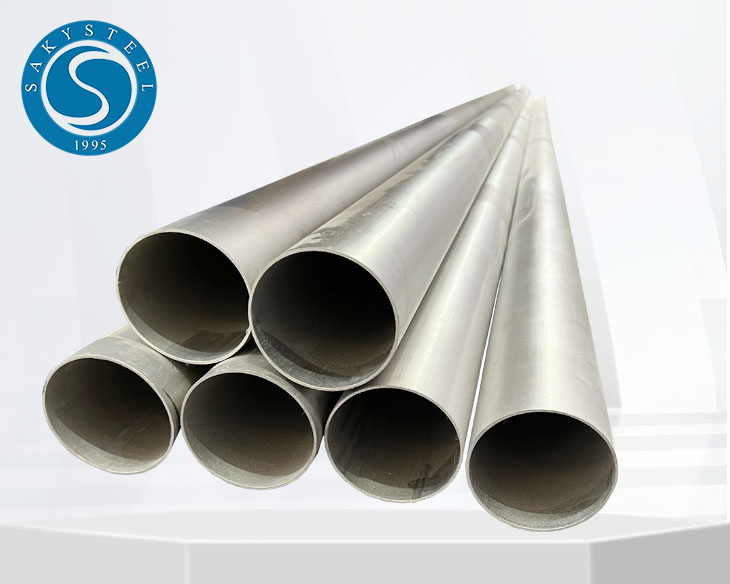
Nickel Alloy Pipe Selection Guide for High-Temperature Applications
High-temperature piping needs more than heat resistance. The alloy must match the atmosphere, stress level, pressure and corrosion conditions.
Inconel 600 and 601 are often considered where oxidation resistance is important. Incoloy 800H and 800HT are commonly selected for long-term elevated-temperature service. Inconel 625 is useful when corrosion resistance must be combined with good strength.
There is no single “best” nickel alloy pipe for every high-temperature system. The correct choice depends on the actual service conditions and design code.
Quick Selection
- Oxidizing hot environment: consider Alloy 600 or 601.
- Long-term elevated-temperature service: consider Alloy 800H or 800HT.
- Heat plus aggressive corrosion: consider Alloy 625.
- Severe chemical corrosion: evaluate a corrosion-resistant grade such as C276 against the actual process medium.
High-Temperature Nickel Alloy Pipe Comparison
| Grade | Main Selection Reason | Typical Service |
|---|---|---|
| Inconel 600 UNS N06600 |
Heat and oxidation resistance | Furnace, heater and thermal-processing systems |
| Inconel 601 UNS N06601 |
Strong oxidation resistance at elevated temperature | Furnace and high-temperature process equipment |
| Incoloy 800H UNS N08810 |
Elevated-temperature strength and structural stability | Process heaters and thermal equipment |
| Incoloy 800HT UNS N08811 |
Long-term high-temperature service | High-temperature process systems |
| Inconel 625 UNS N06625 |
Corrosion resistance combined with useful strength | Chemical, offshore and demanding process piping |
| Hastelloy C276 UNS N10276 |
Resistance to severe chemical corrosion | Aggressive chemical-process systems |
Important: alloy selection should not be based on temperature alone. Pressure, stress, atmosphere, process chemistry and design life also matter.
Which Nickel Alloy Pipe Should You Choose?
For Oxidizing High-Temperature Environments
Alloy 600 and Alloy 601 are common candidates. Both are nickel-chromium alloys. They are used where resistance to heat and oxidation is important.
Alloy 601 is often evaluated when oxidation resistance is a primary requirement. The actual gas atmosphere must still be reviewed.
For Long-Term Elevated-Temperature Service
Alloy 800H and 800HT are designed for elevated-temperature applications. Their chemistry and processing are controlled for high-temperature service.
They are widely considered for process heaters, thermal equipment and similar systems. The specified condition must match the project requirement.
For Heat Plus Corrosion
Alloy 625 is often considered when the system combines elevated temperature with an aggressive corrosive environment.
It is especially relevant when chloride, seawater or demanding chemical exposure is part of the design problem. The specific medium and concentration must be checked.
Nickel Alloy Pipe Standards
The ASTM standard depends on both alloy grade and product form. Seamless and welded products may use different specifications.
| Standard | Typical Scope | Relevant Example |
|---|---|---|
| ASTM B167 | Seamless pipe and tube for specified nickel-chromium alloy grades | Alloy 600 and 601 within the applicable specification scope |
| ASTM B407 | Nickel-iron-chromium alloy seamless pipe and tube | Alloy 800 / 800H / 800HT |
| ASTM B444 | Specified nickel-chromium-molybdenum alloy seamless pipe and tube | UNS N06625 Alloy 625 |
| ASTM B622 | Seamless nickel and nickel-cobalt alloy pipe and tube within its listed grades | Includes UNS N10276 C276 within the applicable specification scope |
Always state the required standard on the RFQ. Also specify whether the product must be seamless or welded.
High-Temperature Pipe Selection by Application
| Application | Common Alloy Candidates | Main Selection Issue |
|---|---|---|
| Industrial Furnaces | 600 / 601 / 800H / 800HT | Oxidation, atmosphere and thermal exposure |
| Process Heaters | 800H / 800HT | Long-term elevated-temperature strength |
| Chemical Processing | 625 / C276 | Chemical corrosion plus temperature |
| Offshore / Marine Systems | 625 | Chloride and seawater exposure |
| Power and Thermal Equipment | 600 / 601 / 800H / 800HT | Heat, oxidation and design stress |
What Buyers Should Include in an RFQ
A short but complete RFQ helps avoid the wrong alloy or pipe specification.
- Nickel alloy grade and UNS number
- ASTM / ASME or project standard
- Seamless or welded construction
- Outside diameter and wall thickness
- Length and quantity
- Required delivery or heat-treatment condition
- Operating temperature and process medium
- Design pressure if relevant
- MTC and heat-number traceability requirements
- PMI, UT, ET, RT, hydrostatic or other inspection requirements where applicable
Do not specify a maximum service temperature from a generic alloy table alone. The allowable design temperature depends on the code, stress, pressure, environment and component design.
FAQ
Which nickel alloy pipe is best for high temperature?
There is no universal best grade. Alloy 600 and 601 are often considered for oxidation-resistant service. Alloy 800H and 800HT are common choices for long-term elevated-temperature applications. Alloy 625 is useful when corrosion resistance is also critical.
What is the difference between Inconel 600 and Incoloy 800H pipe?
Alloy 600 is a nickel-chromium-iron alloy widely used for heat and corrosion resistance. Alloy 800H is an iron-nickel-chromium alloy developed for elevated-temperature service. The correct choice depends on temperature, stress, atmosphere and project requirements.
Is Inconel 625 suitable for high-temperature piping?
Alloy 625 can be used in demanding temperature and corrosion environments. It is often selected when corrosion resistance is important. The allowable service conditions must still be checked against the design code and actual process environment.
Which ASTM standard is used for nickel alloy pipe?
It depends on the alloy and manufacturing route. Examples include ASTM B167, B407, B444 and B622 for applicable seamless pipe and tube grades. Welded products can require different specifications.
What information is needed for a nickel alloy pipe quotation?
Provide the grade, standard, pipe type, OD, wall thickness, length and quantity. Add operating temperature, process medium and inspection requirements when available.
Need a High-Temperature Nickel Alloy Pipe?
Send SASA ALLOY your service conditions and pipe specification.
Include the alloy grade if known. If it is not confirmed, provide the operating temperature, process medium, pressure, size and inspection requirements for technical review.
Post time: Aug-17-2026