Introduction
Monel is a nickel-copper alloy family known for its excellent corrosion resistance, especially in marine and chemical environments. One common question from engineers and buyers is whether Monel is magnetic.
Monel is generally considered a non-magnetic or weakly magnetic material. However, its magnetic response can vary depending on alloy grade, manufacturing condition, cold working and heat treatment.
Understanding the magnetic properties of Monel is important for applications where material behavior in magnetic fields, electrical equipment or precision components needs to be considered.
Quick Answer: Is Monel Magnetic?
- Monel 400: Generally considered non-magnetic because of its nickel-copper solid solution structure.
- Monel K500: May show weak magnetic response depending on heat treatment and processing condition.
- Magnetic behavior should not be used as the only method for identifying Monel materials.
Why Does Monel Have Different Magnetic Behavior?
The magnetic response of Monel alloys is influenced by chemical composition, manufacturing process and metallurgical condition.
1. Alloy Composition
Monel alloys mainly consist of nickel and copper. The combination of these elements creates a corrosion-resistant alloy with unique physical properties, including relatively low magnetic response compared with many ferrous materials.
The exact magnetic behavior depends on the specific alloy grade and its internal structure.
2. Cold Working Effects
Manufacturing processes such as rolling, drawing and bending can influence the microstructure of Monel materials.
Cold worked Monel may show different magnetic characteristics compared with fully annealed material. Therefore, material condition should be considered when evaluating magnetic properties.
3. Heat Treatment Effects
Monel K500 is strengthened through precipitation hardening. The aging treatment used to improve mechanical properties may also influence its magnetic response.
For applications requiring specific magnetic performance, testing under the actual material condition is recommended.
Magnetic Properties of Monel 400 and Monel K500
Different Monel grades may show different magnetic behavior because of differences in composition and processing condition.
| Grade | Magnetic Behavior | Main Reason |
|---|---|---|
| Monel 400 | Generally non-magnetic | Nickel-copper solid solution structure |
| Monel K500 | May show weak magnetic response | Age hardening and processing condition effects |
Factors Affecting Monel Magnetism
| Factor | Effect |
|---|---|
| Material Grade | Different Monel grades have different magnetic responses. |
| Cold Working | May change the internal structure and magnetic behavior. |
| Heat Treatment | Can influence magnetic response, especially for precipitation hardened grades. |
| Material Condition | Annealed and processed conditions may behave differently. |
How to Test Whether Monel Is Magnetic?
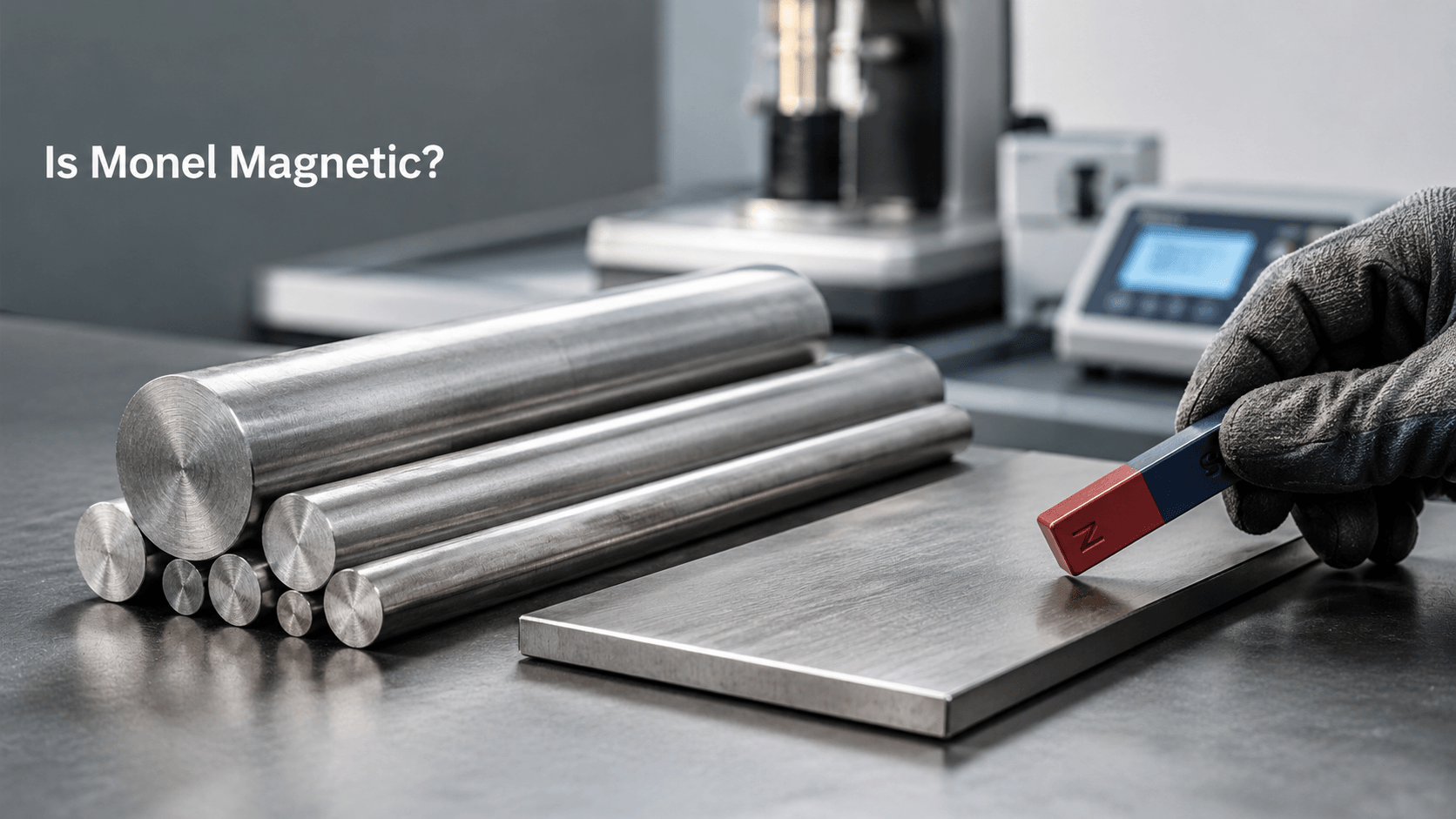
A simple magnet test can provide a quick indication of magnetic response, but it cannot be used as a reliable method for identifying Monel alloys or verifying material grade.
For industrial applications, professional material testing methods should be used when alloy confirmation is required.
| Testing Method | Purpose |
|---|---|
| Magnet Test | Provides a quick indication of magnetic response. |
| Magnetic Permeability Measurement | Provides more accurate measurement of magnetic behavior. |
| PMI Testing | Confirms alloy composition and material identification. |
For critical applications, material identification should rely on chemical composition analysis and certified inspection documents rather than magnetic response alone.
Applications Where Monel Magnetic Properties Matter
Although Monel is mainly selected for corrosion resistance and mechanical performance, its magnetic behavior can be important in specific applications.
| Application | Why Magnetic Properties Matter |
|---|---|
| Marine Equipment | Monel is selected mainly for corrosion resistance in seawater environments. |
| Electrical Components | Low magnetic response may be required in certain designs. |
| Aerospace Components | Material properties must match application requirements. |
| Chemical Processing Equipment | Corrosion resistance is usually the primary consideration. |
FAQ
Is Monel 400 completely non-magnetic?
Monel 400 is generally considered non-magnetic. However, manufacturing condition and cold working may influence its magnetic response.
Will a magnet stick to Monel?
A magnet usually does not strongly attract Monel 400. Some Monel grades or processed conditions may show weak magnetic response.
Is Monel K500 magnetic?
Monel K500 may show measurable magnetic response depending on heat treatment and processing condition due to its precipitation hardening characteristics.
Can magnetic testing identify Monel material?
No. Magnetic testing only indicates magnetic behavior and cannot confirm alloy composition. PMI or laboratory analysis should be used for material identification.
What is the difference between Monel 400 and Monel K500?
Monel 400 is a nickel-copper alloy known for corrosion resistance and good toughness. Monel K500 is strengthened through precipitation hardening to achieve higher mechanical strength while maintaining corrosion resistance.
Related Monel Products
Monel materials are available in different product forms for industrial applications.
- Monel 400 Round Bar
- Monel K500 Round Bar
- Monel 400 Wire
- Monel Alloy Tube and Pipe
- Customized Monel Components
When selecting Monel materials, customers should consider alloy grade, product form, dimensions, mechanical requirements and application environment.
Conclusion
Monel is generally classified as a non-magnetic or weakly magnetic nickel-copper alloy. However, magnetic behavior can vary depending on grade, heat treatment and manufacturing condition.
Monel 400 typically shows very low magnetic response, while Monel K500 may exhibit measurable magnetic characteristics due to its strengthening treatment.
For engineering applications, magnetic properties should be evaluated together with alloy composition, mechanical requirements and service environment to ensure correct material selection.
Post time: Jul-30-2026