Introduction
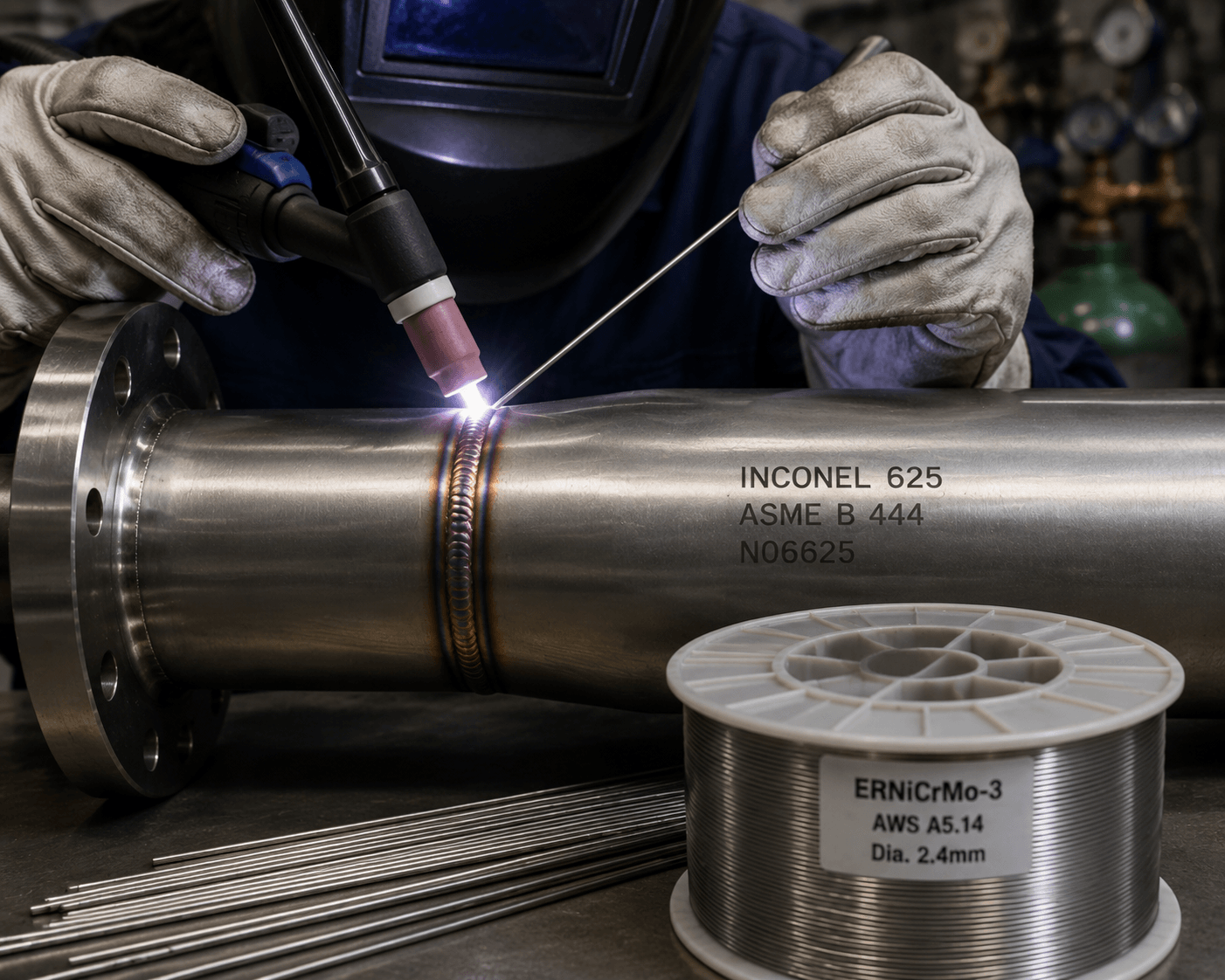
Inconel welding requires specialized techniques because nickel-based superalloys are designed to maintain strength, corrosion resistance and stability under extreme conditions.
Unlike conventional stainless steels, Inconel alloys have unique metallurgical characteristics, including high nickel content, excellent heat resistance and sensitivity to welding parameters. Proper welding process selection, filler metal matching and heat control are essential for achieving reliable weld quality.
This Inconel welding guide explains common welding processes, filler metal selection, preheating requirements, common defects and recommended solutions for different Inconel grades.
Quick Answer: How Is Inconel Welded?
- GTAW (TIG welding) is commonly used for high-quality Inconel welds requiring precision.
- ERNiCr-3 and ERNiCrMo-3 are common filler metals for different Inconel grades.
- Preheating is generally not required for many Inconel alloys, but temperature control is important.
- Proper shielding gas, heat input and welding parameters help prevent cracking and defects.
Why Is Inconel Difficult to Weld?
Inconel alloys are widely used in aerospace engines, chemical processing equipment, power generation and high-temperature applications because of their excellent mechanical performance.
However, their high alloy content and metallurgical characteristics make welding more challenging compared with ordinary carbon steel or stainless steel.
High Nickel Content
The high nickel content in Inconel provides excellent corrosion resistance and high-temperature strength, but it also affects weld pool behavior and requires careful control of welding parameters.
Heat-Affected Zone Control
Excessive heat input can affect microstructure, increase distortion and reduce the performance of welded components.
Controlling welding speed, current and interpass temperature helps maintain material properties.
Thermal Expansion and Distortion
Nickel-based alloys have different thermal expansion characteristics compared with many steels. Proper fixture design and welding sequence are important to reduce distortion.
Common Inconel Welding Processes
Different welding processes are selected according to component size, required weld quality and production conditions.
| Process | Characteristics | Applications |
|---|---|---|
| GTAW / TIG | Excellent control and high weld quality | Precision components, aerospace parts, thin sections |
| GMAW / MIG | Higher productivity compared with TIG | Larger industrial components |
| SMAW | Suitable for repair and field welding | Maintenance applications |
| Laser Welding | Low heat input and precise welding | Advanced manufacturing applications |
Inconel Filler Metal Selection Guide
Selecting the correct filler metal is one of the most important steps in Inconel welding. The filler material should provide compatible chemical composition, corrosion resistance and mechanical properties with the base metal.
Different Inconel grades require different welding consumables. Using an unsuitable filler wire may reduce weld performance and increase the risk of cracking or corrosion problems.
| Base Metal | Recommended Filler Metal | Typical Applications |
|---|---|---|
| Inconel 600 | ERNiCr-3 | Heat treatment equipment, chemical processing |
| Inconel 601 | ERNiCr-3 | High-temperature oxidation-resistant components |
| Inconel 625 | ERNiCrMo-3 | Marine, chemical and aerospace applications |
| Inconel 718 | ERNiFeCr-2 | Aerospace engines and high-strength components |
| Incoloy 800 / 800H | ERNiCr-3 | Heat exchangers and furnace components |
ERNiCr-3 vs ERNiCrMo-3 Welding Wire
ERNiCr-3 and ERNiCrMo-3 are two commonly used nickel alloy welding wires. The selection depends mainly on alloy composition and required corrosion resistance.
| Filler Wire | Main Characteristics | Typical Matching Materials |
|---|---|---|
| ERNiCr-3 | Nickel-chromium filler with good oxidation and corrosion resistance | Inconel 600, 601, 800 series and dissimilar welding |
| ERNiCrMo-3 | Nickel-chromium-molybdenum filler with enhanced corrosion resistance | Inconel 625, Hastelloy alloys, high corrosion environments |
Inconel 625 Welding Considerations
Inconel 625 is one of the most widely welded nickel alloys because of its excellent corrosion resistance and high strength. It is commonly welded using GTAW, GMAW and other fusion welding processes.
ERNiCrMo-3 welding wire is commonly selected for Inconel 625 because its chemical composition is closely matched with the base metal and provides excellent corrosion resistance.
Important Factors for Inconel 625 Welding
- Clean the welding surface to remove oil, oxide and contaminants.
- Use suitable shielding gas to protect the weld pool.
- Control heat input to minimize distortion.
- Avoid excessive interpass temperature.
- Select filler metal according to service environment.
Preheating and Heat Control During Inconel Welding
Unlike some carbon steels, many Inconel alloys generally do not require high preheating temperatures before welding. However, proper temperature control remains essential for weld quality.
| Parameter | Recommended Practice |
|---|---|
| Surface Preparation | Remove contaminants before welding |
| Preheat | Usually not required for many Inconel alloys unless specified by procedure |
| Heat Input | Control heat input to maintain metallurgical properties |
| Interpass Temperature | Maintain controlled temperature between weld passes |
Common Inconel Welding Defects
Although Inconel alloys have excellent welding performance when properly processed, incorrect welding parameters may cause defects affecting service reliability.
| Defect | Possible Causes | Prevention |
|---|---|---|
| Cracking | Improper heat control or contamination | Clean surface and optimize welding parameters |
| Porosity | Poor shielding gas protection | Ensure proper gas flow and preparation |
| Lack of Fusion | Incorrect welding parameters | Adjust current, speed and welding technique |
| Distortion | Excessive heat input | Control welding sequence and heat input |
Inconel Welding by Grade
Different Inconel grades have different alloy compositions and service requirements. Selecting suitable welding procedures and filler metals according to the specific grade is essential for maintaining corrosion resistance and mechanical performance.
| Inconel Grade | Recommended Filler | Welding Considerations |
|---|---|---|
| Inconel 600 | ERNiCr-3 | Good weldability with TIG and MIG processes; commonly used for high-temperature applications |
| Inconel 625 | ERNiCrMo-3 | Requires controlled heat input to maintain corrosion resistance and mechanical properties |
| Inconel 718 | ERNiFeCr-2 | Heat treatment condition should be considered after welding |
| Inconel 601 | ERNiCr-3 | Suitable for oxidation-resistant high-temperature equipment |
Inconel Welding Inspection and Quality Control
Because Inconel components are often used in aerospace, energy and chemical processing applications, welding quality inspection is important to ensure reliability during service.
| Inspection Method | Purpose |
|---|---|
| Visual Inspection (VT) | Check weld appearance, surface defects and weld profile |
| Liquid Penetrant Testing (PT) | Detect surface cracks and discontinuities |
| Radiographic Testing (RT) | Inspect internal weld defects |
| Mechanical Testing | Verify strength and weld performance when required |
Common Inconel Welding Standards
Inconel welding procedures and filler metals are commonly specified according to international welding standards. The applicable standard depends on industry requirements and project specifications.
| Standard | Application |
|---|---|
| AWS A5.14 | Specification for nickel and nickel alloy welding electrodes and rods |
| ASME Section IX | Welding procedure and qualification requirements |
| EN ISO 18274 | Nickel and nickel alloy welding consumables |
FAQ
What welding process is best for Inconel?
GTAW (TIG welding) is commonly preferred when high weld quality and precise control are required. GMAW and other processes may be selected for larger components or higher productivity requirements.
Which filler wire is used for Inconel 625 welding?
ERNiCrMo-3 welding wire is commonly used for Inconel 625 because its nickel-chromium-molybdenum composition provides good compatibility with the base metal.
Does Inconel require preheating before welding?
Many Inconel alloys do not require traditional preheating, but proper surface preparation, heat input control and interpass temperature management are important.
What causes cracks in Inconel welds?
Common causes include contamination, excessive heat input, unsuitable filler selection and improper welding parameters.
Can Inconel be welded to stainless steel?
Yes. Dissimilar welding between Inconel and stainless steel is possible when suitable filler metals and welding procedures are selected.
Inconel Welding Support from SASA ALLOY
SASA ALLOY provides nickel alloy welding materials including Inconel welding wire and filler metals for industrial applications.
Available welding consumables include ERNiCr-3, ERNiCrMo-3 and other nickel alloy filler materials suitable for different Inconel grades.
Technical support is available for filler selection, material matching and application requirements.
For Inconel welding material requirements, please provide base metal grade, welding process, diameter, quantity and application information.
Conclusion
Successful Inconel welding depends on correct process selection, compatible filler metal, controlled heat input and proper inspection methods.
Understanding the differences between Inconel grades and welding consumables helps engineers achieve reliable welded components for high-temperature, corrosion-resistant applications.
With proper welding procedures and material selection, Inconel alloys can provide long service life in aerospace, chemical processing, energy and industrial environments.
Post time: Jul-25-2026