Introduction
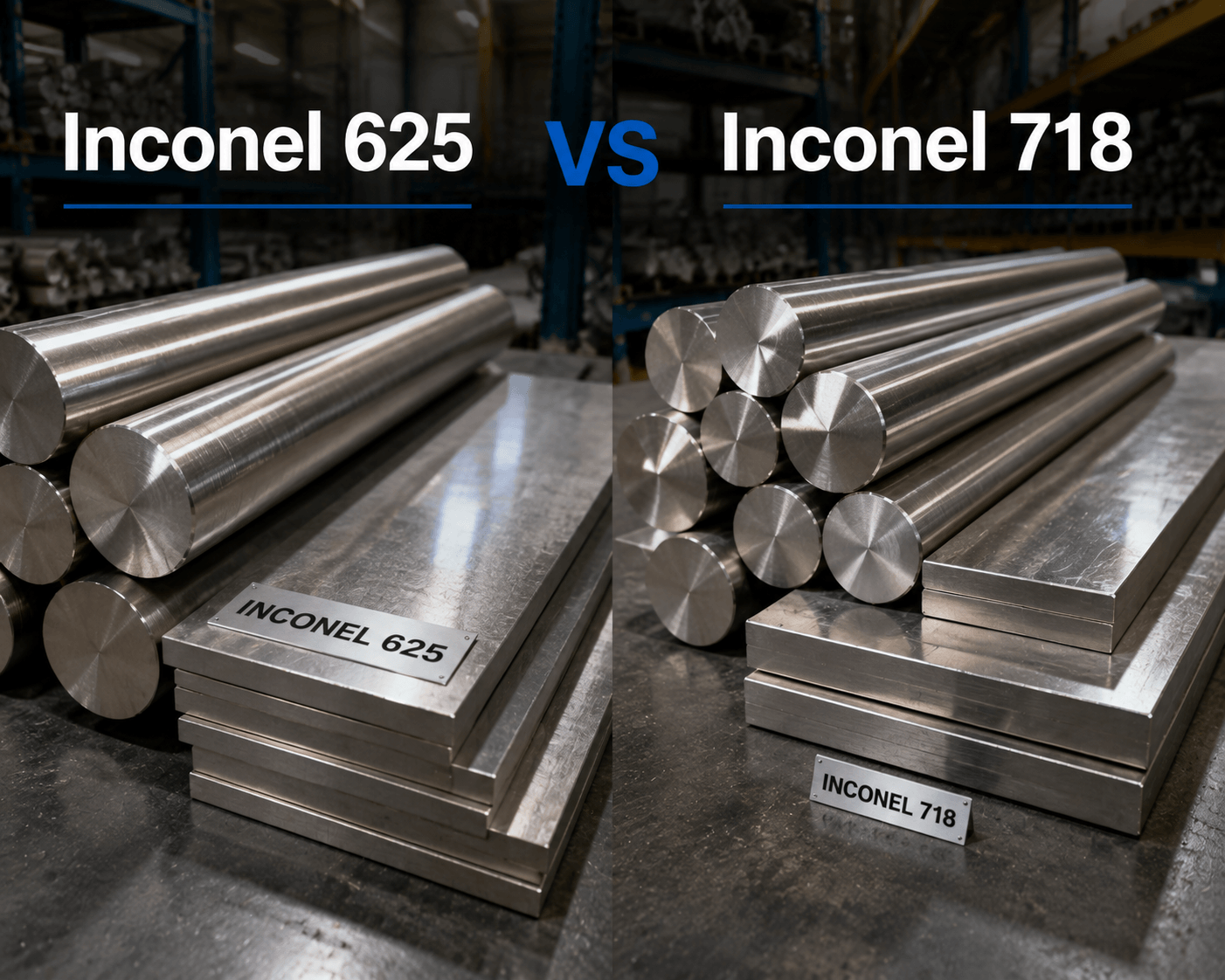
Inconel 625 and Inconel 718 are two widely used nickel-based superalloys known for their excellent strength, corrosion resistance and high-temperature performance. Although both belong to the Inconel family, their alloy composition and engineering advantages make them suitable for different applications.
Inconel 625 is primarily known for outstanding corrosion resistance, weldability and long-term performance in harsh environments. Inconel 718 is recognized for its high strength and excellent mechanical properties at elevated temperatures, especially in aerospace applications.
Selecting between Inconel 625 and Inconel 718 depends on factors such as mechanical strength, temperature requirements, corrosion environment, fabrication method and application conditions.
Quick Answer: Inconel 625 vs Inconel 718
- Inconel 718 provides higher mechanical strength and is widely used in aerospace engine components.
- Inconel 625 provides superior corrosion resistance and excellent weldability.
- 625 is preferred for chemical, marine and corrosion-resistant applications.
- 718 is preferred for high-strength components operating at elevated temperatures.
What Is Inconel 625?
Inconel 625 is a nickel-chromium-molybdenum alloy designed for excellent corrosion resistance and high strength without requiring precipitation hardening.
Its high molybdenum and niobium content provides excellent resistance to pitting, crevice corrosion and stress corrosion cracking, making it suitable for aggressive environments.
Characteristics of Inconel 625
- Excellent corrosion and oxidation resistance.
- High strength across a wide temperature range.
- Excellent weldability compared with many nickel alloys.
- Suitable for marine and chemical environments.
What Is Inconel 718?
Inconel 718 is a precipitation-hardenable nickel-chromium alloy containing niobium, molybdenum and other alloying elements to achieve very high mechanical strength.
It is widely used in aerospace engines, gas turbines and high-performance components requiring strength retention at elevated temperatures.
Characteristics of Inconel 718
- Very high tensile and yield strength.
- Excellent creep and fatigue resistance.
- Maintains mechanical properties at high temperatures.
- Commonly used in aerospace applications.
Basic Comparison: Inconel 625 vs Inconel 718
| Property | Inconel 625 | Inconel 718 |
|---|---|---|
| Main Advantage | Corrosion resistance and weldability | High strength and fatigue resistance |
| Strength Level | High | Very high |
| Hardening Method | Solid solution strengthening | Precipitation hardening |
| Typical Applications | Chemical, marine, energy | Aerospace, turbines, engines |
Inconel 625 vs Inconel 718 Chemical Composition Comparison
The different alloying elements in Inconel 625 and Inconel 718 determine their mechanical properties, corrosion resistance and application advantages.
| Element | Inconel 625 | Inconel 718 |
|---|---|---|
| Nickel (Ni) | Balance | Balance |
| Chromium (Cr) | High chromium content for oxidation and corrosion resistance | Provides oxidation resistance and high-temperature stability |
| Molybdenum (Mo) | Higher content, improves pitting and crevice corrosion resistance | Contributes to strengthening and high-temperature performance |
| Niobium (Nb) | Strengthening element with excellent weldability | Main precipitation strengthening element |
| Hardening Mechanism | Solid solution strengthening | Precipitation hardening |
Inconel 625 vs 718 Strength Comparison
Strength is one of the most important differences between Inconel 625 and Inconel 718. Inconel 718 is designed as a high-strength precipitation hardened alloy, while Inconel 625 focuses on balanced strength and corrosion resistance.
| Mechanical Property | Inconel 625 | Inconel 718 |
|---|---|---|
| Tensile Strength | High strength | Very high strength |
| Yield Strength | Good | Higher after heat treatment |
| Fatigue Resistance | Excellent | Excellent for cyclic loading |
| Creep Resistance | Excellent | Excellent at elevated temperature |
Which Is Stronger: Inconel 625 or Inconel 718?
Inconel 718 generally provides higher mechanical strength than Inconel 625, especially after precipitation hardening treatment. This makes it suitable for aerospace and high-load components.
However, Inconel 625 provides better overall corrosion resistance and excellent weldability, which makes it preferred for chemical processing, marine and corrosion-focused applications.
Inconel 625 vs 718 Temperature Performance
Both Inconel 625 and Inconel 718 maintain excellent performance at elevated temperatures, but their temperature advantages are different.
| Feature | Inconel 625 | Inconel 718 |
|---|---|---|
| High Temperature Strength | Excellent | Excellent |
| Maximum Service Temperature | Suitable for high-temperature corrosion environments | Excellent strength retention at elevated temperatures |
| Typical Advantage | Oxidation and corrosion resistance | Mechanical strength retention |
Corrosion Resistance Comparison
Inconel 625 has a strong advantage in corrosion resistance because of its high molybdenum and chromium content. It performs especially well in chloride-containing and chemically aggressive environments.
| Environment | Better Choice | Reason |
|---|---|---|
| Seawater | Inconel 625 | Excellent chloride corrosion resistance |
| Chemical Processing | Inconel 625 | Strong resistance to aggressive chemicals |
| Aerospace Engine Parts | Inconel 718 | High strength under demanding conditions |
Inconel 625 vs Inconel 718 Fabrication and Welding
Both Inconel 625 and Inconel 718 can be fabricated using common nickel alloy processing methods, but their strengthening mechanisms affect machining, forming and welding behavior.
| Process | Inconel 625 | Inconel 718 |
|---|---|---|
| Machining | Good machinability compared with precipitation hardened alloys | More challenging due to high strength and work hardening |
| Welding | Excellent weldability with ERNiCrMo-3 filler | Requires controlled welding procedures |
| Heat Treatment | Usually supplied in solution treated condition | Requires precipitation hardening for maximum strength |
| Fabrication Advantage | Better fabrication flexibility | Higher final mechanical performance |
Inconel 625 and Inconel 718 Standards
Inconel 625 and Inconel 718 products are commonly supplied according to ASTM and aerospace material specifications depending on product form and application requirements.
| Material | Common Standards | Product Forms |
|---|---|---|
| Inconel 625 | ASTM B446, ASTM B443, ASTM B444 | Bar, plate, sheet, pipe and tube |
| Inconel 718 | AMS 5662, AMS 5596 and related specifications | Bar, plate, sheet and aerospace components |
Inconel 625 vs Inconel 718 Applications
The final material selection depends on whether the project requires maximum strength or superior corrosion resistance.
| Application | Recommended Alloy | Reason |
|---|---|---|
| Aerospace Engine Components | Inconel 718 | High strength and fatigue resistance |
| Gas Turbine Parts | Inconel 718 | Excellent mechanical properties at high temperature |
| Marine Equipment | Inconel 625 | Excellent seawater corrosion resistance |
| Chemical Processing Equipment | Inconel 625 | Resistance to aggressive chemical environments |
| High-Strength Fasteners | Inconel 718 | High tensile strength after heat treatment |
How to Select Between Inconel 625 and Inconel 718
| Requirement | Recommended Alloy |
|---|---|
| Maximum mechanical strength | Inconel 718 |
| Severe corrosion environment | Inconel 625 |
| Complex welding fabrication | Inconel 625 |
| Aerospace high-load components | Inconel 718 |
FAQ
Which is better, Inconel 625 or Inconel 718?
Neither alloy is universally better. Inconel 718 is preferred when maximum strength is required, while Inconel 625 is preferred when corrosion resistance and weldability are the main priorities.
Is Inconel 718 stronger than Inconel 625?
Yes. Inconel 718 generally provides higher tensile and yield strength after precipitation hardening treatment.
Is Inconel 625 more corrosion resistant than Inconel 718?
In many corrosive environments, Inconel 625 provides better corrosion resistance due to its higher molybdenum content and alloy design.
Can Inconel 625 and 718 be welded?
Yes. Both alloys can be welded using suitable procedures and compatible nickel alloy filler metals.
Inconel Alloy Solutions from SASA ALLOY
SASA ALLOY supplies Inconel 625 and Inconel 718 products including round bars, plates, sheets, pipes, tubes and welding materials for industrial applications.
Products can be supplied according to ASTM, AMS and customer specifications with material certificates and customized processing options.
Our technical team can assist with alloy selection based on strength requirements, corrosion environment, temperature conditions and fabrication needs.
For Inconel 625 or Inconel 718 requirements, please provide material grade, product form, dimensions, quantity and application details.
Conclusion
Inconel 625 and Inconel 718 are both advanced nickel-based superalloys, but they are designed for different engineering priorities.
Inconel 625 offers outstanding corrosion resistance, welding performance and reliability in aggressive environments. Inconel 718 provides superior mechanical strength and high-temperature capability for demanding aerospace and power applications.
Understanding the differences between Inconel 625 and Inconel 718 allows engineers and industrial buyers to select the most suitable alloy for their specific operating conditions.
Post time: Jul-27-2026