Quick answer: ASTM B622 covers seamless nickel-alloy pipe and tube; ASTM B626 covers welded nickel-alloy tube. For C276, specify UNS N10276 alongside the correct product standard. If the order is for welded pipe, check ASTM B619 instead of automatically using B626. These designations identify different product routes, not interchangeable quality levels.
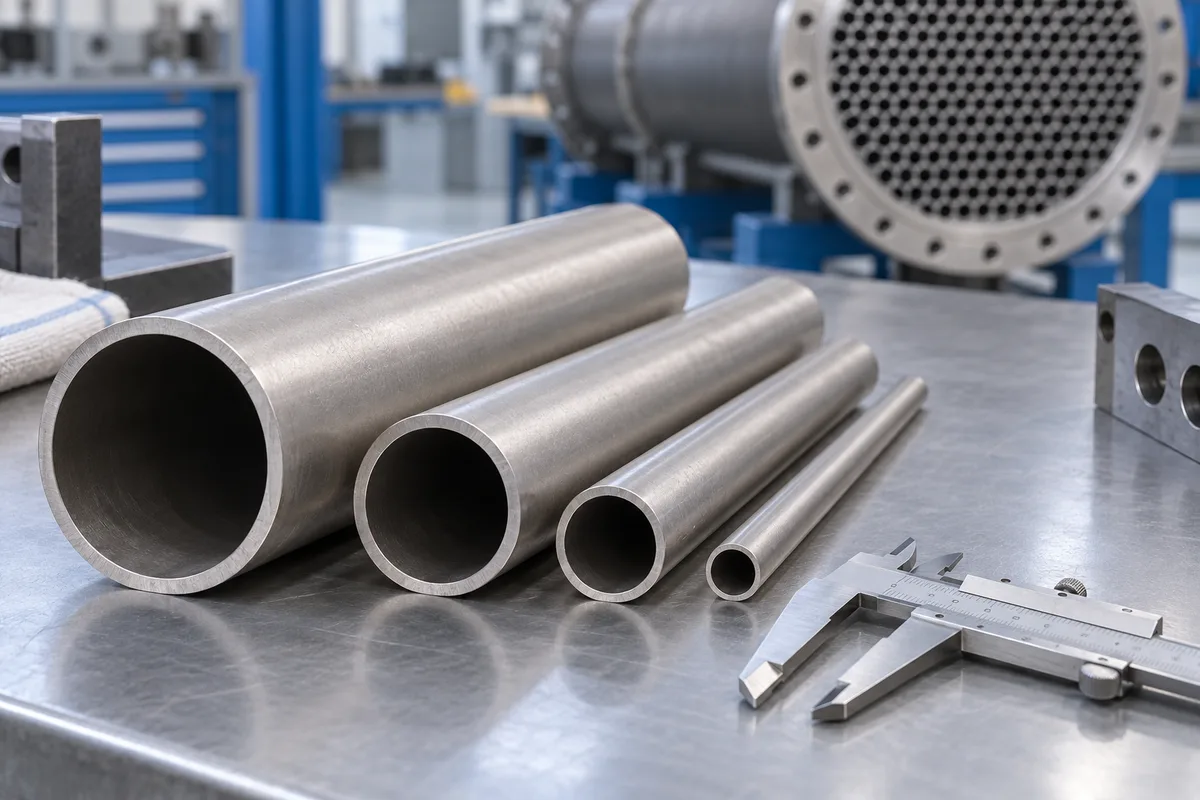
A purchase request reading only “C276 tube, ASTM standard” leaves important questions unanswered. Buyers need to define the product form, manufacturing route, dimensions, delivery condition and acceptance requirements before comparing quotations. This guide focuses on those ordering decisions rather than a general seamless-versus-welded comparison.
Which standard belongs on the purchase order?
- Seamless pipe or seamless tube: review ASTM B622 for the specified grade and product dimensions.
- Welded tube: review ASTM B626. Its scope includes heat-exchanger and condenser tubing as well as other stated service applications.
- Welded pipe: review ASTM B619. Do not treat a welded-tube designation as an automatic substitute.
The distinction is supported by the official ASTM B622 scope and ASTM B626 scope. Haynes International also lists C-276, UNS N10276, against the relevant seamless and welded product specifications in its corrosion-resistant alloy specification reference. Check the contractually required edition before ordering.
Five details that make quotations comparable
1. Grade and product route
Write the UNS grade separately from the standard. A standard number alone does not identify a single alloy. State whether seamless or welded material is required, and ask suppliers to flag any proposed alternative as a deviation requiring approval.
2. Dimensions and wall basis
For tube, give outside diameter, wall thickness and length with units. Say whether the wall requirement is minimum or nominal/average as applicable to the selected specification. For pipe, identify the size designation and wall requirement, and check their actual dimensions against the drawing. Include straight-length or coil requirements, end preparation and any cut-length tolerance. A supplier should not have to infer these details from a photograph.
3. Delivery condition and finish
Request the delivery condition required by the applicable specification and project. Clarify any additional surface, cleanliness or finishing requirement on the drawing. ASTM B626 describes automatic welding without added filler metal and solution-annealed, descaled supply. A polished appearance alone does not demonstrate compliance with those manufacturing requirements.
4. Inspection scope
Ask for a compliance statement identifying the required examinations, applicable acceptance criteria and any supplementary tests. Agree on inspection coverage, witness points and report requirements before placing the order. Do not assume that every test mentioned in a short standard abstract is independently mandatory in every ordering situation; the applicable clauses and permitted alternatives must be checked.
5. Traceability and documentation
Specify the inspection-document requirement and how the heat or lot identification must connect the delivered material to its records. Confirm how identification will be preserved after cutting and repacking. If third-party inspection is required, define its scope and release point rather than simply adding “third-party approved” to the request.
For a product starting point, see SASA ALLOY C276 pipe and tube. The final manufacturing route, dimensions and documentation must be confirmed against your enquiry.
RFQ checklist for C276 tubing
Use the following fields when requesting a quotation. Complete them from the project documents, and mark unresolved requirements for engineering review:
- Alloy: C276 / UNS N10276.
- Product: pipe or tube; seamless or welded.
- Product standard and required edition.
- Outside diameter or pipe size, wall basis, thickness, length and units.
- Quantity, dimensional tolerances and end preparation.
- Delivery condition, surface finish and cleanliness.
- Inspection document, testing scope and traceability requirements.
- Drawing revision, packing requirements and delivery destination.
- Required delivery date and an explicit list of permitted deviations.
Quotation review tip: ask each supplier to return the same completed requirement list. A lower price is difficult to evaluate if one offer uses a different wall basis, omits inspection documents or proposes a different manufacturing route. Request a separate explanation for every exception.
Common buyer questions
Can B626 tube replace B622 tube?
Do not approve substitution solely because both offers state C276. Review the specified manufacturing route and obtain the responsible engineer's acceptance of the proposed deviation before changing the order.
Does the standard number establish the working pressure?
No. The product designation is not a stand-alone pressure rating. The equipment design must establish suitability using the applicable design rules, dimensions, temperature and other project inputs.
Should the newest edition always be used?
Use the edition required by the approved project and purchase order. If a newer edition is proposed, resolve the change with the responsible project team rather than silently replacing the specified edition.
Request a C276 pipe or tube quotation
Send SASA ALLOY your UNS grade, product standard, manufacturing route, dimensions, quantity and inspection requirements. Include the drawing and any unresolved specification questions so the quotation can identify its scope and exceptions clearly.
Contact Us for a C276 Quotation
This is a procurement guide. Use the full applicable standard and approved project requirements for contractual acceptance.
Post time: Sep-10-2026